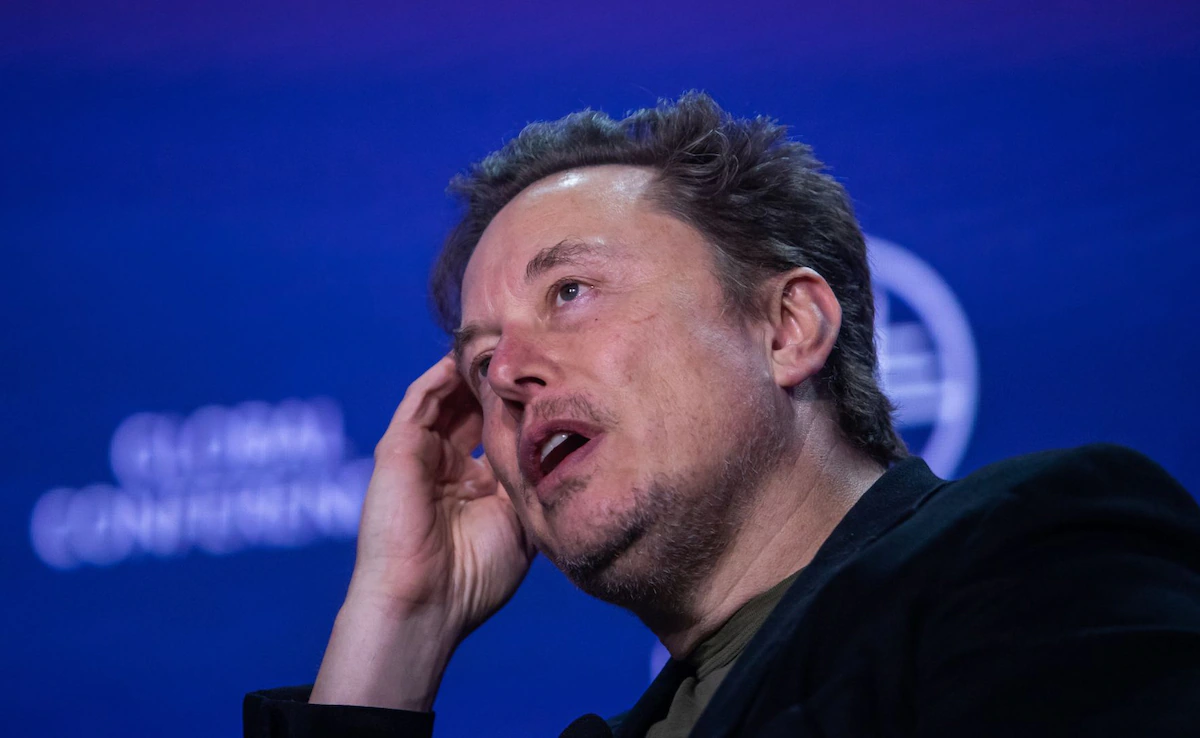
Tech billionaire Elon Musk has revealed that he “felt like I was dying” and nearly went to the hospital after receiving his second COVID-19 vaccine dose, in comments that went viral Sunday on X.
Musk made the remarks while responding to a post referencing testimony by Dr. Helmut Sterz, Pfizer’s former chief toxicologist, during a recent German COVID-19 inquiry. Musk reposted commentary from Swedish journalist Peter Imanuelsen, amplifying the claims to his millions of followers.
Claims Raised at German COVID-19 Inquiry
According to reports from the inquiry, Sterz cited data from Germany’s vaccine regulator, the Paul Ehrlich Institute, which has recorded 2,133 reports of deaths following administration of Pfizer’s mRNA COVID-19 vaccine, Comirnaty.
Sterz argued that spontaneous reporting systems are prone to underreporting. He referenced assumptions used in the United States suggesting that only a fraction of adverse events are formally reported.
Applying a multiplier factor, he claimed the total number of deaths potentially linked to vaccination in Germany could be significantly higher, estimating figures that could reach tens of thousands.
Sterz also told commissioners that Pfizer’s early post-marketing safety data referenced approximately 1,200 suspected deaths within two months of the vaccine’s approval.
He called for a new, independent scientific review of the long-term safety profile of COVID-19 vaccines, emphasizing transparency to restore public trust.
During his testimony, Sterz claimed that Pfizer did not conduct certain pre-approval studies—such as carcinogenicity assessments—due to time constraints during the rapid development phase of the vaccine. He also alleged that comprehensive studies on the vaccine’s effects during pregnancy were not completed prior to rollout.
Sterz suggested that the volume of reported adverse events warranted a pause in the use of the vaccines pending further independent investigation. He further questioned whether the overall risk-benefit balance remained favorable.
READ ALSO: Study finds higher risk of heart inflammation in teens after mRNA COVID-19 vaccination
Pfizer and global health authorities have consistently maintained that COVID-19 vaccines underwent rigorous clinical trials and continuous safety monitoring before and after authorization.
During the inquiry, one commissioner reportedly noted that German courts have generally upheld the position that Pfizer’s COVID-19 vaccine maintains a positive risk-benefit ratio, making compensation claims for vaccine-related injuries difficult to win.
Sterz disagreed with that assessment. He referenced work by mathematician Robert Rockenfeller of the University of Koblenz, who estimated that severe adverse events linked to vaccination could outnumber severe COVID-19 cases prevented in certain analyses.
The testimony prompted strong reactions online. British cardiologist Dr. Aseem Malhotra described the developments as “deeply disturbing,” while Dr. Ryan Cole of the Independent Medical Alliance questioned why COVID-19 vaccines remain on the market. Imanuelsen argued that Sterz’s statements warranted global headline coverage.
In the United States, reports of deaths following COVID-19 vaccination have been submitted to the Vaccine Adverse Event Reporting System (VAERS), jointly managed by the U.S. Food and Drug Administration and the Centers for Disease Control and Prevention.
As of late February, thousands of death reports had been logged following COVID-19 vaccination, according to publicly accessible databases. However, federal health agencies have repeatedly cautioned that VAERS reports alone do not establish causation and may include unverified or coincidental events.
A 2011 Harvard Pilgrim Health Care study frequently cited in vaccine safety debates found that adverse event reporting systems generally capture only a portion of actual events. Critics argue this suggests underreporting, while public health experts counter that passive reporting systems are designed as early warning tools rather than definitive measures of risk.
Earlier this year, the FDA launched a consolidated Adverse Event Monitoring System aimed at improving efficiency and transparency in tracking vaccine- and drug-related safety reports. Some critics, however, have questioned whether the new database adequately addresses longstanding concerns about verification and follow-up procedures.
Musk’s comments have reignited debate around vaccine safety, regulatory transparency, and post-marketing surveillance practices. Health authorities worldwide continue to assert that the benefits of COVID-19 vaccination—particularly in preventing severe disease, hospitalization, and death—outweigh the risks for the vast majority of people.




 Latest7 days ago
 Latest1 week ago
 Football7 days ago
 Business5 days ago
 Business6 days ago
 Crime5 days ago
 Comments and Issues4 days ago