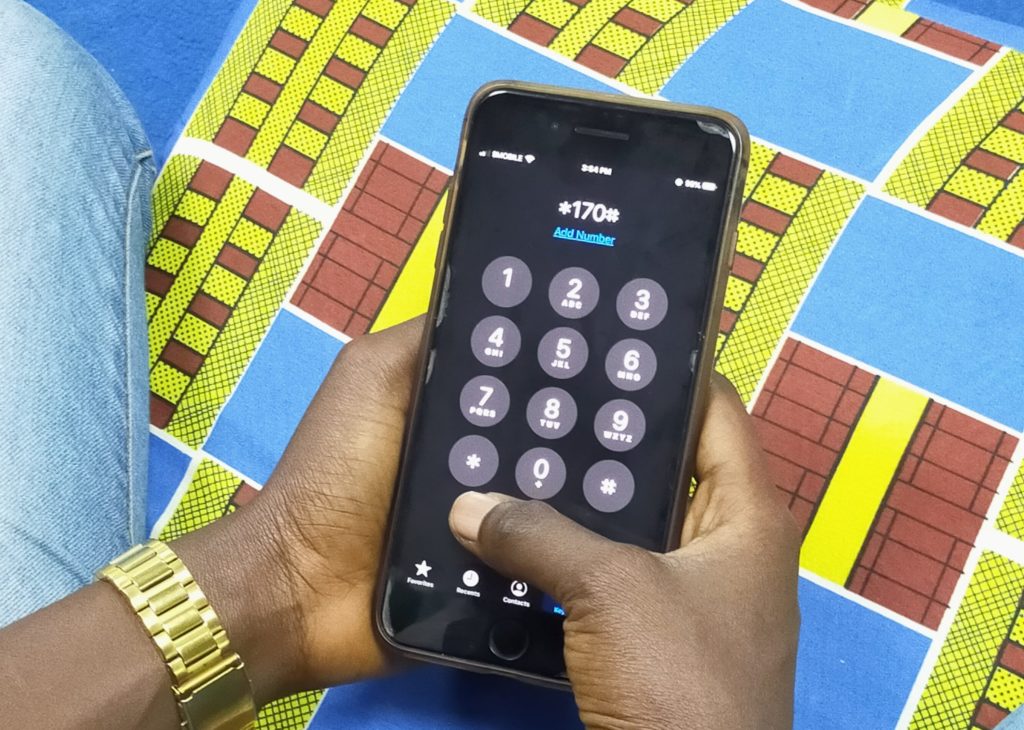
The Nigerian Communications Commission (NCC) has ordered all deposit money banks (DMBs) to cease deducting fees for unstructured supplementary service data (USSD) transactions directly from customers’ bank accounts.
In compliance with this directive, the United Bank for Africa (UBA) notified its customers on Tuesday that, effective June 3, 2025, USSD banking charges will instead be taken from users’ mobile airtime balances.
In an email dispatched to account holders, UBA stated, “In line with the directive of the Nigerian Communications Commission (NCC), please be informed that effective June 3, 2025, charges for USSD banking services will no longer be deducted from your bank account.
Going forward, these charges will be deducted directly from your mobile airtime balance in accordance with the NCC’s End-User Billing (EUB) model.” Under this new billing structure, each USSD session lasting up to 120 seconds will attract a fee of N6.98, which will be billed by the customer’s mobile network operator (MNO).
UBA further explained that customers will receive a consent prompt at the start of each USSD session. “Airtime will only be deducted upon your confirmation and availability of the bank to fulfil this service,” the email read. “If you do not wish to continue using USSD banking under this new model, you may choose to discontinue use of the USSD channel.”
UBA also reassured customers that they could continue to access funds and perform transactions through other digital banking channels, such as its mobile app and internet banking platform, for added convenience.
Industry observers note that the NCC’s directive represents a concerted effort to resolve the longstanding USSD payment dispute between mobile network operators and banks, a friction that has lingered since late 2024.
In December 2024, the Central Bank of Nigeria (CBN) and the NCC jointly urged MNOs and DMBs to settle an outstanding USSD debt totalling ₦250 billion. The impasse arose when banks fell behind on remittances owed to telcos for USSD services, prompting MNOs to threaten the suspension of USSD codes and disrupt critical banking access for millions of Nigerians.
By early January 2025, tensions had escalated to the point where the NCC warned it would suspend USSD services entirely and publish the names of banks still indebted to telcos.
On January 15, the regulator issued a strict notice directing telcos to disconnect USSD codes assigned to nine banks by January 27 if the banks failed to clear their debts. Consequently, several smaller institutions experienced temporary disruptions in their USSD banking services.
In late February 2025, MTN Nigeria announced it had received ₦32 billion of the N72 billion owed by banks toward the USSD debt. However, considerable arrears remained, casting uncertainty over the future of USSD-based transactions—a key channel for financial inclusion, especially among unbanked and underbanked populations who rely on basic feature phones.
READ ALSO: NCC commissions e-Health project in Ondo to revolutionize healthcare delivery through ICT
By adopting the End-User Billing (EUB) model, the NCC aims to streamline revenue flows and eliminate the recurring debt disputes that have hindered seamless USSD operations. Under EUB, telcos bill end users directly for USSD sessions, while banks are relieved of the obligation to make monthly remittances.
In theory, this arrangement should reduce backlogs, ensure predictable revenue for MNOs, and preserve uninterrupted access to USSD banking for customers.
Yet, concerns over the impact of this shift on users have also surfaced. Critics argue that charging airtime for USSD sessions may impose an additional burden on low-income customers who traditionally depended on zero-balance USSD access, whereby small fees were bundled into bank service charges.
With the new model, individuals who perform multiple inquiries—such as balance checks, mini statements, and bill payments—may see their airtime depleted more quickly. Consumer advocacy groups, including the Consumer Protection Network (CPN), have called on both telcos and banks to ensure transparent communication around the billing changes and to introduce safeguards for vulnerable users.
Market analysts predict that other major banks will issue similar notifications in the coming days. First Bank of Nigeria, Zenith Bank, Guaranty Trust Bank (GTBank), and Access Bank are all expected to publish statements outlining how they will implement the NCC’s directive.
While details may vary slightly—particularly regarding the exact fee per session—most institutions are likely to follow the ₦6.98-per-120-seconds benchmark established by the NCC.



 Business1 week ago
 Latest6 days ago
 Business1 week ago
 Football5 days ago
 Health1 week ago
 Business5 days ago
 Football1 week ago
 Football1 week ago