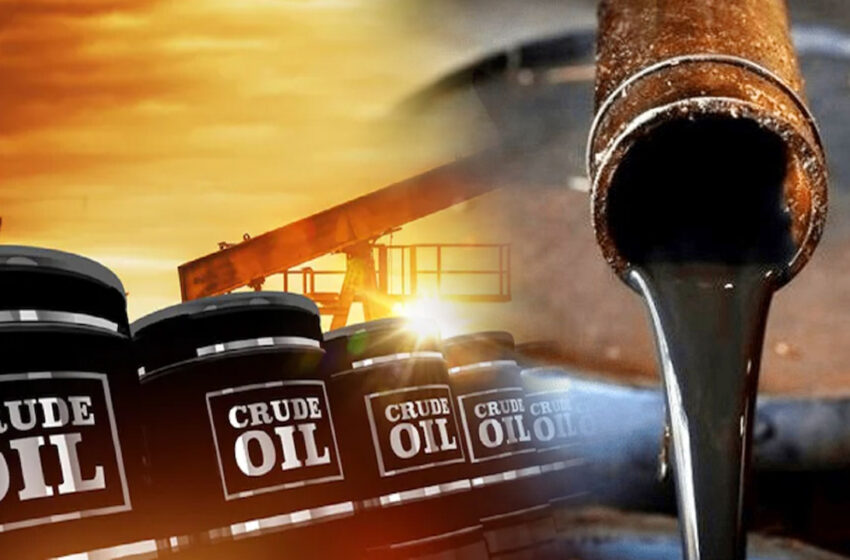
Nigeria’s flagship crude grade, Bonny Light, has climbed above $70 per barrel, trading higher than the Federal Government’s 2026 budget benchmark of $64.85, as escalating geopolitical tensions inject fresh volatility into global oil markets.
Latest price data show Bonny Light hovering around $71 per barrel, slightly down by 0.7 percent from $72.3 recorded on Monday. Despite the marginal pullback, the grade remains comfortably above the government’s conservative fiscal assumption.
Market analysts attribute the recent strength in oil prices to rising geopolitical risk premiums, particularly linked to tensions around the Red Sea and renewed diplomatic friction between the United States and Iran.
U.S. military forces have reportedly gathered near the Red Sea ahead of a third round of nuclear talks with Iran in Geneva, heightening concerns about potential supply disruptions. Adding to market anxiety are ongoing Iranian naval exercises in the Strait of Hormuz — a critical chokepoint through which roughly 20 million barrels of oil pass daily.
Energy economist Dr. Kelvin Obi told reporters that “markets are pricing in the risk of disruption, not actual disruption yet. Any escalation in the Strait of Hormuz could trigger a sharp spike in crude prices.”
He noted, however, that risk-driven rallies tend to be volatile. “If diplomacy progresses positively, we could see prices retreat just as quickly,” he added.
Trade policy uncertainty is also clouding the demand outlook. The U.S. administration has signaled possible new national security tariffs, including a proposed 15 percent global tariff, following a Supreme Court ruling that invalidated some earlier levies.
READ ALSO: Iran-Israel tensions may push petrol price to ₦1,000/Litre as crude oil soars
Analysts warn that renewed trade tensions could slow global growth and dampen energy demand.
“The oil market is currently torn between supply-side fears and demand-side caution,” said Lagos-based energy consultant Funmi Adeyemi. “Prices above $70 are positive for Nigeria’s revenue projections, but sustainability will depend on global growth dynamics.”
Attention is now focused on the release of weekly crude stock data from the American Petroleum Institute (API), which could influence short-term price direction.
The Federal Government’s 2026 budget is built on a crude oil benchmark of $64.85 per barrel and an ambitious daily production target of 1.84 million barrels. In January 2025, production stood at about 1.48 million barrels per day, slightly below Nigeria’s OPEC+ quota of 1.5 million bpd.
Economist Dr. Aisha Mohammed said prices above the benchmark provide fiscal breathing space but warned that production levels remain critical.
“Higher prices are helpful, but Nigeria’s bigger challenge has been meeting production targets. Without improved output, the revenue benefit from higher prices may be limited,” she said.
Nigerian crude, widely regarded as “light and sweet,” commands strong demand due to its low sulfur content and high API gravity, making it cheaper to refine into high-value products such as diesel and gasoline.
In a move to diversify its crude portfolio, Nigeria launched the Cawthorne (API 36.4°) grade in February 2026, following the introduction of Utapate in 2024 and Obodo in 2025.
Analysts say expanding crude streams enhances Nigeria’s competitiveness in global markets.
The operational ramp-up of the Dangote Refinery has also transformed Nigeria’s oil landscape. With a refining capacity exceeding 650,000 barrels per day in 2026, the facility has significantly reduced the country’s reliance on imported petroleum products.
During a recent site visit by the Nigerian National Petroleum Company Limited (NNPCL), the refinery was reported to be operating at 661,000 bpd — surpassing its initial design capacity. It is currently supplying between 60 million and 65 million litres of petrol daily to the domestic market and exporting about 20 million litres of surplus fuel.



 Latest1 week ago
 Football1 week ago
 Business6 days ago
 Latest1 week ago
 Health1 week ago
 Latest6 days ago
 Latest6 days ago
 Latest1 week ago