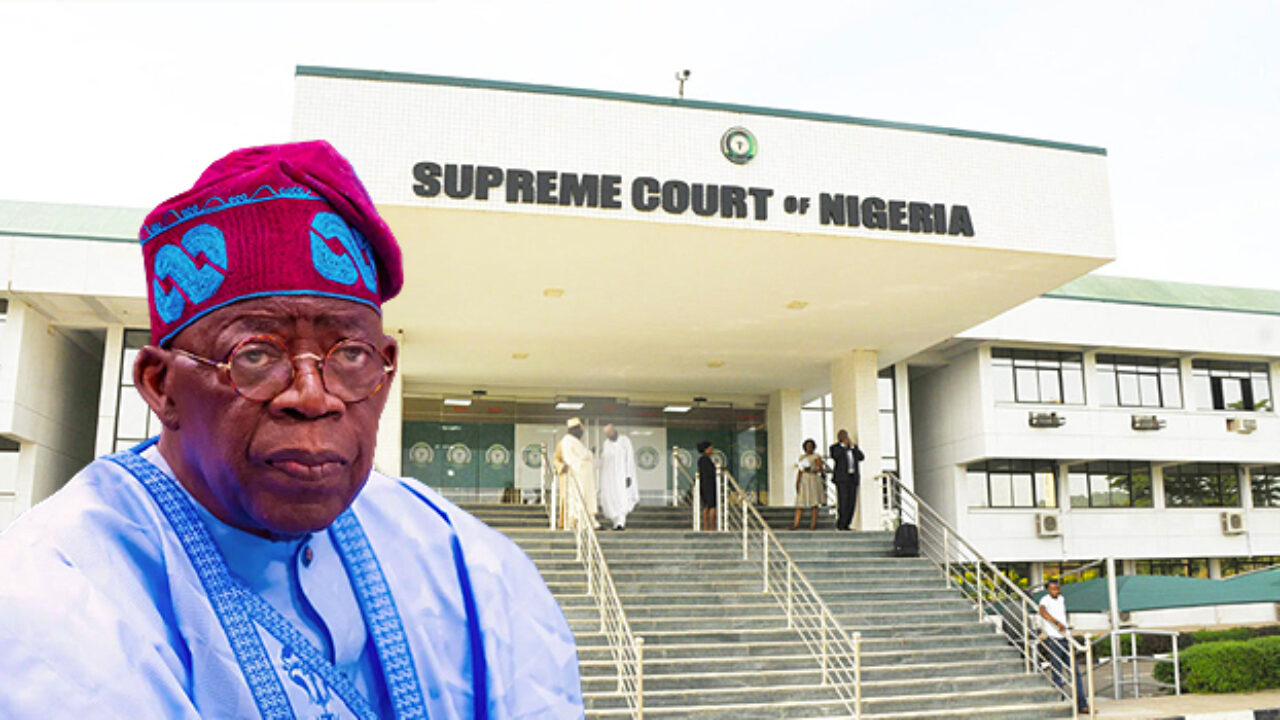
The Supreme Court has affirmed the constitutional authority of the President to declare a state of emergency in any state of the federation to prevent a breakdown of law and order or a descent into chaos and anarchy.
In a split decision of six to one, the apex court held that the President, while exercising emergency powers, may suspend elected state officials, provided such suspension is for a limited period and aimed at restoring normalcy.
Delivering the lead majority judgment, Justice Mohammed Idris ruled that Section 305 of the 1999 Constitution (as amended) empowers the President to take extraordinary measures once a state of emergency is proclaimed.
He explained that the provision does not expressly define or limit the nature of such measures, thereby granting the President discretion to determine the steps required to address the emergency situation.
Justice Idris stated that the framers of the Constitution intentionally left the scope of emergency actions broad, in order to allow swift and effective intervention in situations that threaten public safety, constitutional order, or national stability.
The judgment arose from a suit filed by Adamawa State and 10 other states governed by the Peoples Democratic Party (PDP), which challenged the legality of the state of emergency declared by President Bola Tinubu in Rivers State.
During the emergency period, elected officials in the state, including Governor Siminalayi Fubara, were suspended for six months.
In addressing the suit, Justice Idris first upheld the preliminary objections raised by the defendants—the Attorney General of the Federation (AGF) and the National Assembly—who had questioned the competence of the action.
The court held that the plaintiff states failed to establish a cause of action sufficient to invoke the Supreme Court’s original jurisdiction.
According to the majority judgment, the plaintiffs did not demonstrate how the declaration of emergency in Rivers State directly affected their legal rights or interests in a manner contemplated by the Constitution.
Consequently, the apex court struck out the suit for want of jurisdiction. Notwithstanding this decision, the court proceeded to consider the substantive issues raised in the case and ultimately dismissed the claims on their merits.
However, Justice Obande Ogbuinya dissented from the majority view. In his minority judgment, he agreed that the President possesses the constitutional power to declare a state of emergency but disagreed with the scope of actions taken under such authority.
Justice Ogbuinya held that while emergency rule may justify extraordinary intervention, it does not extend to the suspension of elected officials such as governors, deputy governors, and members of state assemblies.
He warned that allowing such suspensions could undermine democratic governance and the constitutional autonomy of states.
Despite the dissent, the majority ruling stands as the decision of the court, reinforcing the President’s emergency powers while emphasizing that any suspension of elected officials must be temporary and strictly tied to the objective of restoring law and order.



 Editorial Opinion1 week ago
 Latest7 days ago
 Comments and Issues4 days ago
 Health4 days ago
 News6 days ago
 Latest3 days ago
 News4 days ago
 Latest4 days ago