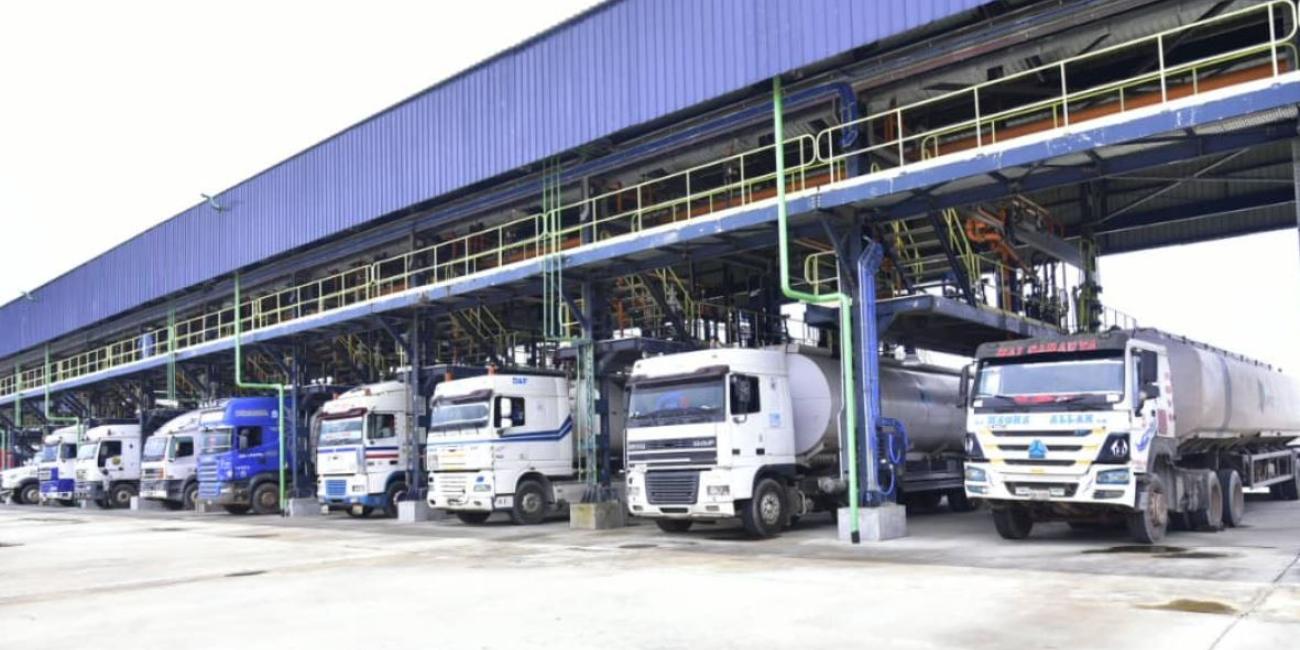
The Petroleum Product Retail Outlets Owners Association of Nigeria (PETROAN) has clarified that its members have not lifted Premium Motor Spirit (PMS), commonly known as petrol, from the recently revived Port Harcourt Refinery.
Instead, the products lifted include Automotive Gas Oil (AGO or diesel) and Dual Purpose Kerosene (DPK), according to the association’s president, Billy Gillis-Harry.
Gillis-Harry made the clarification on Tuesday while speaking on The Morning Show aired on Arise News.
His statement comes amid ongoing debate about fuel distribution efficiency in Nigeria, particularly following the Dangote Refinery’s announcement of nationwide distribution plans for PMS and diesel beginning August 15, 2025.
“For the products we are lifting at NNPC, especially at the Port Harcourt refinery, most of them were DPK and AGO,” Gillis-Harry stated. “PMS was lifted by NNPC from NNPC trucks to NNPC stations. And of course, we did buy from NNPC stations in our carts.”
He emphasized that PETROAN has not lifted commercial quantities of PMS directly from the refinery, countering widespread assumptions about private marketers accessing petrol from the depot.
“We did not buy any commercial PMS from NNPC while the process of doing distributions from that depot was ongoing,” he said. “There was no time we said we were picking PMS from the depot. We were picking PMS from NNPC through the private depots.”
READ ALSO: Dangote pays N450bn tax, pledges N900bn for roads infrastructures
The PETROAN president revealed that his members had received substantial allocations of other refined products.
“We took petroleum products running into tens of millions of litres,” he said, noting that PETROAN still actively applies for DPK and AGO from the Nigerian National Petroleum Company (NNPC).
In response to criticism from energy analyst and co-founder of Dairy Hills, Kelvin Emmanuel—who accused private marketers of inefficiency and failure to ensure equitable PMS distribution—Gillis-Harry defended PETROAN’s record but praised Dangote’s efforts.
“We are very proud of Dangote,” he said. “We want to support him; we want to encourage him to be successful, and we will bring in our little bit to make our giant brother very successful.”
He described PETROAN as a committed supporter of in-country refining, particularly the federal government’s refinery rehabilitation efforts.
“We supported the government and the industry leaders, especially NNPC, to encourage them to complete the rehabilitation and revamping process,” he added, noting that PETROAN made several visits to monitor progress.
Meanwhile, Kelvin Emmanuel reiterated earlier criticisms, asserting that Dangote Refinery is doing what the NNPC and marketers have failed to do for decades.
READ ALSO: Dangote retires as Chairman of Dangote Sugar Refinery after 20 years of leadership
“Dangote has come to Nigeria to do what NNPC has failed to do for 25 years,” Emmanuel stated. He cited chronic inefficiencies, alleging that the Warri and Port Harcourt refineries remain largely non-operational despite heavy investments.
He referenced a $1.5 billion crude swap-backed loan for refinery rehabilitation, noting that the Federal Executive Council had approved $2.9 billion for the effort in August 2021.
“It is only Lagos, some parts of the South-West, and Abuja that enjoy fair PMS pricing,” Emmanuel argued. “What Dangote is saying is that he will take on transportation and storage costs to deliver petrol directly to the stations—because marketers have frustrated Nigerians’ access to affordable petrol.”
The Dangote Petroleum Refinery has announced that from August 15, 2025, it will begin nationwide distribution of petrol and diesel. The company has deployed 4,000 Compressed Natural Gas (CNG)-powered tankers and promised free logistics support for registered petrol dealers, manufacturers, telecom companies, aviation firms, and large-scale consumers.
Additionally, Dangote is setting up CNG daughter booster stations and mini-distribution hubs supported by more than 100 tankers, with the goal of reducing distribution costs and expanding clean energy access nationwide.
Industry observers see this as a game-changing shift that could disrupt Nigeria’s historically fragmented fuel supply chain and possibly eliminate price disparities caused by logistics bottlenecks and depot-level inefficiencies.



 Football1 week ago
 Business1 week ago
 Latest6 days ago
 Business7 days ago
 Football1 week ago
 Business1 week ago
 Business1 week ago
 Football5 days ago