
Crime
Foreign nationals flee Iran amid escalating Israel-Iran conflict

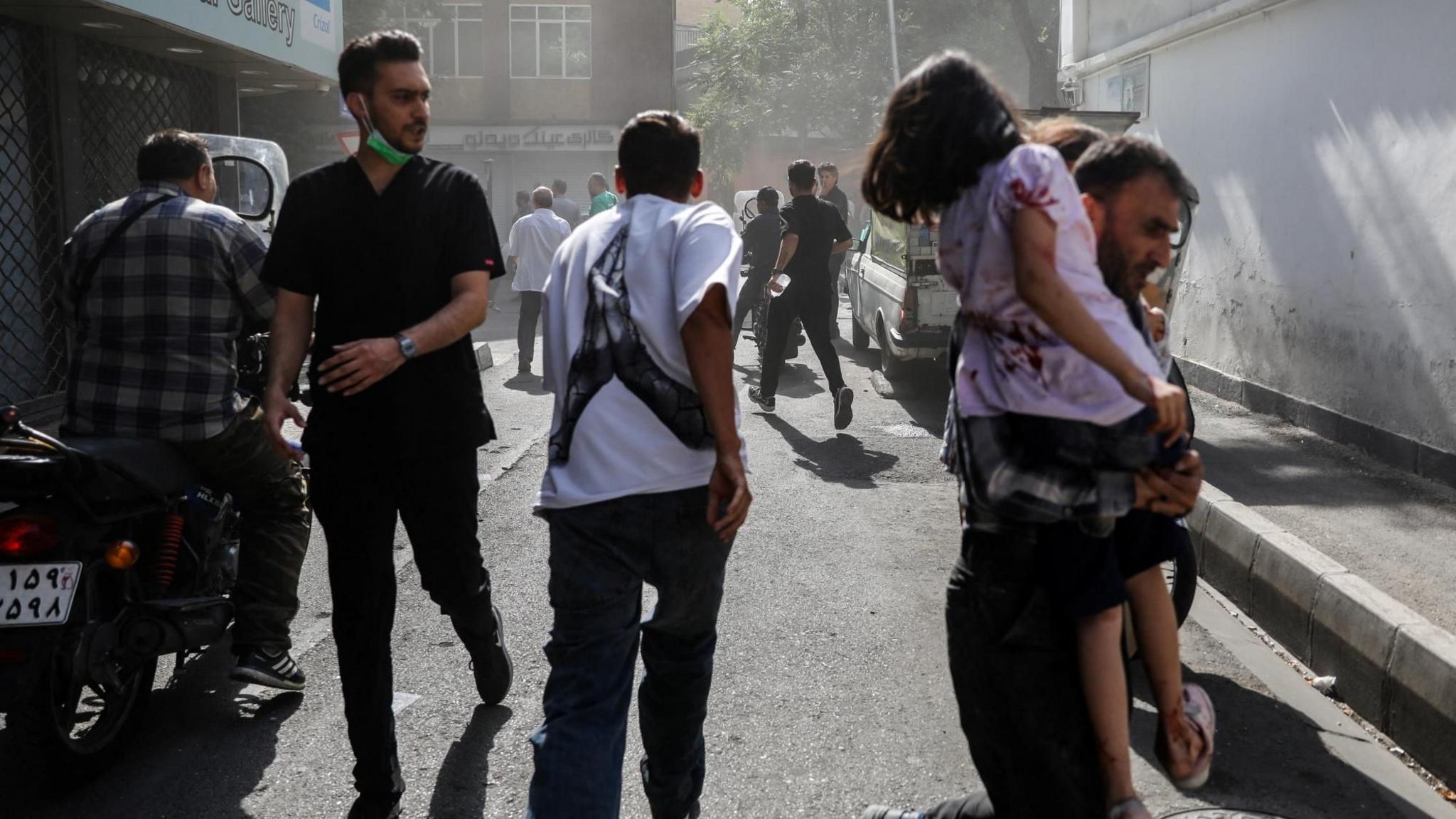
Amid rising regional tensions following Israel’s airstrikes on Iran, more than 700 foreign nationals have fled the Islamic Republic through neighbouring Azerbaijan and Armenia, government officials in both countries confirmed on Tuesday.
The evacuations come as Israel continues a military campaign against Iran launched last Friday, citing concerns over Tehran’s alleged nuclear ambitions—a claim Iranian authorities have strongly denied.
According to a senior government source in Baku, over 600 foreign citizens from 17 countries entered Azerbaijan through the Astara border crossing, located on the Caspian Sea coast, approximately 500 kilometers from Tehran.
The evacuees were later transported to Baku International Airport, where they boarded flights to return to their home countries.
Evacuees included nationals from Russia, Belarus, Kazakhstan, Kyrgyzstan, Tajikistan, Uzbekistan, Germany, Spain, Italy, Serbia, Romania, Portugal, the United States, the United Arab Emirates, China, and Vietnam.
“Since the start of the military escalation between Israel and Iran, more than 600 citizens of 17 countries have been evacuated from Iran via Azerbaijan,” the official said, noting that Azerbaijan temporarily lifted its COVID-era land border closure to facilitate the emergency crossings.
In neighbouring Armenia, authorities assisted India in evacuating 110 of its citizens from Iran.
“India also evacuated 110 of its citizens from Iran through Armenia,” confirmed Ani Badalyan, spokesperson for Armenia’s Foreign Ministry.
Meanwhile, Poland began a partial evacuation of its embassy staff in Tehran. Deputy Foreign Minister Henryka Mościcka-Dendys said that Warsaw had decided to withdraw “non-essential personnel” from the embassy, with evacuation routes directed toward the Azerbaijani border.
READ ALSO: Israel kills Iran’s military chief in overnight airstrike on Tehran
“We have decided to evacuate or support the departure of staff who do not need to remain in the country. Our colleagues will try to reach the border with Azerbaijan,” she told reporters in Warsaw.
Adding to the coordinated regional response, Turkmenistan—one of the world’s most isolated nations—opened a transit corridor to allow the passage of approximately 120 evacuees, mostly citizens of Central Asian countries, through its territory.
The evacuation efforts signal growing international unease over the intensifying military exchanges between Israel and Iran, which have drawn global appeals for de-escalation.
Though no foreign embassies have formally suspended operations in Tehran, several Western and Asian countries are reportedly monitoring the situation closely, preparing contingency plans for full-scale withdrawals if the hostilities deepen.
Diplomatic observers say the mass evacuations highlight both the volatility of the conflict and the pressure on Iran’s neighbours to act as safe transit routes amid a regional security crisis.
While Iran continues to deny that it is seeking nuclear weapons, Israeli officials insist their military actions are preemptive, aiming to dismantle what they describe as nuclear development infrastructure.


-
 Latest6 days ago
Israel marks 3 years since October 7 Hamas attack amid Gaza strikes, election debate
-

 Energy6 days ago
Fuel Battle: Dangote, marketers and government clash over petrol imports
-

 Energy1 week ago
Petrol, diesel prices rise 86% in 2026 as costs hit fresh highs
-

 Football7 days ago
Nigeria’s World Cup exit under spotlight as FIFA’s DR Congo files emerge
-
 Energy1 week ago
Has Iran lost control of the Strait of Hormuz? Oil flows rebound as war disruptions persist
-

 Latest22 hours ago
Full List: Meet the 2026 Nobel Prize winners across six categories
-

 Latest7 days ago
US Court set to rule on release of FBI, DEA records on Tinubu
-

 Business7 days ago
Nigerian investors at a crossroads as fixed-income yields slide