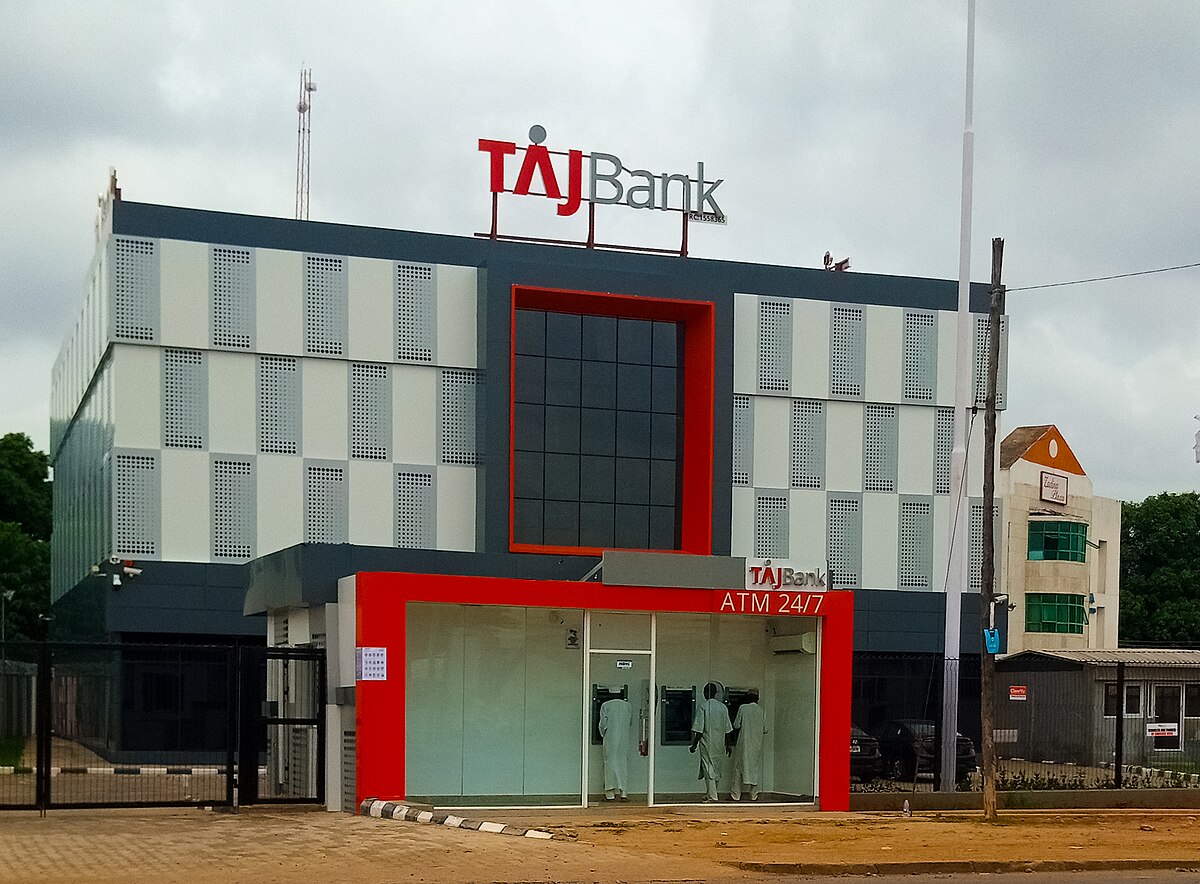
TAJ Bank Ltd has once again found itself at the centre of a major financial crisis after a system malfunction in March 2025 led to the unauthorized transfer of N957.4 million to various customer accounts across 26 banks and fintech platforms.
This marks the second such incident in less than a year, following a 2024 glitch that resulted in a N139.6 million loss.
In a surprising turn of events, the bank has withdrawn a legal suit filed at the Federal High Court in Abuja, which had sought the freezing and reversal of the disputed funds.
Court documents show that TAJ Bank filed the suit on June 11, 2025, arguing that the money had been illegally debited from its system due to a glitch on March 9 and 10 and subsequently transferred to customers of the 26 named institutions.
According to the documents, TAJ Bank sought an interim order directing the banks and fintechs to freeze and reverse the funds based on Central Bank of Nigeria (CBN) regulations including the BVN Operations and Watchlist Framework (2017), and other guidelines on transaction reversals and fraud prevention.
The bank described the funds as “illegally debited” and warned of “untold hardship and dire financial loss” if urgent action was not taken.
READ ALSO: Fidelity Bank launches free digital tools for 100 SMEs
TAJ Bank also argued that the institutions had a regulatory obligation under CBN rules to block and reverse funds traced to fraudulent or erroneous transactions, and urged the court to compel compliance. It stated that failure to act could allow dishonest users to abuse the system and escape accountability.
At a court session on June 27, TAJ Bank’s legal representative, Rilwanu Idris, Esq., urged Justice Muhammad Umar to grant an ex-parte order freezing the affected accounts to prevent further dissipation of the funds.
“If you ask them [the financial institutions] to produce the money, they will,” he argued, assuring the court that the bank would take steps to ensure that no party would suffer unfair consequences.
However, Justice Umar declined the application, ruling that the financial institutions must be put on notice and properly served with the bank’s legal processes. The case was subsequently adjourned to July 21, 2025.
At the resumed hearing, TAJ Bank’s new legal counsel, T. O. Nworie, announced the bank’s decision to withdraw the suit, filing a Notice of Discontinuance dated July 17, 2025.
No specific reason was disclosed in open court for the withdrawal. Justice Umar formally struck out the case following the bank’s request.
The development contrasts sharply with the outcome of a similar glitch in August 2024, when the Federal High Court, under Justice Peter Lifu, granted TAJ Bank an interim freezing order involving Fair Money Microfinance Bank and other institutions. That ruling led to the reversal of ₦139.6 million in erroneously credited funds.
TAJ Bank’s recent case highlights the complexity of legal recoveries in the financial sector when technical errors result in widespread unauthorized transfers.
Legal experts suggest that even where clear trails of funds exist, the success of recovery efforts depends heavily on timely court intervention, cooperation from financial institutions, and robust internal controls.
Speaking on the incident, Dr. Tope Fasoranti, an economist and digital transformation consultant, said the situation illustrates the growing vulnerabilities within Nigeria’s digital banking infrastructure.
“We need stronger cybersecurity frameworks, automated safeguards, and rapid response systems,” he advised. “There also has to be institutional collaboration and regulatory vigilance to detect and mitigate internal fraud and technical failures.”
He warned that the increasing digitization of banking services demands greater awareness, investment in risk management, and customer education. “It’s no longer enough to have digital infrastructure—it must be secure, agile, and responsive to anomalies,” Fasoranti said.
According to the Nigeria Interbank Settlement System (NIBSS), Nigerian banks lost a total of N52.26 billion in fraud-related incidents in 2024 from over 70,000 transactions, a steep increase from N11.61 billion in 2023.
The majority of these losses were traced to electronic channels, often aided by insider collusion or social engineering scams targeting unsuspecting customers.



 Football3 days ago
 Energy1 week ago
 Crime1 week ago
 Football1 week ago
 Business1 week ago
 Crime1 week ago
 Business1 week ago