The Federal Government under President Bola Ahmed Tinubu will, in the next two years, invest more in Nigeria’s railway infrastructure than all previous administrations combined, according to Dr. Kayode Opeifa, Managing Director of the Nigerian Railway Corporation (NRC).
Dr. Opeifa made the bold declaration on Thursday, June 19, 2025, while delivering a keynote paper at the 11th Nigeria Transport Lecture (NTL), organised by Transport Day Media in Lagos.
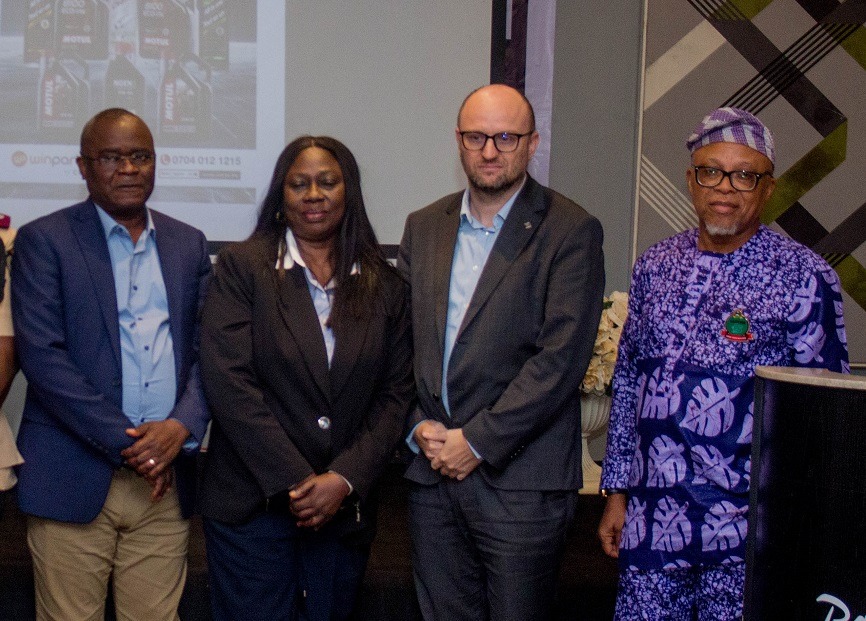
The event attracted key stakeholders from federal and state governments, the private sector, and the transport and logistics ecosystem.
Speaking on the topic “Sustainable Transformation System in Nigeria: A Pathway to Economic Prosperity,” Opeifa said the renewed focus on rail development is already yielding transformative gains, noting that current and upcoming investments would eclipse the country’s cumulative rail sector spending of the last six decades.
He attributed this possibility to key reforms undertaken by the Tinubu administration, including the removal of fuel subsidy, the unification of exchange rates, and the constitutional amendment that moved rail transportation from the exclusive to the concurrent legislative list — allowing state governments to invest directly in railway development.
“President Tinubu has done excellently well by freeing up resources previously wasted on fuel subsidy and by harmonizing exchange rates. These bold decisions are redirecting funding to strategic sectors like transportation,” Opeifa stated.
READ ALSO: Tinubu congratulates Gov Sanwo-Olu on 60th Birthday, Hails Lagos development efforts
He praised the administration for embarking on historic infrastructure projects, such as the long-abandoned Badagry-Sokoto Super Highway, the Lagos-Calabar coastal highway, and the Presidential CNG Initiative (Pi-CNG).
He also acknowledged grants being extended to states for intra-city and regional rail development, describing them as a significant step toward achieving a modern, multimodal transport system.
Opeifa applauded the efforts of states like Lagos and Abuja, which he described as having the most impressive transport systems in the country. He further highlighted transportation progress in Kano, Kaduna, Delta, Edo, Oyo, Ogun, and others. In the northern region, states like Adamawa, Taraba, Borno, Sokoto, Katsina, Kogi, and Gombe were commended for investing in intra- and inter-state transport networks.
He also observed that private sector involvement in interstate transport services was more pronounced in the South-East, where commercial operators continue to bridge mobility gaps despite infrastructure constraints.
While commending ongoing efforts, the NRC boss stressed that achieving a fully sustainable transportation system would require both short- and long-term strategies. These, he said, must be anchored on collaboration between the government, private sector, development partners, and donor agencies.
Despite progress, Opeifa cautioned that longstanding challenges—such as infrastructure deficits, insecurity, labour union tensions, decarbonisation lags, and policy inconsistency—continue to hamper sustainable development in the sector.
The 11th Nigeria Transport Lecture drew participation from high-profile stakeholders, including representatives of the Lagos State Government, Federal Road Safety Corps (FRSC), Federal Airports Authority of Nigeria (FAAN), National Automotive Design and Development Council (NADDC), Julius Berger Nigeria Plc, Nahco Aviance Plc, Nexant Consulting, and numerous transport and logistics firms.
The forum provided an avenue for public-private dialogue on the future of Nigeria’s transport infrastructure and the urgent need for integrated solutions to support the country’s economic transformation agenda.




 Football5 days ago
 Crime6 days ago
 News1 week ago
 Crime1 week ago
 Business6 days ago
 Business4 days ago
 Business7 days ago
 Football6 days ago