
Crime
Customs, NAFDAC Launch Joint Committee to Enforce 2024 Drug, Border Safety Pact.

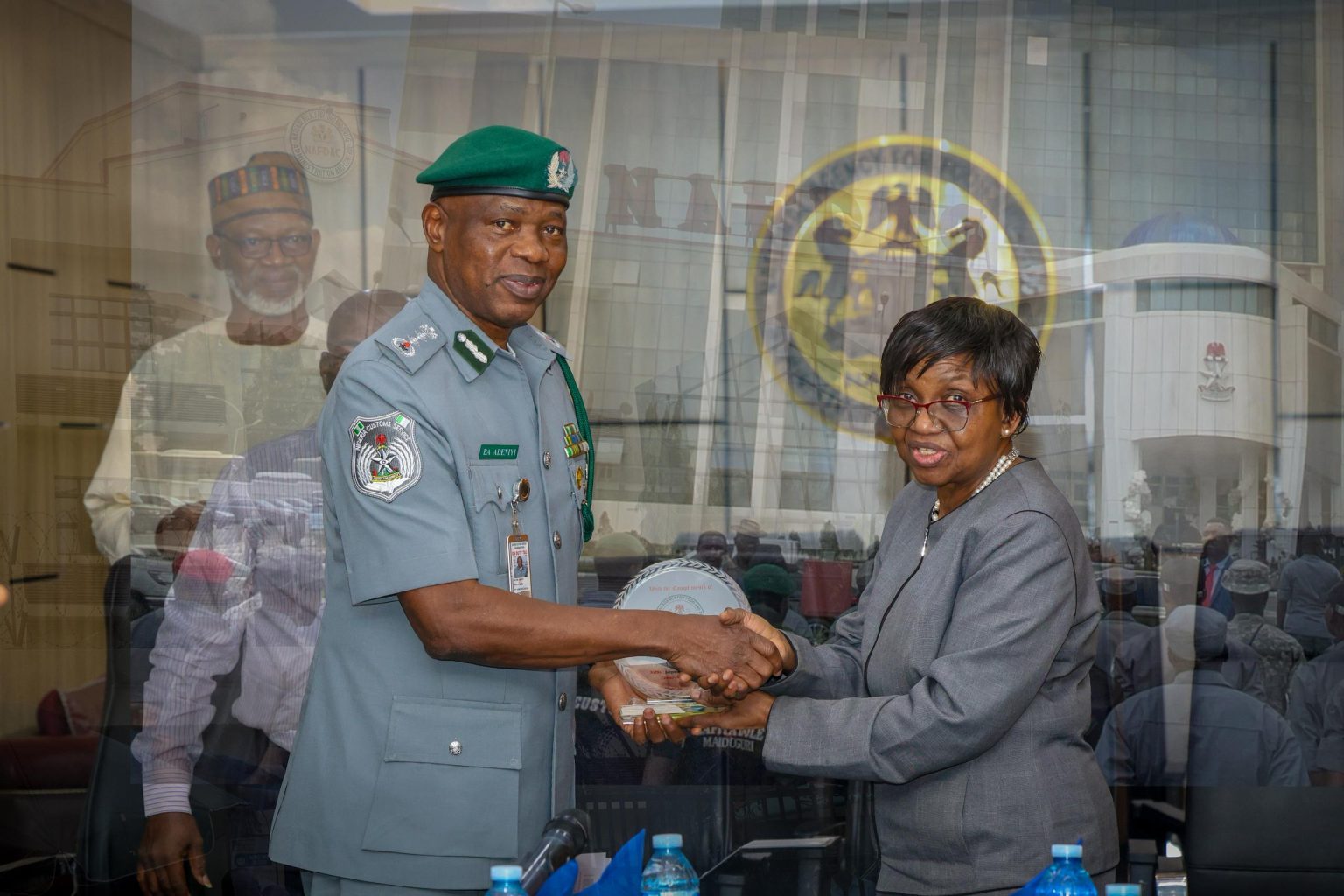
In a country where borders often bleed and counterfeit drugs slip through invisible cracks, two of Nigeria’s most critical agencies have taken a decisive step from rhetoric to enforcement.
On Wednesday, July 9, 2025, the Comptroller-General of Customs, Adewale Adeniyi, visited the Director-General of the National Agency for Food and Drug Administration and Control (NAFDAC), Professor Moji Adeyeye, at her Abuja office to inaugurate a Joint Implementation Committee tasked with enforcing the 2024 Memorandum of Understanding between their two agencies.

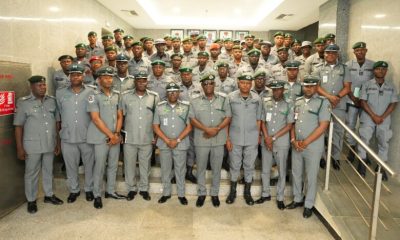
Adewale Adeniyi, during the visit to the Director-General of the National Agency for Food and Drug Administration and Control (NAFDAC), Professor Moji Adeyeye
Signed on November 14, 2024, during the CGC’s Annual Conference, the MoU was born out of growing concern over the influx of fake pharmaceuticals, harmful consumables, and illicit cross-border substances. But with the inauguration of this committee, the document moves from promise to policy, from ambition to action.
READ ALSO: The Smallest Victims: How Nigeria’s Children Became Prisoners of Our Silence
“This is not just collaboration on paper,” CGC Adeniyi declared. “This committee is the engine room that will drive our shared vision to protect Nigerians from harmful, unregulated substances.”
Flanked by Customs Legal Adviser, Smart Akande, and NAFDAC’s implementation lead, Olakunle Olaniran, the Customs chief laid out a clear roadmap. The Terms of Reference for the committee already exist, guiding its work across five critical pillars: development of a joint operational work plan, coordination of public communication, harmonisation of enforcement standards, training and capacity-building, and the identification of implementation challenges with practical solutions. Adeniyi emphasised that the agreement remains legally binding and is anchored in Nigerian law, offering it both legitimacy and enforceability.
For Prof. Moji Adeyeye, the moment marked a crucial shift from talking about collaboration to actually doing it. She praised the speed of progress and reaffirmed NAFDAC’s institutional commitment. “This is no longer about meetings and memos. It’s about action,” she said. “Regulatory synergy with Customs is central to defeating fake, substandard, and deadly products that threaten lives every day.”
The committee, co-chaired by Olaniran and Akande, represents a rare alignment of vision and muscle in Nigeria’s regulatory space. By bridging the operational powers of Customs with the scientific and regulatory authority of NAFDAC, the initiative aims to create a united front at Nigeria’s porous borders and within its complex pharmaceutical supply chains.
According to a 2023 public health study, more than 17 percent of medicines circulating in Nigeria’s informal markets are either counterfeit or substandard. Beyond the statistics lie stories of broken families, failed treatments, and a deepening mistrust in the system meant to heal. The economic damage is immense, but the human cost is far more devastating.
This joint committee is, in every sense, a test case. A test of willpower. A test of execution. And, perhaps most importantly, a test of whether institutional silos can finally be broken in favour of inter-agency synergy.
If followed through, the Customs and NAFDAC pact may become more than just a model of cooperation it could be a firewall between citizens and disaster. For now, Nigerians are watching. And hoping that this pact isn’t just another document tucked away in a dusty file, but the beginning of a border that finally holds.









-

 Latest1 day ago
Pastor Chris Oyakhilome announces mother’s passing at 88 [VIDEO]
-

 Football4 days ago
Saka: England still carry World Cup scar
-

 Business5 days ago
CBN reduces MPR by 350bps to 23% in major monetary policy shift
-

 Comments and Issues6 days ago
Sometimes, goodwill finds us through the people we love
-

 Latest2 days ago
Arsenal eye €70-80m move for Real Madrid star
-

 Business1 week ago
Jetour takes T1 adventure SUV experience to Abuja, targets growing Nigerian market
-

 Football1 week ago
Nigeria vs Colombia: Falconets battle for U-20 World Cup semi-final ticket
-

 Crime2 days ago
Police arrest suspect, launch manhunt for 2 others over Delta Education Director’s death