
Education
Beyond the Classroom: How Nigeria’s Teachers Are Defending Children’s Rights

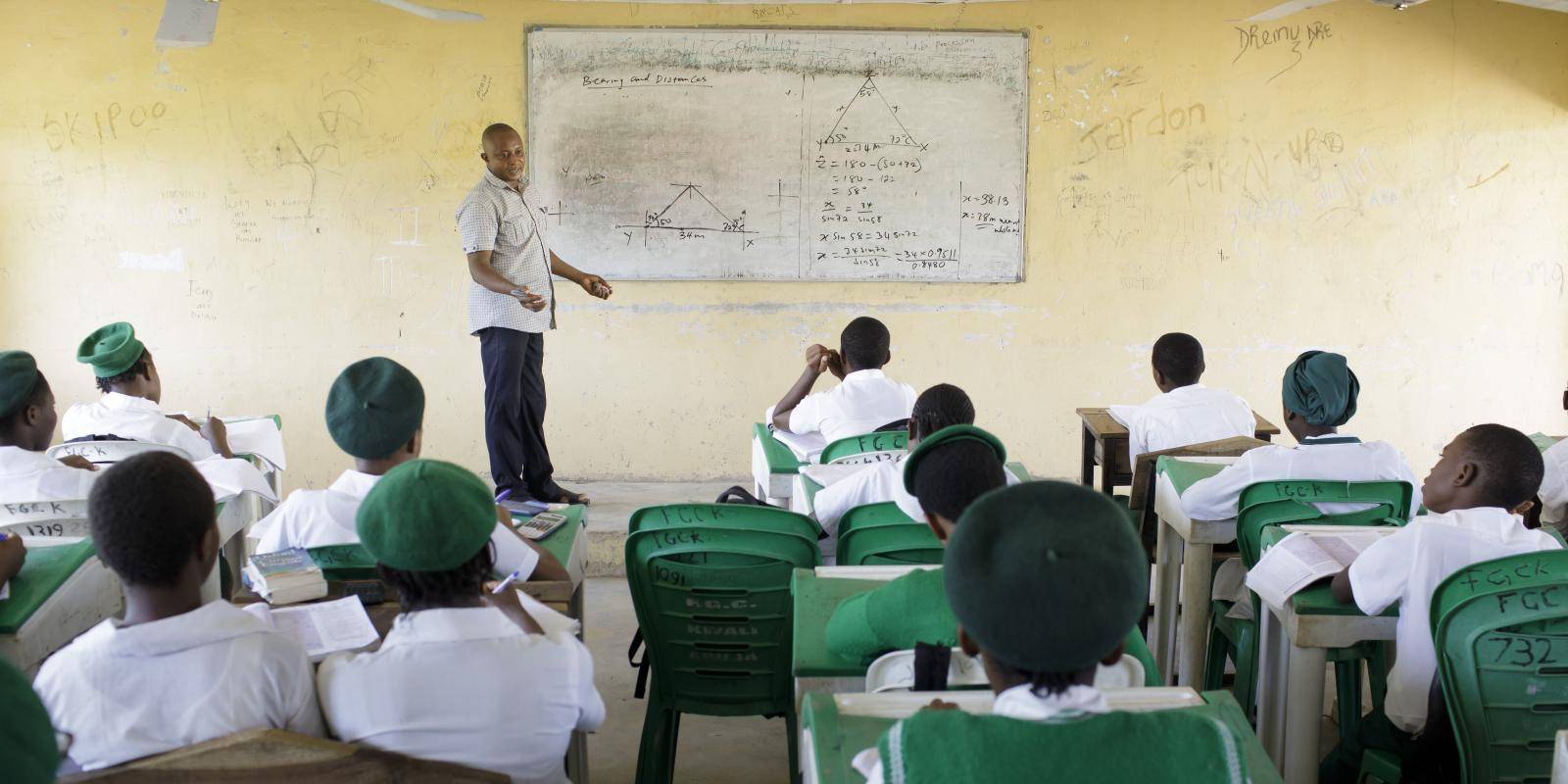
On a hot Tuesday in the North Central region of Nigeria, pupils in pressed uniforms recite multiplication tables while the sound of conflict simmers in the distance. Their teacher, Mustapha, moves desk to desk, checking sums and smiles. On the wall, painted in careful strokes, are the words: “The school where every child matters.” It is not just a motto; it is a promise. Mustapha founded the school to keep education alive for children orphaned or displaced by violence, offering free classes, and psychosocial support. “This is the place where every child matters, no matter what religion, background or culture,” he says. “Our aim is to make positive changes in their lives.”
Across Nigeria, teachers like Mustapha are doing more than teaching; they are defending children’s rights, often at great personal cost. UNICEF reports that an estimated 10.2 million primary-school-age children and 8.1 million lower and upper secondary-school-age adolescents are out of school, a staggering figure that represents millions of interrupted dreams. At the same time, six in ten Nigerian children experience some form of violence before age 18, while one in four girls and one in ten boys are subjected to sexual violence, most without ever receiving help.
READ ALSO:The Smallest Victims: How Nigeria’s Children Became Prisoners of Our Silence
In Ikorodu, Lagos State, a primary school teacher noticed a young boy who flinched at sudden movements. During playtime she saw bruises and, drawing on her safeguarding training, documented her concerns, alerted the head teacher, and referred the matter to the authorities. The child received care, a suspect was arrested, and the teacher’s vigilance became a lifeline. In the north-west, a guidance counsellor learned during a parent-teacher meeting that a brilliant JSS3 girl might be withdrawn from school for marriage. She mobilised the head teacher, a social worker, and a community leader to intervene, invoking the Child Rights Act and offering an accelerated learning plan. The family agreed to postpone marriage and keep the girl in school, giving her a chance to finish her education.
Teachers across the country, from the north central to the south south are working to turn their classrooms into sanctuaries safe spaces where children can learn without fear of violence, exploitation, or early marriage. They integrate short, age-appropriate rights lessons into literacy classes, use child-friendly reporting boxes to encourage disclosures, and build referral networks so no report of abuse ends in a dead end. They meet parents and community leaders, challenging harmful practices and resetting norms. Some work in regions where the threat of abduction or attack looms large, implementing trauma-sensitive teaching to help children heal and stay engaged.
A teacher in the classroom during a lecture
These efforts are more than acts of compassion; they are acts of defence under the Convention on the Rights of the Child, to which Nigeria is a signatory. They are grounded in law and policy, but also in courage and care. UNICEF has called for the full implementation of the Minimum Standards for Safe Schools, stressing that ensuring safety in schools is a shared responsibility that requires unwavering commitment.
When a head teacher in north central, Nigeria stands firm against the forces of conflict, when a Lagos primary school teacher documents signs of abuse, or when a counsellor persuades a family to delay child marriage, they are all doing more than their jobs. They are changing the trajectory of children’s lives. In every whisper from a frightened pupil, in every attendance register that marks a girl still in school, and in every safe space they create, these teachers are proving that defending children’s rights is not something that happens far from the blackboard it happens right there, in the heart of the classroom.







-

 Featured5 days ago
Ranking the seven greatest World Cup finals of all time
-
 Business6 days ago
OPay breaks silence on viral September shutdown claim
-

 Latest6 days ago
Tinubu’s FBI records: Omokri challenges claims, cites 2003 Embassy reply
-

 Business4 days ago
X3M Ideas donates 50 Walkie-Talkies to strengthen security operations in Onigbongbo
-

 Latest5 days ago
2027: Atiku vows direct payment of local government funds if elected president
-

 Latest5 days ago
2027: Atiku, Obi absent as opposition begins talks on single presidential candidate
-

 Latest6 days ago
Anambra 2027: INEC, NDC clash over 10 disputed Assembly candidates
-

 Latest6 days ago
Atiku’s attack on Tinubu’s vacation ‘embarrassing, poorly researched’ — Abati