Despite the Federal Government’s aggressive campaign to transition Nigeria’s public transport system to Compressed Natural Gas (CNG) as a cleaner and more cost-effective fuel alternative, actual adoption across the country remains slow.
This sluggish response stands in stark contrast to the government’s narrative, which casts CNG as a silver bullet capable of reducing transportation costs and mitigating environmental degradation.
Since 2023, the Federal Government has reportedly invested over $450 million into developing the country’s CNG value chain. Yet, in Abuja—arguably the most symbolic urban center for pilot implementation—the rollout has fallen short of expectations.
On the surface, the Federal Government appears committed. The Presidential Compressed Natural Gas Initiative (PCNGi) was launched with considerable fanfare, promising the deployment of 11,500 CNG-powered buses across the nation, alongside incentives for converting petrol and diesel vehicles to CNG.
However, on the streets of Abuja, skepticism abounds. “We’ve heard it all before,” said Lawal Usman, a taxi driver operating in Wuse. “First it was subsidy removal, then electric cars. Now it’s CNG. But how do I convert my car? Where are the stations?”
His doubts are echoed by the Abuja chapter of the National Union of Road Transport Workers (NURTW), which cites a lack of awareness, the high cost of vehicle conversion, and the absence of accessible refueling stations as key obstacles. “Right now, CNG exists more on paper than on the road,” said one union official.
Currently, Abuja has only a handful of functioning CNG refueling stations, most of which are located in remote industrial zones, far removed from transport hubs or high-traffic commuter routes. Civil society advocates argue that until this infrastructure gap is closed, adoption will remain sluggish.
“It’s one thing to say CNG is cheaper,” said Oluchi Nwankwo, a transport sustainability advocate. “But if the infrastructure isn’t there, people won’t adopt it. Convenience matters—especially for drivers who are already under financial pressure.”
READ ALSO: CNG vehicles: Risks, realities, experts’ recommendations
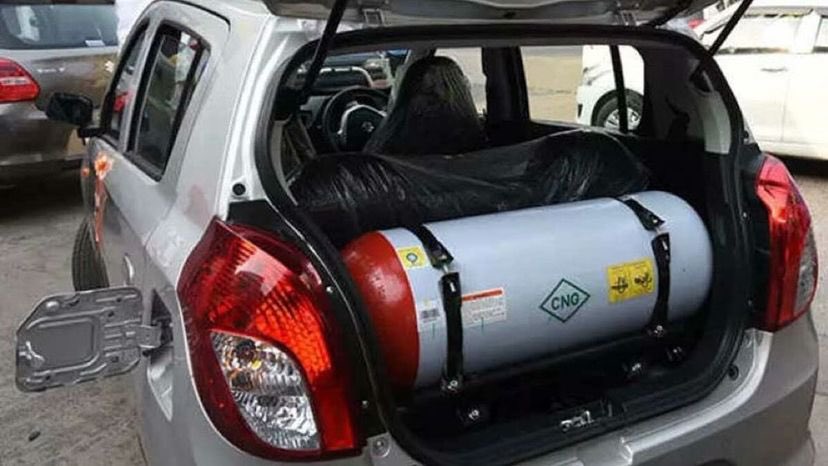
Beyond the infrastructure, cost remains a significant deterrent. Vehicle conversion costs between N300,000 and N600,000, with higher-end conversions reaching over N1 million for SUVs. Without clear subsidies or affordable financing options, many commercial drivers view CNG as financially out of reach.
At KPG Filling Station along the Mararaba-Nyanya Expressway, station manager Musa Alkakli confirmed that uptake has been slow. “We’ve had about 20 requests for conversion in three months. It’s a start, but demand is still modest,” he said.
He noted that a standard sedan like a Toyota Corolla requires CNG kits worth around N835,000, while SUVs can cost over N1 million. Refueling currently ranges between N320 and N350 per kilogram, fluctuating with foreign exchange rates.
Meanwhile, a senior official at the Federal Ministry of Transportation, who spoke anonymously, admitted the rollout has been slower than planned. “CNG adoption is a marathon, not a sprint. We are working to expand access to conversion kits, raise public awareness, and encourage local manufacturing to reduce costs.”
Efforts are underway. PCNGi has begun distributing kits to select transport companies and is collaborating with downstream marketers like NIPCO to expand station networks. But stakeholders insist more needs to be done—and fast.
Engr. Hassan Saidu, former National Chairman of the Nigeria Institution of Highway and Transportation Engineers (NIHTE), emphasized that CNG adoption must go hand-in-hand with comprehensive regulation and safety oversight.
“Do our regulatory authorities have the capacity to enforce CNG conversion standards? Safety isn’t just about the vehicle—it’s about the driver, road conditions, and emergency response.”
He identified five critical pillars for transport safety: trained drivers, road synergy, appropriate speed limits, vehicle standards, and emergency response. “All five must be in place. You can’t cherry-pick,” he warned.
Saidu also questioned the readiness of regulatory agencies. “Are we educating Nigerians about the CNG transition? Are safety standards being enforced? Are we deploying intelligent transport systems (ITS) to improve traffic flow and ensure CNG vehicles move efficiently?”
Dr. Ifeanyi Eze of the Centre for Sustainable Energy Advocacy and Transition echoed similar sentiments. “The economic logic behind CNG is compelling. But this is a systems challenge—technical training, stakeholder coordination, and risk guarantees for investors are essential.”


 Energy7 days ago
 Crime6 days ago
 Football7 days ago
 Business7 days ago
 Crime6 days ago

 Business7 days ago
 Football2 days ago