
Business
Official exchange rate falls to record low of N1,534/$1

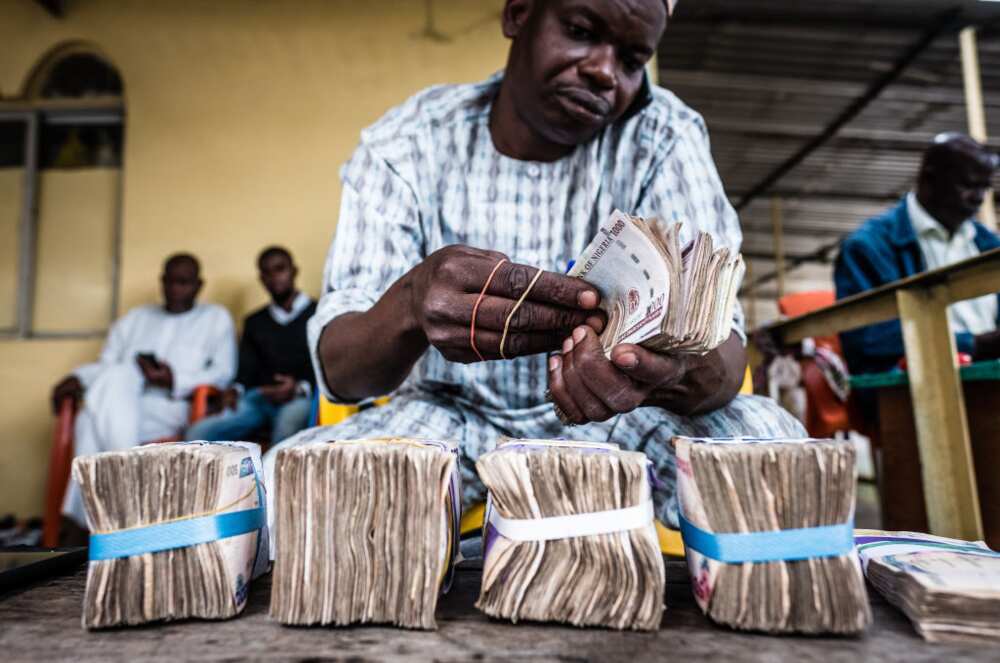
The Nigerian naira plummeted to an all-time low of N1,534.39 per dollar on Monday, accompanied by a staggering 64.69% drop in forex turnover to $89.61 million.
This significant decline, amounting to 4.19% or N64.42 weaker than Friday’s closing rate of N1,469.97, underscores growing concerns regarding the currency’s trajectory.
The unprecedented depreciation observed marks the lowest point in the historical performance of the naira, highlighting the severity of the prevailing economic challenges.
Despite recent efforts by the Central Bank of Nigeria (CBN) to bolster the foreign exchange market through interventions, the currency’s downward trend persists, prompting concerns about its potential impact on the broader economy.
This development is likely to aggravate existing inflationary pressures and further strain household budgets, particularly for those reliant on imported goods.
The implications for businesses, both large and small, are also significant, with potential increases in production costs and challenges in maintaining profitability.
The domestic currency depreciated by 64.42% to close at N1,534.39 to a dollar at the close of business, data from the NAFEM where forex is officially traded, showed.
READ ALSO: Forex crisis: CBN edges towards free float of Naira
This represents an N64.42 loss or a 4.19% decline in the local currency compared to the N1,469.97 it closed on Friday.
The intraday high recorded was N1550/$1, while the intraday low was N1,000/$1, representing a wide spread of N550/$1.
According to data obtained from the official NAFEM window, forex turnover at the close of trading was $89.61 million, representing a 64.69% decrease compared to the previous day.
Similarly, the naira depreciated marginally at the parallel forex market where forex is sold unofficially, the exchange rate quoted at N1,490/$1, a decrease of 0.34% against N1,485 it closed the previous day,
The Great British Pound (GBP) appreciated marginally by 0.27% to close at £1/N1,885 as against £1/N1,890 the previous day while Naira also gained against the Euro by 0.63% to close at N1575/EUR1 against NI585 / EUR1 reported the previous day.
The former President and Chairman Governing council of the Chartered Institute of Stockbrokers (CIS) and the Managing Director of Arthur Steven Asset Management Limited, Mr. Olatunde Amolegbe said for the exchange rate to be stable, market and participants’ confidence is key.
READ ALSO: Breaking: Banks to pay diaspora remittances in Naira
“Confidence is what makes foreigners want to come to invest in your country and make locals want to keep their investments here.
“In the absence of these dynamics, demand will naturally outstrip supply and you see the sort of instability we are experiencing now.
“I think the current efforts of CBN will be positive for market confidence, but the desired impact might manifest in the medium term rather than in the short run.
“I also think the efforts at using monetary policy tools to reduce system liquidity could ultimately reduce currency speculation but again it’s not a silver bullet.
“Deliberate efforts need to intensify at effecting structural changes that will encourage import substitution such as improved security, better infrastructure, increased foreign direct investments, and encouraging local production,” he said.












-
 Latest5 days ago
Full List: Meet the 2026 Nobel Prize winners across six categories
-

 Football4 days ago
Premier League Matchweek 7: Five Fixtures That Could Shape the Weekend
-

 Latest4 days ago
Umahi defends Lagos-Calabar highway route changes amid public outcry
-

 Business3 days ago
Dangote Refinery IPO: 70% Subscription claim meets fourfold demand assertion as investors seek clarity
-
Business4 days ago
Dangote Refinery IPO Extension: Was the 70% subscription report overhyped?
-

 Latest2 days ago
UCTH faces morgue crisis as 50 unclaimed corpses await mass burial
-

 Featured4 days ago
El-Rufai, ADC governorship candidate’s court appearance puts Kaduna opposition politics in focus
-

 Latest5 days ago
Makinde’s Chief of Staff, Segun Ogunwuyi, resigns