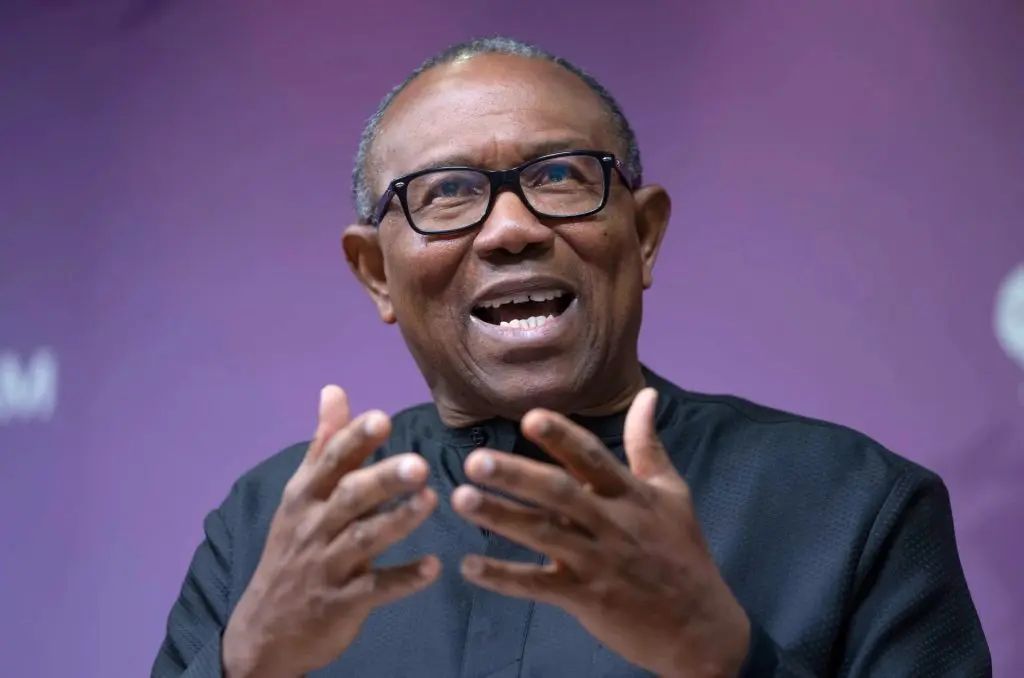
Labour Party leader and former presidential candidate Mr. Peter Obi has addressed renewed scrutiny over his past involvement with the regime of the late Head of State, General Sani Abacha, offering what he described as a clarification “in the interest of truth and posterity.”
In a statement posted Wednesday via his official X (formerly Twitter) account, Obi shared an official letter from the 1990s documenting his appointment to a presidential taskforce on port decongestion, established during the Abacha administration.
The taskforce, according to Obi, was created to tackle widespread inefficiencies and delays in clearing goods at Nigerian seaports—a major concern for the business community at the time. The delays had disrupted economic activity and driven up the cost of doing business in the country.
“As I stated during my interview at the weekend and have consistently maintained, I had never met General Sani Abacha before that encounter,” Obi wrote.
Obi emphasized that his involvement was not politically motivated, but rather the result of collective action taken by traders and importers—himself included—who were deeply affected by the port crisis.
READ ALSO: Peter Obi blames leadership failure for rising youth violence
“Our meeting with him was borne out of collective concern as traders and importers over the prolonged delays in clearing goods at the ports,” he said. “We approached him not as political actors, but as concerned citizens seeking pragmatic solutions.”
Obi explained that the objective of the meeting and the taskforce was to advocate for greater efficiency in port operations—a purely civic and economic mission aimed at easing trade disruptions and supporting national productivity.
“Our intention was clear: to advocate for efficiency and propose practical steps toward restoring normalcy in port operations for the benefit of the wider business community and the Nigerian economy.”
Addressing suggestions that his involvement with the military regime indicated political opportunism, Obi strongly refuted the claims. He described the renewed attention as part of a campaign by “mischief makers with ulterior motives.”
“I don’t expect this copious evidence to bury this Abacha case because the mischief makers have ulterior motives,” Obi said. “But it’s being placed in the public space for posterity and in line with my transparency pledge to Nigerians on any issue I am involved in.”
Obi concluded his statement by reaffirming his longstanding commitment to transparency and civic responsibility, noting that he has always welcomed public accountability on his actions in both public and private service.
The clarification comes amid an ongoing wave of political commentary and renewed interest in the history of Nigeria’s democratic actors, particularly those who had indirect roles during the country’s long military era.


 Football1 week ago
 Business6 days ago
 Business6 days ago
 Latest5 days ago
 Business7 days ago
 Football7 days ago
 Business1 week ago
 Crime1 week ago