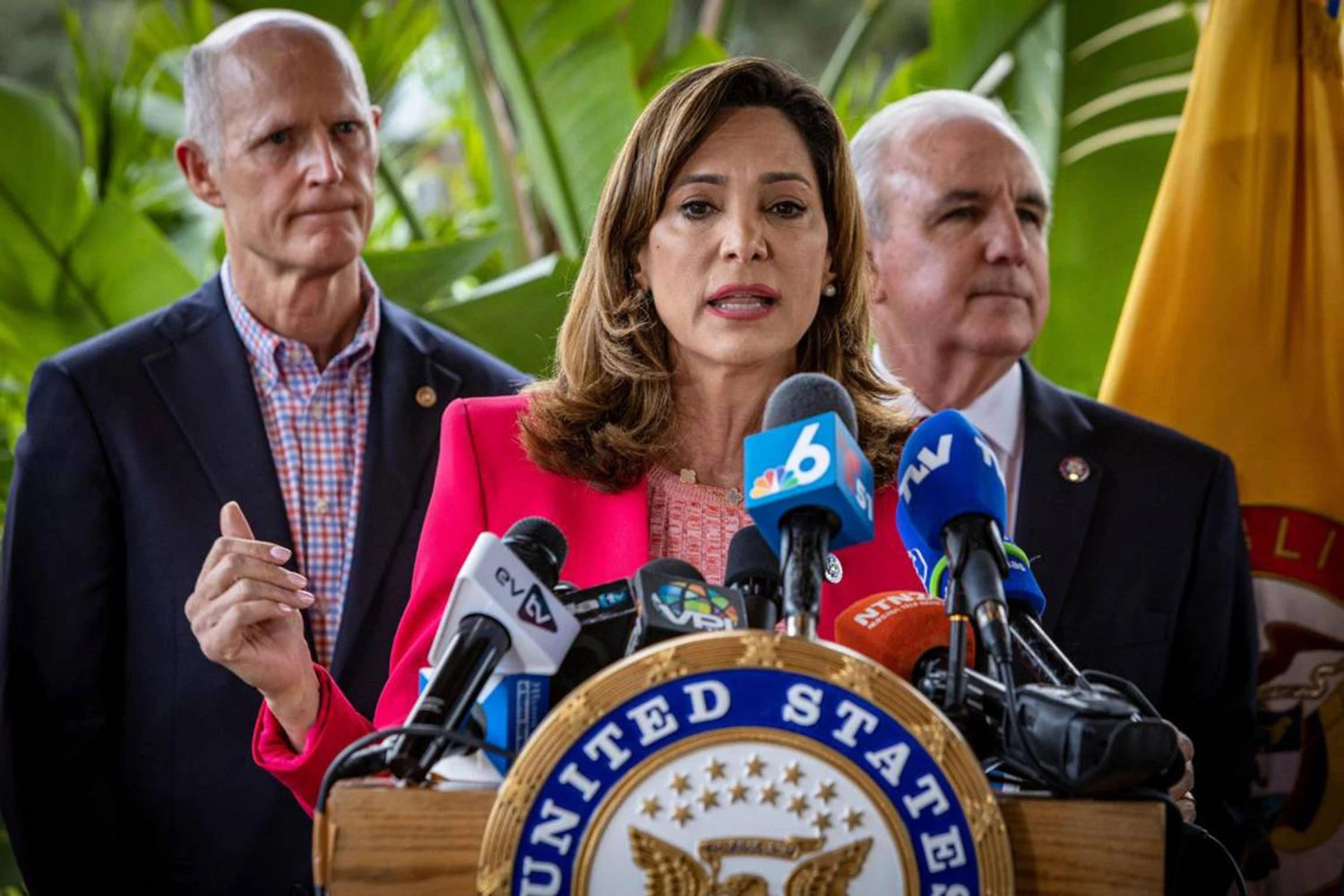
A member of the United States Congress, Maria Elvira Salazar, has expressed concern over what she described as efforts by Nigeria’s current administration to downplay the scale of insecurity and religious violence in the country.
In a statement circulated on social media, the lawmaker criticised what she characterised as insufficient transparency and urgency in addressing security challenges, particularly attacks affecting Christian communities in parts of Nigeria. She argued that the situation requires stronger international attention and action.
Salazar said she stands with Donald Trump and members of the Republican caucus in asserting that the United States should not remain passive in the face of alleged religious persecution and escalating violence.
The congresswoman further called for accountability measures, including potential sanctions and other punitive steps, against individuals deemed responsible for ongoing attacks. She urged additional members of Congress to join what she described as efforts to ensure consequences for perpetrators of violence.
READ ALSO: Northern Nigeria’s education system under siege amid growing insecurity
Nigeria has grappled with a complex web of security challenges over the past decade, including insurgency in the North-East, banditry in the North-West, communal clashes, and kidnappings for ransom.
Religious and ethnic tensions have at times intersected with these conflicts, though Nigerian authorities have frequently maintained that many of the attacks are driven more by criminality, resource competition, and insurgency than by religious targeting alone.
The Nigerian government has repeatedly stated that it is committed to addressing insecurity through military operations, intelligence reforms, and community engagement strategies. Officials have also rejected allegations that the state is indifferent to violence affecting any religious group, insisting that security forces are working to protect all citizens regardless of faith or ethnicity.
Salazar’s remarks reflect ongoing debates within U.S. policy circles about how Washington should respond to human rights and security concerns in strategic partner nations. While some lawmakers have advocated for stronger measures, others have emphasised diplomatic engagement and security cooperation as key tools in addressing instability in West Africa’s largest economy.
As discussions continue, observers note that U.S.-Nigeria relations remain multifaceted, encompassing counterterrorism collaboration, trade, and regional stability efforts, even amid growing scrutiny over human rights and security developments.



 Latest7 days ago
 Latest1 week ago
 Football7 days ago
 Business5 days ago
 Business6 days ago
 Comments and Issues4 days ago
 Crime5 days ago