
News
Economists score Tinubu’s ‘Renewed Hope’ low on cost of living, despite economic stabilisation gains

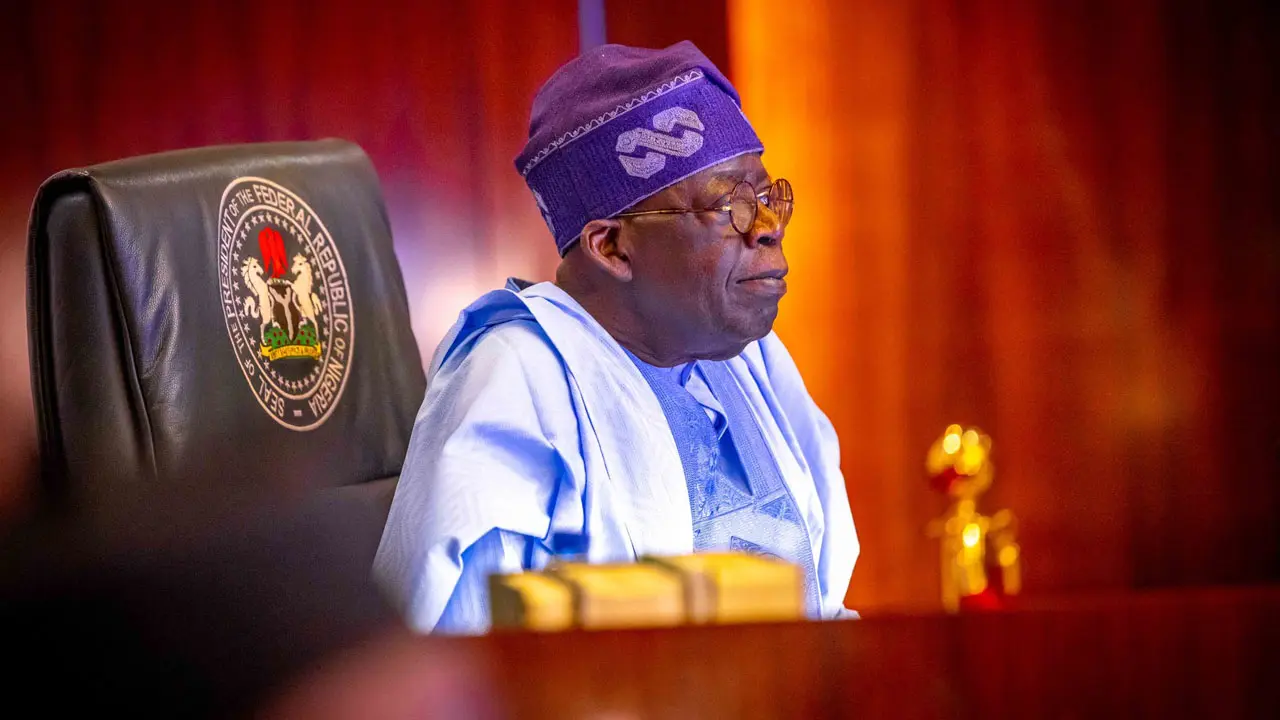
As President Bola Ahmed Tinubu’s administration marks its second anniversary on May 29, 2025, a wave of mixed reactions has trailed his economic policies, with economists and financial analysts giving the government low marks on improving the cost of living, despite some success in stabilising Nigeria’s troubled economy.
When President Tinubu took office on May 29, 2023, he made two seismic policy announcements: the removal of fuel subsidy and the unification of the exchange rate through the floating of the naira.
While these reforms were lauded by market liberalisation advocates, they unleashed an inflationary spiral that has left millions of Nigerians grappling with hardship.
Immediately after the subsidy was removed, fuel prices jumped from ₦198 to ₦540 per litre, and have since soared to between ₦875 and ₦920, depending on location. The naira, which traded at ₦460.70/$ in May 2023, depreciated steeply to ₦1,579.40/$ as of Monday.
These developments triggered a surge in inflation, significantly impacting the cost of living. Transportation, food, and other essential services have seen massive price hikes.
According to the National Bureau of Statistics (NBS), inflation reached 23.71% in April 2025, up from 22.22% in April 2023, eroding the purchasing power of many households.
Although the federal government introduced a new ₦70,000 minimum wage in July 2024 to cushion the effects, analysts argue that the impact has been watered down by surging inflation.
The same inflationary pressure has also devalued increased Federation Account Allocation Committee (FAAC) disbursements to federal, state, and local governments.
READ ALSO: Tinubu, South East and Umahi’s good boy antics
Speaking on the administration’s performance, Muda Yusuf, CEO of the Centre for the Promotion of Private Enterprise (CPPE), acknowledged that the government has made some headway in addressing long-term economic imbalances.
He stated that Tinubu’s economic team spent the last two years fixing fundamental structural issues and stabilising the macroeconomic environment.
“There’s no doubt the GDP has dropped drastically in dollar terms,” Yusuf said, attributing the decline more to exchange rate adjustments than actual economic contraction. “We must distinguish between a shrinking GDP caused by real economic slowdown and one caused by a depreciating currency.”
He emphasized that the real issue facing Nigerians is the deteriorating cost of living, exacerbated by inflation, which in turn has increased poverty and widened income inequality.
“The reforms triggered serious inflationary pressure. That’s why we have so much poverty now,” he said. “It has had a devastating effect on the well-being of citizens and the profitability of businesses.”
Yusuf noted some areas of progress, such as improved investor confidence due to exchange rate stability in the past 10 months, higher government revenue, and ongoing efforts to support local refining, including Dangote Refinery and revamps at Warri and Port Harcourt.
However, he stressed that these achievements have yet to translate into relief for the average Nigerian.
He called for urgent recalibration of fiscal, monetary, and trade policies to reduce the cost of living, improve access to basic needs like food, housing, education, and healthcare, and reduce the 27.5% benchmark interest rate that stifles business growth.
Echoing similar sentiments, Gbolade Idakolo, CEO of SD & D Capital Management, acknowledged the suffering endured by Nigerians but insisted that the government is on the right path.
READ ALSO: Bello El-rufai backs Tinubu for 2027, defies father’s SDP defection
“Despite unpopular decisions, the administration has managed to stabilise the economy,” Idakolo said. “Foreign reserves have improved, the naira is gaining strength, and GDP per capita income has reportedly increased from $200 billion to over $450 billion.”
He praised the federal government’s policy shift that increased FAAC allocations, promoted local production, and saw the establishment of six regional development commissions.
He also cited major infrastructure projects like the Lagos-Calabar Coastal Highway and reforms in the petroleum sector as positive strides.
Idakolo noted that the administration paid off the COVID-19 IMF loan from the previous government, thereby reducing foreign debt and debt servicing costs.
Still, he conceded that the average Nigerian has endured economic hardship over the past two years, saying: “The living standard has seriously declined, but continuing with the policies of the previous administration would have led to total chaos.”
As Tinubu’s “Renewed Hope” administration enters its third year, the burden now lies in shifting from stabilisation to recovery—ensuring economic gains reach households and businesses alike, especially the most vulnerable.
Analysts agree that success in the coming years will depend on how effectively the government addresses the cost of living crisis and reforms its policies to promote inclusive growth


-

 Football1 week ago
Banda, Chawinga make 2026 Women’s Ballon d’Or top 30 shortlist
-

 Trending Stories6 days ago
Davido, Wizkid, Burna Boy or Asake: Who is having the biggest 2026 so far?
-
 Featured1 week ago
Peter Obi, Makinde and the 2027 elections: Can unity really challenge APC?
-
 Football5 days ago
Premier League releases 2026/27 festive fixtures, 7 matches set for Boxing Day
-

 Business4 days ago
Jetour Nigeria, dealers take dashing, other models to Abuja Experience
-

 Crime5 days ago
Anambra Police arrest mother over alleged child sexual exploitation
-

 Business5 days ago
Dangote Refinery IPO shifts spotlight to corporate governance, investor protection
-

 Energy7 days ago
Brent crude tops $100: What higher oil prices mean for Nigeria