
Latest
Deadly Ceuta border crisis raises fresh questions over Europe migration policy

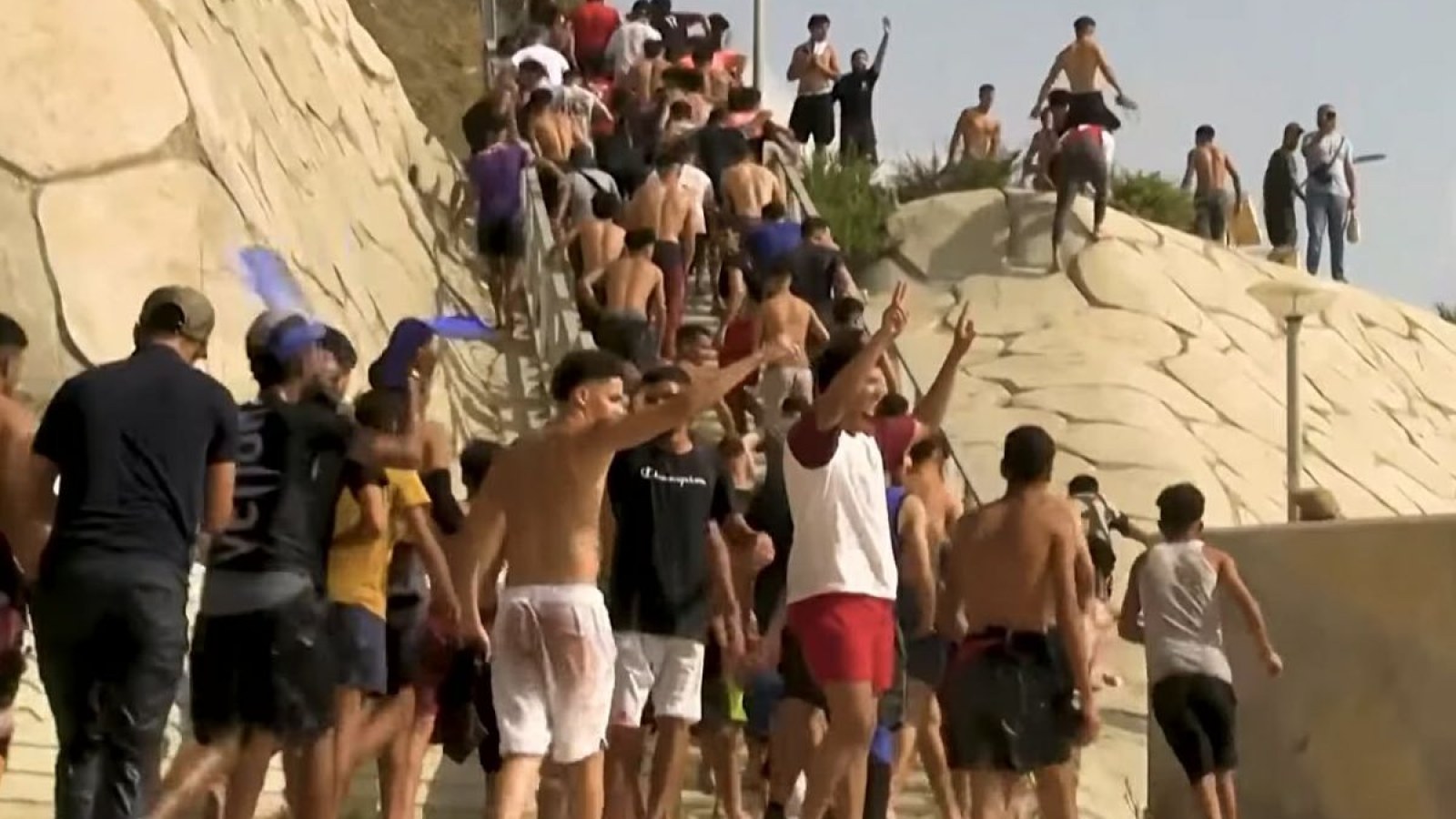
At least 18 migrants have lost their lives in one of the deadliest attempts to reach the Spanish enclave of Ceuta in recent years, as an unprecedented wave of thousands crossed from neighbouring Morocco by land and sea, overwhelming Spanish border authorities and prompting the deployment of the military.
The fatalities, mostly caused by drowning and a deadly stampede near the Tarajal border crossing, have highlighted the growing humanitarian and security challenges unfolding along Europe’s southern frontier.
Ceuta, an autonomous Spanish city located on the North African coast and sharing a land border with Morocco, has long served as a gateway for migrants seeking entry into Europe. However, the scale of the latest influx has stunned officials on both sides of the border.
According to Spanish authorities, an estimated 49,000 migrants entered Ceuta within a 24-hour period, making it one of the largest recorded surges into the enclave.
Migrants reportedly crossed by swimming around border barriers, climbing breakwaters, and attempting to breach security fences separating Morocco from the Spanish territory.
A police source told AFP on Friday that authorities were unable to determine exactly how many people entered the enclave overnight due to the continuous flow of arrivals.
READ ALSO; Spain reinforces Ceuta border after thousands of migrants cross from Morocco
“There was a steady stream of people all night long,” the source said, adding that although the pace slowed after daylight, migrants “continued to arrive overnight and are still arriving” on Friday morning.
The first reports of the mass crossings emerged on Wednesday, with the situation escalating dramatically by Thursday.
Rachid Sbihi, head of the local workers’ association representing Spain’s Civil Guard officers, said most of the victims drowned while attempting to swim into Ceuta.
Others were killed in a crush as crowds rushed to cross the heavily fortified breakwater fence at Tarajal beach, one of the enclave’s principal entry points.
Video footage circulating on Thursday showed hundreds of migrants, predominantly Moroccan nationals, navigating the rocky breakwaters before spilling onto roads inside Ceuta.
While many of those making the crossing were young men, families with women and small children were also seen undertaking the dangerous journey.
The deaths have intensified concerns among humanitarian organisations about the risks migrants face while attempting irregular crossings into Europe.
Authorities have yet to establish what triggered the sudden movement of tens of thousands of migrants toward Ceuta.
The absence of an official explanation has fuelled speculation over whether deteriorating economic conditions, regional instability, or changes in border enforcement contributed to the unprecedented migration surge.
Ceuta, alongside the nearby Spanish enclave of Melilla, remains one of the European Union’s only land borders with Africa and has historically experienced periodic waves of irregular migration. However, the latest influx far exceeds previous episodes.
In response to the crisis, the Spanish government announced the deployment of military personnel to reinforce Civil Guard officers and restore order in the enclave.
Officials said the armed forces would assist security agencies in maintaining public order and securing the border.
Images released after the announcement showed Spanish soldiers patrolling the frontier alongside armoured military vehicles near the Spanish-Moroccan border.
The heightened security presence reflects growing concerns over the strain the influx is placing on local infrastructure and border management.
Spanish Prime Minister Pedro Sánchez is expected to travel to Ceuta alongside Interior Minister Fernando Grande-Marlaska to assess the situation firsthand and coordinate the government’s response.
The visit comes amid mounting pressure on Madrid to address both the immediate humanitarian emergency and the broader migration challenges facing the country.
The latest tragedy underscores the dangers confronting migrants attempting perilous journeys into Europe, while also exposing the complex political, humanitarian and security issues surrounding migration across the Mediterranean and North African border routes.


-

 Football7 days ago
Banda, Chawinga make 2026 Women’s Ballon d’Or top 30 shortlist
-

 Featured7 days ago
Peter Obi, Makinde and the 2027 elections: Can unity really challenge APC?
-

 Trending Stories5 days ago
Davido, Wizkid, Burna Boy or Asake: Who is having the biggest 2026 so far?
-

 Business1 week ago
Nigeria records N12.59trn trade surplus in Q2 2026 — NBS
-

 Football5 days ago
Premier League releases 2026/27 festive fixtures, 7 matches set for Boxing Day
-

 Business3 days ago
Jetour Nigeria, dealers take dashing, other models to Abuja Experience
-

 Business4 days ago
Dangote Refinery IPO shifts spotlight to corporate governance, investor protection
-

 Crime4 days ago
Anambra Police arrest mother over alleged child sexual exploitation