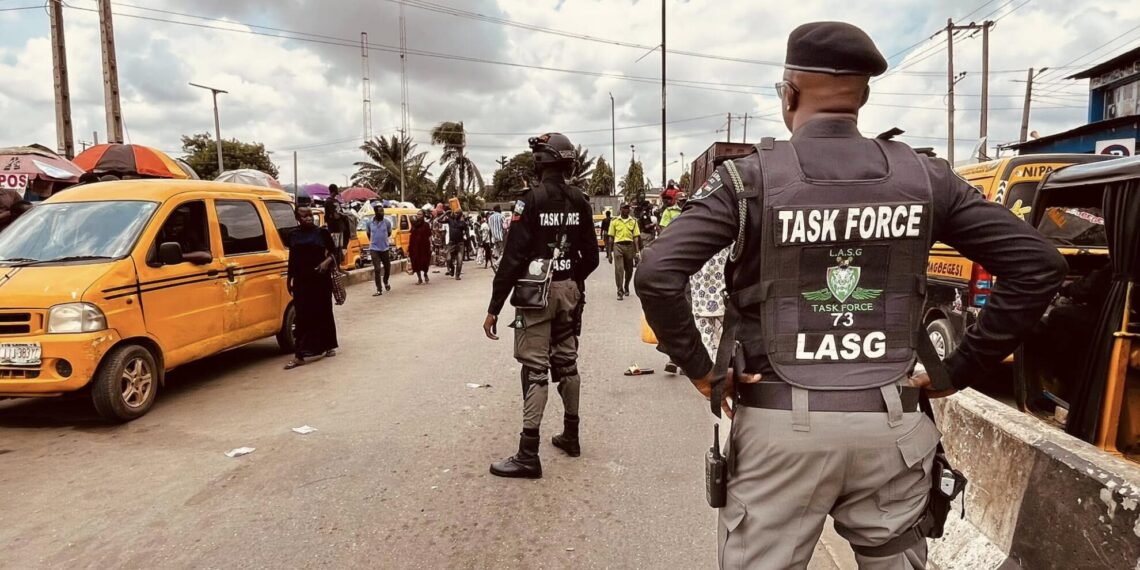
Rising tensions are unfolding across Lagos as an intensified traffic enforcement campaign targets major highways, drawing mixed reactions from commuters and motorists amid allegations of harassment and extortion.
Authorities say the ongoing operation is part of a broader “urban regeneration” strategy aimed at restoring order on key routes such as the Third Mainland Bridge, Lekki-Epe Expressway, and the Oshodi-Apapa corridor. However, residents and road users are increasingly questioning the methods employed by enforcement agencies.
The Lagos State Traffic Management Authority and the Lagos State Task Force have deployed special teams to tackle traffic violations, including one-way driving, illegal parking, and the operation of unauthorized bus stops.
Officials report that more than 230 vehicles were impounded within a week during the exercise. Offences cited include obstruction of pedestrian walkways by commercial buses and private vehicles, lane indiscipline, and the establishment of illegal terminals along major roads.
The Lagos State Special Offences Court has also stepped up enforcement, with sittings in areas such as Ikorodu and Oshodi leading to fines of up to ₦200,000 and, in some cases, vehicle forfeitures.
Despite the government’s justification, public criticism has intensified, particularly on social media, where motorists accuse officials of “predatory enforcement.”
Several residents allege that traffic officers exploit poorly marked roads and hidden signage to penalize unsuspecting drivers. Complaints include arrests for illegal turns or one-way violations in areas where traffic signs are either obscured or poorly positioned.
Some motorists claim enforcement officers deliberately position themselves in concealed locations to apprehend drivers, raising concerns that the exercise is more revenue-driven than safety-focused.
A viral video recently prompted the Lagos State Police Command to open an investigation into claims that officials forced a driver into a traffic violation to extort money. While police authorities later dismissed aspects of the allegation as unfounded, the incident has further fueled public distrust.
The crackdown coincides with ongoing traffic disruptions linked to the reconstruction of the Ajah Bridge along the Lekki-Epe Expressway. The resulting diversion and lane adjustments have contributed to confusion among motorists and a rise in traffic violations.
Although the state government has introduced measures such as dynamic lane-sharing to ease congestion, critics argue that enforcement is being prioritized over infrastructure readiness.
Civil society groups and transport unions have warned that aggressive penalties without adequate road signage, parking facilities, and public awareness risk punishing citizens unfairly.
Lagos State Commissioner for Transportation, Oluwaseun Osiyemi, has urged motorists to explore alternative routes, including the Coastal Road, while emphasizing that traffic officials are deployed to manage, not exploit, road users.
The Ministry of Justice has also defended the role of the Mobile Court, describing it as necessary to maintain order in a megacity where traffic disruptions can have significant economic consequences.
As enforcement intensifies, motorists are being advised to remain vigilant, adhere strictly to traffic rules, and familiarize themselves with existing transport regulations.
With enforcement and public skepticism running high, the situation highlights a growing debate over the balance between traffic control and citizens’ rights in Nigeria’s commercial capital.


 Comments and Issues1 week ago
 Comments and Issues1 week ago
 Business1 week ago
 Comments and Issues1 week ago
 Comments and Issues1 week ago
 Latest6 days ago
 Latest6 days ago