
Education
King’s College not for sale, Akpata says as Old Boys commit ₦100bn to school’s revamp

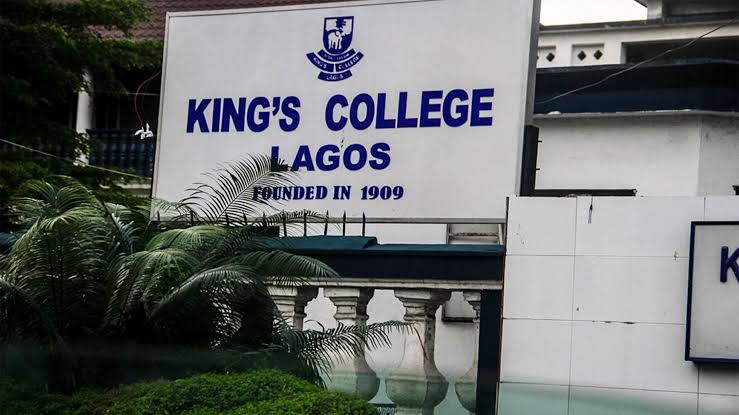
Akpata said the 117-year-old school had not been sold to KCOBA and that the association had no intention of acquiring ownership of the institution.
He made the clarification during an interview with ARISE News on Thursday, amid continuing opposition from some parents, staff unions and other stakeholders to the concession arrangement.
“King’s College has not been sold. We have not bought the school, the school has not been offered to us, and we are not interested in buying our school,” Akpata said.
The controversy followed the Federal Government’s decision to concession the management of King’s College to KCOBA under a public-private partnership arrangement.
The Federal Government has similarly maintained that the agreement does not amount to privatisation or transfer of ownership. Education Minister Tunji Alausa said the government would retain legal ownership and regulatory oversight of the institution.
Under the arrangement, KCOBA is expected to finance, rehabilitate, modernise, operate and maintain the school. The association has said its objective is to restore the institution’s infrastructure and improve the learning environment rather than make a profit from the school.
Akpata said the old boys were prepared to mobilise about ₦100 billion for the development of King’s College, with the funds expected to support infrastructure renewal and other areas of the school’s transformation.
He said financial commitments had begun coming in after the concession agreement was executed, describing the initiative as an effort by former students to rescue their alma mater from years of deterioration.
The association launched a ₦100 billion endowment fund in July, with proposed areas of intervention including infrastructure, teacher development, digital technology, scholarships, research, innovation and student welfare.
Akpata said KCOBA had already invested billions of naira in the institution over the years, including projects involving building renovations, sports facilities, power generators, an information and communications technology laboratory and a library equipped with Braille facilities for visually impaired students.
He argued that the old boys could not continue making ad hoc interventions while the school’s broader infrastructure and management challenges remained unresolved.
“There is no profit motive here; it is all altruistic. We want to look after our mother,” Akpata said, stressing that the association’s objective was to restore the institution to the standards associated with its founders.
The KCOBA president, Kashim Ibrahim-Imam, has also defended the concession, describing it as a rescue mission rather than a transfer of ownership.
In a statement reported by THISDAY, Ibrahim-Imam said the Federal Executive Council had approved the management arrangement on a public-private partnership basis and reiterated that the Federal Government was not selling the school.
He said the association intended to address deteriorating facilities while maintaining King’s College as a public national institution.
The proposed arrangement has, however, generated opposition from sections of the school community.
Parents and staff unions have raised concerns about the implications of the concession for school fees, admissions, staff employment, government funding and the continued public character of the institution.
The controversy intensified in September after the Federal Ministry of Education directed that the handover process to KCOBA should commence following the conclusion of the concession agreement. A transition committee was subsequently established to oversee the process.
Some parents have argued that students admitted into King’s College as a Federal Government unity school should be allowed to complete their education under the existing arrangement. They have also demanded greater transparency regarding the terms of the concession.
KCOBA, however, has sought to reassure parents that the arrangement would not result in increased school fees. The association has also said it plans to improve teachers’ welfare, including increasing the salaries and allowances of teachers who choose to remain at the school under the new management structure.
The association has further pledged that scholarships would be provided for indigent students through the proposed endowment fund and that the cost of education for existing students would not be increased as a result of the arrangement.
For the Federal Government and KCOBA, the concession is being presented as a mechanism for addressing longstanding infrastructure and management challenges at the school. For opponents, however, the central issue remains whether the arrangement could alter the character, affordability and public accountability of one of Nigeria’s best-known Federal Unity Colleges.
Akpata said KCOBA remained willing to engage parents, teachers, unions and other stakeholders to address their concerns.
The Federal Government has meanwhile maintained that King’s College remains government-owned and that the concession concerns its management and development rather than the sale of the institution.
As discussions continue, the ₦100 billion proposed intervention is expected to remain at the centre of the debate over how King’s College should be funded, managed and preserved as a public institution.


-

 Trending Stories1 week ago
Davido, Wizkid, Burna Boy or Asake: Who is having the biggest 2026 so far?
-
 Football1 week ago
Premier League releases 2026/27 festive fixtures, 7 matches set for Boxing Day
-

 Crime6 days ago
Anambra Police arrest mother over alleged child sexual exploitation
-

 Business5 days ago
Jetour Nigeria, dealers take dashing, other models to Abuja Experience
-

 Business6 days ago
Dangote Refinery IPO shifts spotlight to corporate governance, investor protection
-

 Business3 days ago
Dangote IPO rush crashes Bamboo login as investors flood platform
-

 Business2 days ago
Abuja gears up for Jetour T2’s rugged-luxury experience
-

 Business4 days ago
Nigeria Business Outlook: Dangote IPO, markets, inflation and naira in focus this week