
Latest
Mali Defence Minister reportedly killed in coordinated nationwide attacks, family confirms

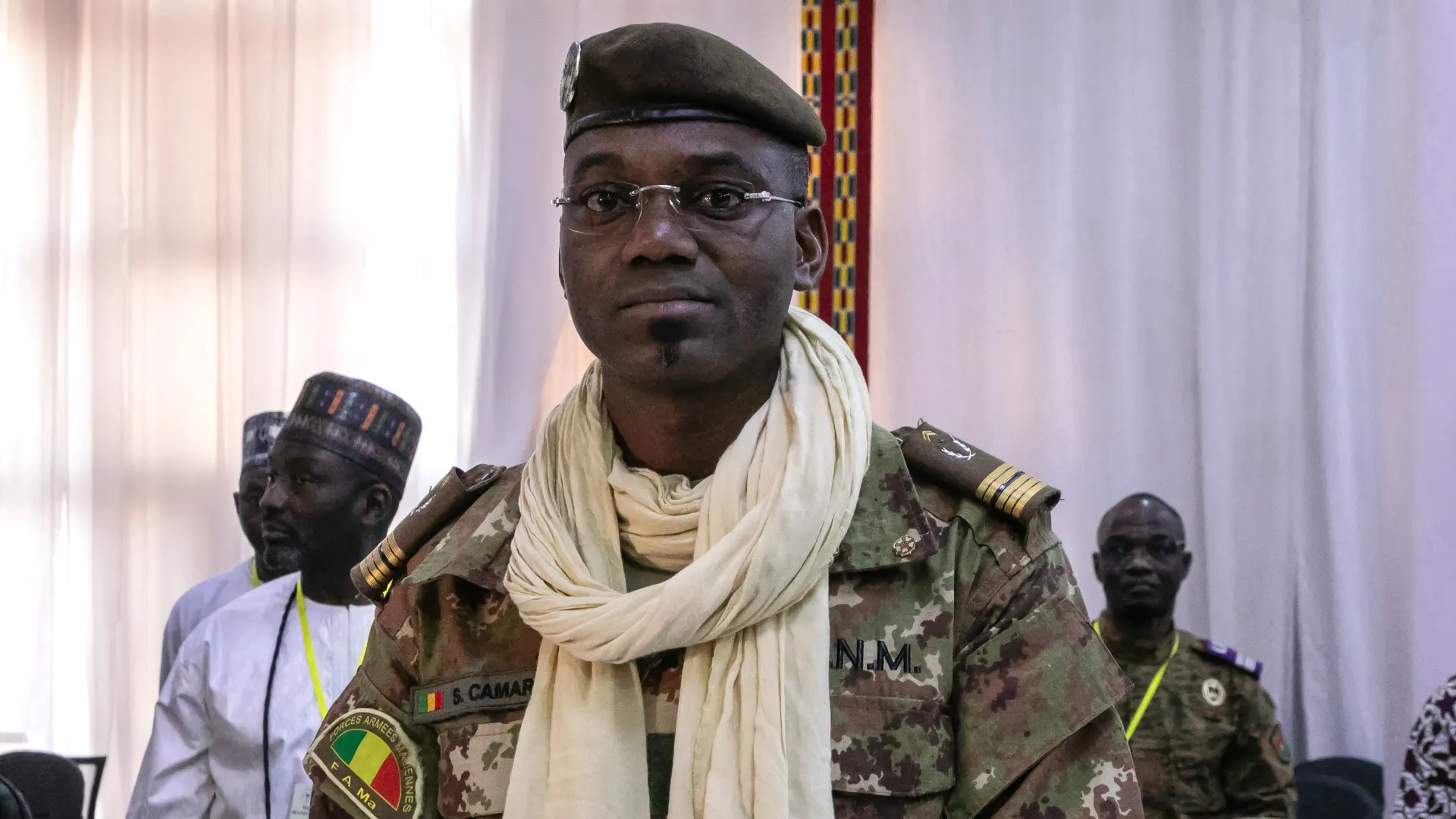
The family of Mali’s Defence Minister, General Sadio Camara, has confirmed his death following a series of coordinated militant attacks that struck multiple locations across the country over the weekend, according to international media reports.
Citing sources including the BBC, reports indicate that Camara was killed in what is believed to have been a suicide truck bombing that targeted his residence near Kati, a strategic military town close to the capital, Bamako.
The reported assassination formed part of a wider offensive attributed to jihadist militants and separatist fighters, who launched simultaneous attacks across several regions of Mali.
International media reports say at least three members of Camara’s family were also killed in the attack. While the military-led government has yet to officially confirm the Defence Minister’s death, the incident is being widely reported by multiple news agencies.
The residence of Mali’s transitional leader, General Assimi Goïta, was also reportedly targeted during the assaults, prompting security forces to relocate him to a secure location as a precaution.
The attacks reportedly spread across key locations including Kati, Gao, Kidal, Sévaré, and Mopti, with clashes erupting between government forces and armed groups in multiple hotspots.
READ ALSO: Malian lawmaker sentenced to 3 years in prison for insulting Ivorian President
Security analysts have described the coordinated assault as one of the most significant militant offensives in Mali in recent years. Ulf Laessing, a Sahel security expert, called it the “largest coordinated jihadist attack on Mali for years,” highlighting the scale and precision of the operation.
Jihadist and Separatist Activity Intensifies
Mali has faced persistent insecurity for more than a decade, driven by armed groups linked to al-Qaeda and the Islamic State, alongside separatist movements operating in the north.
The separatist Azawad Liberation Front (FLA) has continued its campaign for an independent Tuareg homeland in northern Mali, with recent clashes reported in Kidal between the group and government forces.
The FLA has claimed to have reached an agreement with Russia’s Africa Corps forces for a withdrawal from parts of the region, although these claims have not been independently verified. The group also says it has taken control of Kidal and signaled plans to expand operations toward Gao and Timbuktu.
Mali, alongside Niger and Burkina Faso, has recently withdrawn from ECOWAS following military coups that brought their current leaderships to power. The country has been under military rule since General Assimi Goïta seized control in 2020.
Despite earlier promises by the junta to restore stability, large parts of Mali remain outside government control, with insecurity continuing to spread across central and northern regions.
Following the latest wave of violence, authorities imposed a 72-hour nighttime curfew in Bamako, running from 9:00 p.m. to 6:00 a.m., effective April 25, 2026. Security forces have also increased checkpoints, patrols, and search operations across the capital.
The renewed violence has raised alarm over the deteriorating security situation, with experts warning that the simultaneous attacks signal increased coordination between jihadist and separatist factions.
The unfolding crisis underscores the fragility of Mali’s security environment and presents fresh challenges for the military government as it struggles to regain control over escalating insurgencies across the country.


 News7 days ago
Oba Femi Stuns Brock Lesnar in Explosive WrestleMania Debut

 Football1 week ago
Arsenal suffer historic fourth straight domestic defeat after Manchester City loss
 Crime1 week ago
Police launch full investigation after stampede kills three at Ikere hotel party

 Health6 days ago
Study finds higher cancer risk among residents living near factory farms
 Education6 days ago
Why some UTME results are withheld, JAMB explains
 Business6 days ago
Zenith Bank breaks N5trn barrier, emerges Nigeria’s most valuable banking stock

 Health7 days ago
Govt issues nationwide alert after rat poison found in HiPP baby food jar

 Football7 days ago
Lagos to Host NNL Super 4 Draw as Clubs Chase NPFL Promotion