
Comments and Issues
Nigeria: A Return to Post-Fuel Subsidy Removal Contingencies and Palliatives?

Published
3 hours agoon
By
Marcel Okeke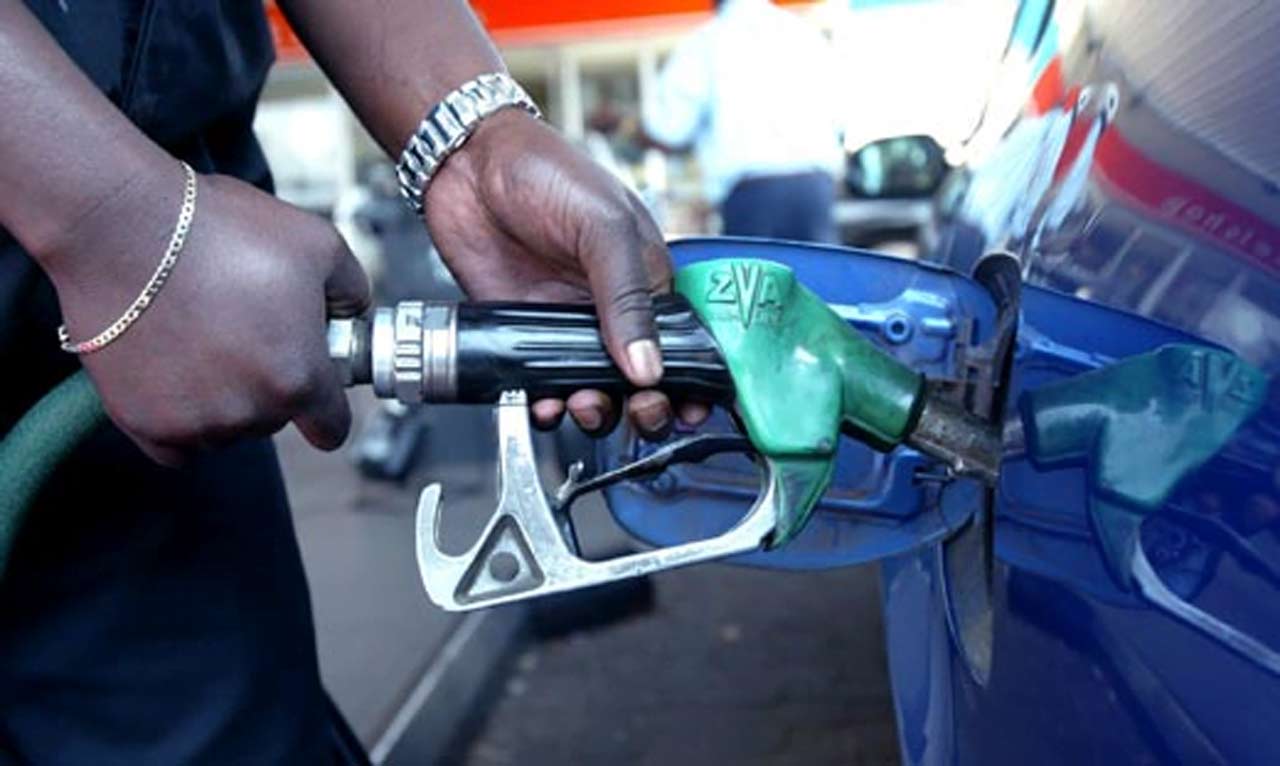
Today, it is obvious that the state of the Nigerian economy is, in almost all respects, the same as the immediate post-fuel subsidy removal time in the second half of 2023. The announcement of fuel subsidy removal by President Bola Ahmed Tinubu on May 29, 2023, during his inauguration, literally threw the Nigerian economy into a tailspin; with all indicators going haywire.
Pump price of petrol (Premium Motor Spirit, PMS) jumped from below N200 per liter to well over N1000 per liter in the last quarter 2023 before settling at around N800 in 2024. Cost of transportation and logistics either tripled or quadrupled in some cases; the same with prices of foodstuffs, house rents and general cost of living. All these triggered a runaway inflationary trend that saw the Consumer Price Index (CPI)—that measures the rate of inflation—hitting almost 35 per cent in December 2024, from about 22 per cent in May 2023.
These led to the impoverishment of millions of Nigerians whose purchasing power had crashed, as economic hardship worsened by the day. Apparently bereft of policy initiatives to effectively stem the tide of mounting poverty and hardship among the citizenry, the powers that be resorted to dishing out palliative packages.
Almost 36 months down the road, the economy seems to have come a full circle: PMS pump price has hit an unprecedented level, standing at the equivalent of a US dollar (that is N1350 or more) per liter. Soaring inflationary trend that was ‘forced’ down through the rebasing of the CPI and changes in the methodology of its computation, has resumed the spiking trajectory. The eleven-month trend of ‘decelerating’ inflation rate—down to 15.06 per cent in February—has resumed acceleration when the rate hit 15.38 percent in March.
At the national and subnational levels, economic hardship keeps spreading like wildfire; with the pangs written on the faces of millions of the citizenry. Apparently to begin to alleviate the high cost of transportation engendered by soaring PMS’ prices, the Federal Government announced plans to distribute one hundred thousand Compressed Natural Gas (CNG) kits countrywide. President Tinubu also announced initiatives to distribute some food items through his Renewed Hope Ambassadors (RHA).
However, the involvement of the RHA—one of Mr. President’s political support groups—as the focal point in the distribution of the palliatives shows the effort as an integral part of Presidential electioneering. And truly, all bags of rice, noodles and condiments being distributed in churches, mosques, market/village squares (as seen in the social media) bear the special logo of President Tinubu’s cap.
Like the immediate post-fuel subsidy removal era, organized labor is practically up in arms, calling for improved wages and welfare for Nigerian workers. Specifically, sequel to the ripple effects of the Middle East crisis, the Nigeria Labor Congress (NLC), commenced demand for an immediate cost of living allowance (COLA), wage awards, and tax reliefs for workers to counter the effect of surging inflation now driven by fuel prices.
President of the NLC, Joe Ajaero, who made the demand also called for the overhauling and expansion of cash transfers to ensure they reach the most vulnerable in the society. The NLC also demanded that the Federal Government should fix public refineries, to avoid any reliance on imported fuel.
In the face of all these, as the Federal Government was cobbling its contingency packages together, many state governments had also embarked on similar palliative measures. For instance, in Borno State, the Governor, Babangida Zulum, unfolded a transport intervention package valued at N1 billion, plus the distribution of 500 electric tricycles to alleviate transportation costs in major towns of the state.
The initiative, which targets the acquisition of about 1000 tricycles (to be given out to the riders), according to reports, is part of the government’s broader strategy to modernize urban mobility, reduce operating costs, and “cushion the economic strain on transporting workers and residents.”
On its part, the Oyo state government has approved a ten thousand naira ‘transport allowance’ for its civil servants. The monthly allowance covers all state and local government workers in the state. According to the state Governor, Seyi Makinde, the allowance which takes effect from April 2026, will be for an initial period of three months, “with possibility of extension, depending on economic conditions.”
In a similar vein, the Ogun state government gave its civil servants a ‘special’ palliative by approving for them a one-day off duty per week “to reduce commuting costs.” In addition, the government approved ten thousand naira transport allowance for every civil servant, beginning from April, 2026, to further “alleviate transportation costs for them”. Many other state governments have also in various ways put some palliatives together since the onset of the ongoing Middle East war that caused spike in PMS’ prices in the country.
Notably, Nigeria recorded the world’s highest petrol price increase at 39.5 per cent between February and March 2026, driven by the US-Iran conflict in the Middle East. The US experienced only 34.7 percent; India recorded no price change, while the UK had only about three percent increase (all according to AI reports).
Meanwhile, in its April 2026 ‘Nigeria Development Update’ (NDU), the World Bank warned that, for most Nigerians, the economic recovery in recent times has yet to translate into better living conditions. According to the NDU report: “wage growth has lagged behind inflation, leaving real incomes under pressure and poverty levels largely unchanged.” The Bank therefore projected that poverty rate would hit 63 per cent this year in Nigeria—that is about 141 million people falling below poverty line.
True to these projections, rather than gaining momentum to move from stabilization to sustainable development, the Nigerian economy appears to be relapsing to the immediate-post-fuel-subsidy removal crisis. So much fragility, weak fiscal structures, high inflation, soaring food prices, limited social protection, etc. still characterize the economy. This, indeed, is a return to square one!
- The author, Okeke, a practicing Economist, Business Strategist, Sustainability expert and ex-Chief Economist of Zenith Bank Plc, lives in Lekki, Lagos. He can be reached via: [email protected] (08033075697) SMS only

You may like
Trending
 Energy1 week ago
Oil prices slide as U.S., Iran announce reopening of Strait of Hormuz after Lebanon ceasefire
 Agribusiness1 week ago
Health experts raise alarm over antibiotic residues in poultry products in Nigeria

 Trending Stories1 week ago
Bakery sues TikToker for ₦50m over viral ‘Everlasting Bread’ claim
 Sports1 week ago
Usyk backs Joshua to defeat Fury as heavyweight rivals train together in Spain

 Football1 week ago
Lookman targets first Atlético Madrid title in Copa del Rey final against Sociedad

 Football1 week ago
Ashley Cole appointed Cesena head coach, criticises lack of opportunities in English football

 Football6 days ago
Why Fernandez isn’t Chelsea captain – Rosenior speaks
 Business1 week ago
Kewalram Chanrai unveils Soueast SUVs in Nigeria, signals Q3 2026 local assembly plan