
Latest
INEC mock accreditation: Low voter turnout recorded in Abuja, Lagos, Ondo

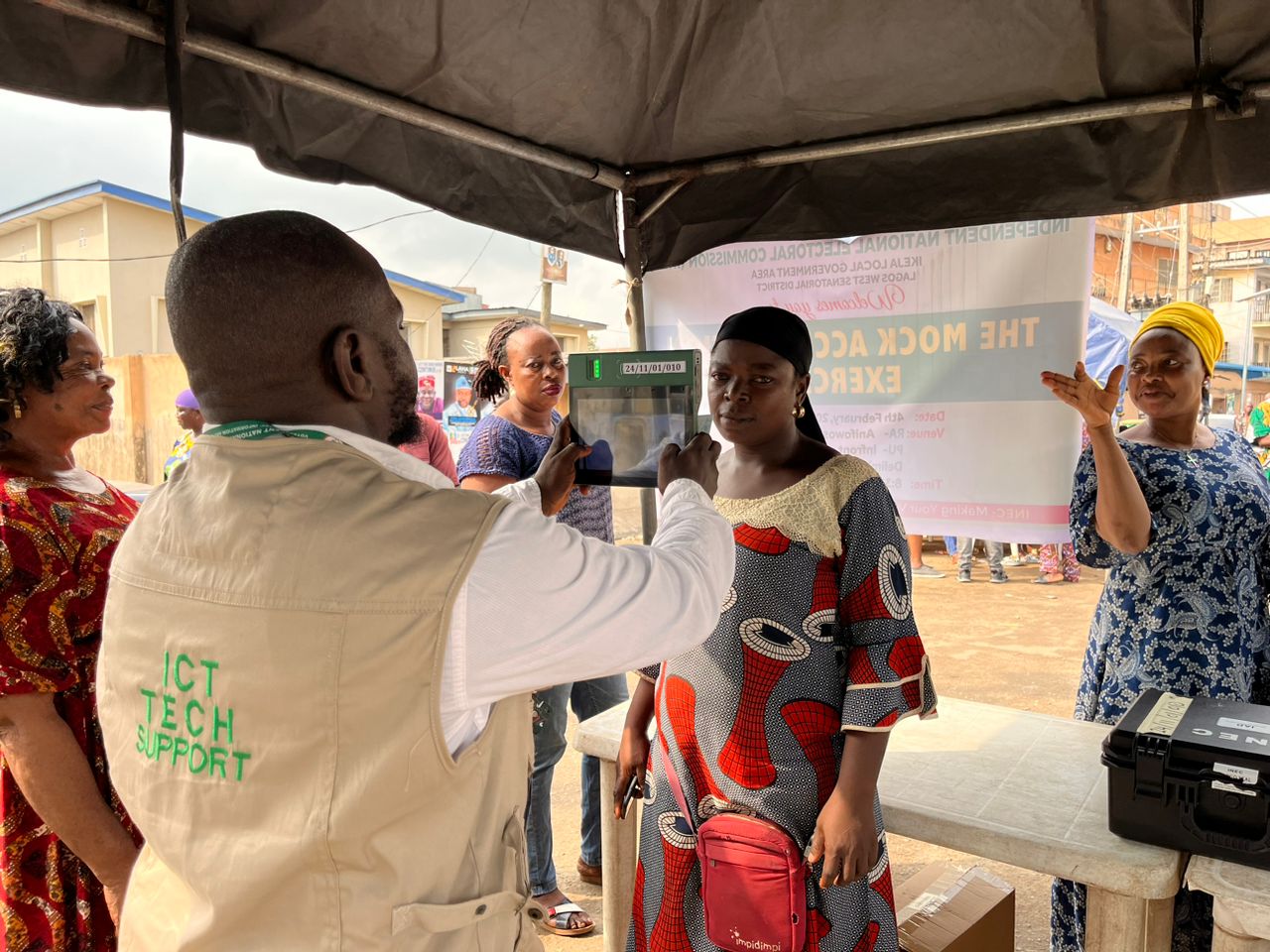
The Independent National Electoral Commission (INEC) has recorded low voter turnout in several locations across the country during its nationwide mock accreditation and electronic result transmission exercise conducted on Saturday, November 28, 2026.
The exercise, which took place across the 36 states and the Federal Capital Territory (FCT), was designed to test the efficiency of the Bimodal Voter Accreditation System (BVAS) and the electronic transmission of polling unit results ahead of the 2027 general elections.
INEC Chairman, Joash Amupitan, had earlier announced November 28 as the date for the exercise, explaining that it was intended to simulate aspects of the presidential election and verify the commission’s preparedness for voter accreditation and electronic result transmission.
However, observations from polling units in Abuja, Lagos and Ondo indicated limited participation by registered voters, raising concerns about public awareness and voter engagement.
In Abuja, only seven people participated in the exercise at a polling unit along Bannex Plaza Road junction in Wuse 2, out of 780 registered voters.
Monitoring the exercise at about 10:30 a.m., journalists observed the presence of police officers and personnel of the Nigeria Security and Civil Defence Corps (NSCDC), alongside INEC officials.
The electoral officials expressed concern over the poor turnout, adding that some individuals who were not registered at the polling unit had turned up but were redirected to their designated voting centres.
The mock ballot paper used at the location did not feature the names of existing political parties. Instead, it contained 14 options represented by items, including aqua, gold and snow.
At another polling unit around the OAU Quarters area, opposite the first location, only five people participated in the exercise, according to INEC officials.
Despite the low turnout, no technical complaints were reported concerning the operation of the BVAS at the two Abuja polling units.
Ondo REC Explains Reasons for Low Turnout
A similar situation was recorded in Ondo State, where only a few residents participated in the exercise at several polling units visited in Akure, the state capital.
READ ALSO; INEC removes 1.6m invalid names from voters’ register, verified figures drop to 100m
At polling unit 17, Ajipowo, along Ondo Road, Gbogi/Isikan Ward 2, some voters turned out to participate in the mock accreditation exercise.
Speaking with journalists, the Ondo State Resident Electoral Commissioner (REC), Mutiu Agboke, acknowledged the low turnout, saying the commission had expected more voters to participate.
He attributed the situation to several factors, including environmental conditions and what he described as expectations by some residents for financial incentives before participating.
“So far, what we have been able to see is that people came out to participate in the exercise. Although we expected a higher turnout, there were several factors responsible for the low turnout. Environmental factors were among them,” Agboke said.
He added that the exercise was designed to evaluate two major components of the electoral process: the operational efficiency of BVAS and the speed of uploading Form EC8A to INEC’s Result Viewing Portal (IReV).
According to him, the commission was encouraged by the speed of voter accreditation recorded at the polling units visited.
“You will agree with me, as members of the media, that at all the centres we visited, voters were accredited in less than one second. For us, that is a big plus because it means that more voters can be accredited within a short period on election day,” he stated.
Agboke explained that the second phase of the exercise would assess how quickly presiding officers could upload Form EC8A to the IReV portal after completing the voting process.
He expressed confidence that the commission’s electronic systems would perform effectively, based on the preliminary results observed during the mock exercise.
INEC Clarifies BVAS Offline Functionality
The Ondo REC also dismissed concerns that the BVAS would malfunction whenever there was no internet connectivity at a polling unit.
He explained that voter accreditation could be conducted offline, while internet connectivity was required only when uploading election results.
According to him, where network coverage was unavailable at a polling unit, the presiding officer could move a short distance to an area with better connectivity to complete the upload.
“Some people believe that BVAS will malfunction whenever there is no network, but that is not correct. During accreditation, BVAS works offline. It is only during the uploading process that an internet connection is required,” he explained.
In Lagos State, low voter participation was also observed in parts of Ikeja, Agege, Oshodi and Isolo visited during the exercise.
Some residents attributed the poor turnout to inadequate public awareness about the mock accreditation exercise.
However, a technical challenge was reported at a polling unit in Ifako-Ijaiye, where the BVAS experienced a glitch.
The nationwide exercise represents part of INEC’s preparations to identify possible technical shortcomings, improve operational efficiency and strengthen public confidence in the electoral process ahead of the 2027 general elections.


-

 Featured5 days ago
Four reportedly killed in Delta NDC attack as Tinubu’s ‘All Is Fair in Politics’ remark faces fresh scrutiny (Video)
-
 Latest5 days ago
Abuja protesters March on INEC headquarters, demand accountability ahead of 2027 elections [video]
-

 Football4 days ago
Man United: Pochettino prioritises new striker over defensive signings in January
-

 Latest1 week ago
2027: Obi declares election day ‘Public Holiday’ for vote defence, warns against rigging
-

 Latest5 days ago
2027: Tinubu woos Lagos Igbo community, assures of inclusion in governance
-

 Featured5 days ago
NDC denies rift with Peter Obi over 2027 campaign funding
-

 Featured1 week ago
Lagos, Abuja lead Nigeria’s housing price race as rent, homeownership costs rise
-

 Featured4 days ago
Sowore withdraws AAC from National Peace Accord, questions committee’s role