
Trending Stories
Fake Job Offers: Two Nigerian women rescued from alleged sex trafficking in Mali

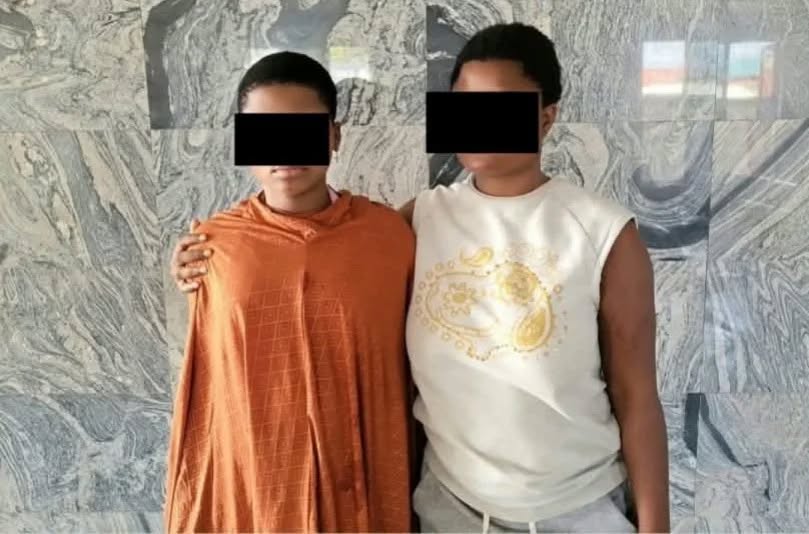
Two Nigerian women, including a 16-year-old girl from Delta State and a 24-year-old fashion designer from Akwa Ibom State, have been rescued from alleged sexual exploitation in Mali after reportedly travelling abroad in search of employment.
The rescue was facilitated by the Global Anti-Human Trafficking Organisation (GAHTO), in collaboration with the National Agency for the Prohibition of Trafficking in Persons (NAPTIP), according to the organisation’s founder, Prosper Kayode Michael.
Michael disclosed the development in a statement reported by Punch on Tuesday, November 17, 2026, saying the victims were rescued the previous week after being lured to Mali with promises of legitimate jobs.
The 16-year-old, whose identity is being withheld to protect her, reportedly said a woman from her community in Delta State promised to take her abroad to sell goods in a market.
The teenager, who had stopped attending school after completing Primary Six, said she travelled with another girl and spent about four days on the road before arriving in Mali.
However, she alleged that the promised trading opportunity did not exist and that she was forced into prostitution after arriving in the country.
She said she initially resisted but was threatened with beatings whenever she refused to comply. According to her account, the exploitation continued for about three weeks before she found an opportunity to escape with assistance from a Good Samaritan, who contacted GAHTO.
The teenager also alleged that she was given injections without being properly informed about their purpose.
The second survivor, identified as Joy, is a 24-year-old fashion designer from Akwa Ibom State who was based in Port Harcourt, Rivers State.
She reportedly accepted an offer from a neighbour who claimed that a relative operating a fashion design and boutique business in Mali was seeking workers.
Joy said she made it clear that she would not accept any job involving prostitution, but the neighbour assured her that the opportunity was legitimate.
According to her account, she travelled from Port Harcourt to Lagos on September 10, 2026, before continuing through the Republic of Benin to Mali. The journey reportedly took about two and a half days.
On arriving in a village identified as Nyala, she became suspicious after seeing women dressed in revealing clothes calling out to attract male customers.
She said another woman from Akwa Ibom later informed her that there was no fashion business and that the actual activity at the location was prostitution.
Joy alleged that she refused to participate despite threats, beatings and molestation. She also claimed that men were brought into her room and forced on her against her will.
After spending several weeks trying to find a way out, she eventually escaped from the compound.
Reacting to the cases, Michael called for stronger efforts to address the economic and social conditions that make young Nigerians vulnerable to human trafficking.
He urged the government to ensure that empowerment programmes reach vulnerable people at the grassroots, irrespective of political affiliation.
He particularly appealed to the Delta State First Lady to assist the 16-year-old survivor in returning to school, noting that her education had been interrupted.
Michael also stressed that rescuing victims from foreign countries was only one part of the challenge, arguing that survivors needed sustainable support to rebuild their lives after returning to Nigeria.
He called on wealthy Nigerians and private organisations to invest in initiatives that would provide vulnerable young people with opportunities to earn a living and establish businesses.
The cases highlight how traffickers exploit unemployment, poverty and the aspirations of young Nigerians through deceptive overseas employment offers.
They also underscore the importance of verifying foreign job opportunities, recruitment agents and employers before travelling.
Human Rights Watch has previously documented how Nigerian women and girls have been deceived with promises of employment, education and professional opportunities before being subjected to sexual exploitation and forced labour abroad.
The organisation has also called for improved victim protection, access to healthcare, psychosocial support, education and sustainable livelihood opportunities for survivors.
For the two women rescued in Mali, the immediate challenge now extends beyond escaping exploitation to rebuilding their lives and securing the support needed to prevent further vulnerability.


-
 Business1 week ago
DisCos urge Minister to end blame game, apologise to Nigerians over blackouts
-
 Business7 days ago
Fuel price: Our eyes on you, FCCPC tells oil marketers
-
 Featured4 days ago
Nigeria’s youth unemployment paradox: Graduates struggle as millions survive in informal jobs
-
 Latest1 week ago
Abati questions former CSU lecturer’s authority in fresh Tinubu certificate dispute [VIDEO]
-
 Business1 week ago
After weeks of blackout, electricity returns to Lagos, Ogun, Oyo, Kwara, FCT
-

 Business4 days ago
Nigerian Banks earn N521.8bn from E-banking, card fees in nine months
-
 Business7 days ago
Petrol import cost drops to N1,164 per litre as crude oil prices decline
-
 Latest7 days ago
2027: Donald Duke offers to step down for consensus opposition candidate