
Crime
Terror financing: Report exposes Dubai-Kano-Lagos supply routes to ISWAP

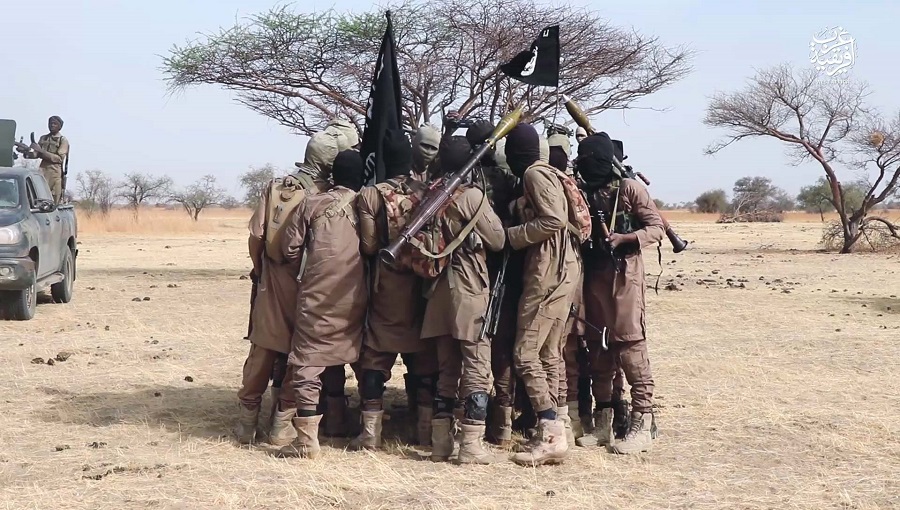
A new investigative report has exposed how Islamic State West Africa Province (ISWAP) is turning attacks on Nigerian military bases into a lucrative financial operation, using stolen weapons as a source of income, recruitment and retention of fighters.
The report by the Institute for Security Studies (ISS), titled Wiring the Insurgency: Inside ISWAP’s Adaptive Technology Programme, reveals that the terrorist group operates an organised payment system known as ghanimah, through which fighters receive money for weapons and military equipment captured during raids on Nigerian security formations.
Ghanimah, an Arabic term meaning spoils of war, requires fighters to surrender captured weapons to the dawlah, representing the Islamic State, in exchange for fixed payments.
According to Taiwo Adebayo, the ISS researcher who authored the report, the financial rewards vary according to the type of weapons seized.
An AK-47 reportedly attracts $750, while a rocket-propelled grenade launcher fetches $1,000. A box of ammunition earns between $500 and $1,000, depending on its calibre, while a pickup truck mounted with a heavy weapon is valued at $30,000.
The payments are made in naira, making the arrangement financially attractive to fighters operating within the Lake Chad Basin.
Adebayo said the system had evolved beyond the traditional practice of capturing weapons during attacks, becoming an institutionalised mechanism for motivating, recruiting and retaining insurgents.
Former fighters interviewed for the investigation disclosed that financial incentives had become increasingly important, particularly in retaining recruits motivated by economic benefits rather than religious ideology.
Military Bases Become ISWAP’s Financial Targets
The investigation found that Nigerian military installations have become important sources of weapons and financial rewards for ISWAP.
The group has carried out dozens of attacks on military bases since 2025, with captured weapons believed to constitute its largest source of arms.
READ ALSO; Troops kill ISWAP Shura Council member, senior commander, 2 Arab fighters in Borno
In March, ISWAP claimed responsibility for seizing a substantial military weapons stockpile, including 54 rifles, 20 machine guns and eight heavy weapons, comprising rocket-propelled grenade launchers and mortars.
A senior Nigerian intelligence source acknowledged the scale of weapons losses, describing the situation as alarming.
“At a time, it was as if we were handing weapons to ISWAP,” the source was quoted as saying.
The report also identified smuggling routes through N’Djamena, Chad, as another source of weapons and military equipment for the insurgents.
Kano, Lagos Linked to Insurgents’ Supply Network
Beyond battlefield captures, the investigation exposed a supply chain connecting international sources in the Middle East with commercial and currency exchange networks in Nigeria.
According to former fighters, Kano and Lagos serve as important supply hubs for equipment that ISWAP cannot easily obtain locally, including drones, camcorders, boat engines and satellite communication devices.
Some equipment, particularly Thuraya and Starlink devices, is reportedly moved from Dubai, United Arab Emirates, to Kano through currency exchange networks.
The report identified a Kano-based currency exchange operator known as Alhaji Surajo as an alleged facilitator of some transactions, although it did not establish his full identity.
From Kano, equipment is reportedly concealed in ordinary commercial consignments, including fabrics and food supplies, before being transported through towns such as Geidam in Yobe State to locations where ISWAP operatives or their representatives collect them.
Commercially sourced DJI Mavic drones, boat motors and media equipment from Lagos reportedly follow similar routes.
Currency exchange operators allegedly facilitate payments to suppliers and transfers between Islamic State financial networks and ISWAP, attracted by unusually high commissions.
The report’s revelations raise further concerns about the exploitation of legitimate commercial and financial channels for terrorist financing.
In 2022, Nigeria’s Sanctions Committee accused 13 individuals and three companies with physical addresses in Kano of involvement in terrorism financing. Nearly half of the individuals were currency exchange operators reportedly convicted and imprisoned in the UAE in 2021 for facilitating terrorist financial transactions between Dubai and Nigeria.
One of those named was Surajo Abubakar Mohammed, although the report did not establish whether he was the same person identified by its interviewees as Alhaji Surajo.
In June, the United States also imposed sanctions on a Nigeria-based operator accused of helping Islamic State move funds across international borders through money exchange businesses.
The findings expose the increasingly sophisticated financial and logistical infrastructure sustaining ISWAP’s insurgency, raising questions about military asset protection, cross-border financial monitoring and the effectiveness of Nigeria’s counterterrorism financing measures.


-

 Featured5 days ago
Four reportedly killed in Delta NDC attack as Tinubu’s ‘All Is Fair in Politics’ remark faces fresh scrutiny (Video)
-
 Latest5 days ago
Abuja protesters March on INEC headquarters, demand accountability ahead of 2027 elections [video]
-

 Football4 days ago
Man United: Pochettino prioritises new striker over defensive signings in January
-
 Latest1 week ago
2027: Obi declares election day ‘Public Holiday’ for vote defence, warns against rigging
-
 Latest5 days ago
2027: Tinubu woos Lagos Igbo community, assures of inclusion in governance
-

 Featured5 days ago
NDC denies rift with Peter Obi over 2027 campaign funding
-

 Featured1 week ago
Lagos, Abuja lead Nigeria’s housing price race as rent, homeownership costs rise
-

 Featured4 days ago
Sowore withdraws AAC from National Peace Accord, questions committee’s role