
Covid-19
Court rejects Pfizer, FDA bid to hide COVID vaccine safety data

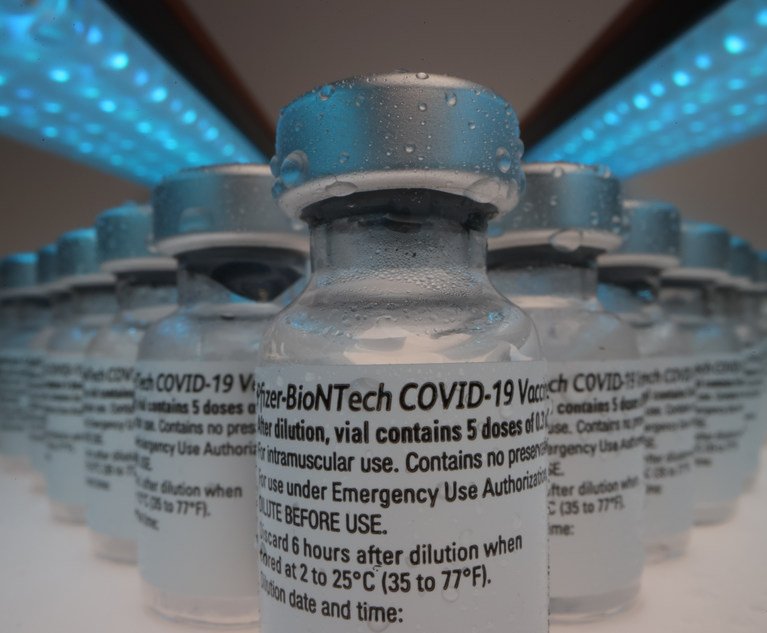
A federal judge has rejected a bid by the U.S. Food and Drug Administration and Pfizer to delay the court-ordered release of nearly 400,000 pages of documents pertaining to the approval of Pfizer’s COVID vaccine.
Federal judge Mark Pittman of the U.S. District Court for the Northern District of Texas, in an order issued Feb. 2, said the FDA must release redacted versions of the documents in question according to the following disclosure schedule: 10,000 pages apiece, due on or before March 1 and April 1, 2022; 80,000 pages apiece, to be produced on or before May 2, June 1 and July 1, 2022; 70,000 pages to be produced on or before Aug. 1, 2022.
55,000 pages per month, on or before the first business day of each month thereafter, until the release of the documents has been completed.
READ ALSO: Canadian police crack down on supporters of anti-COVID restrictions protesters
The order grants the FDA the ability to “bank” excess pages as part of this release schedule — meaning that if the agency exceeds its monthly quota in any given month it can apply those extra pages to a subsequent month.
Last week’s ruling is the most recent development in an ongoing court case that began with a Freedom of Information Act (FOIA) request filed in August 2021 by Public Health and Medical Professionals for Transparency (PHMPT), a group of doctors and public health professionals.
PHMPT, a group of more than 30 medical and public health professionals and scientists from institutions such as Harvard, Yale, and UCLA, in September 2021 filed a lawsuit against the FDA after the agency denied its original FOIA request.
READ ALSO: COVID-19 deceit losing appeal, 12 European countries scrap restrictions, vaccine mandate
In that request, PHMPT asked the FDA to release “all data and information for the Pfizer vaccine,” including safety and effectiveness data, adverse reaction reports, and a list of active and inactive ingredients.
The FDA argued it didn’t have enough staff to process the redaction and release of hundreds of thousands of pages of documents, claiming it could process only 500 pages per month.
This would have meant the cache of documents would not be fully released for approximately 75 years.
In his Jan. 6 order, Pittmann rejected the FDA’s claim and instead required the agency to release 12,000 pages of documents by Jan. 31 and an additional 55,000 pages per month thereafter.
Pfizer responded to the Jan. 6 order by filing a memorandum with the court on Jan. 21, requesting to intervene in the case for the “limited purpose of ensuring that information exempt from disclosure under FOIA is adequately protected as FDA complies with this Court’s order.”
Pfizer claimed to support the disclosure of the documents, but asked to intervene in the case to ensure that information legally exempt from disclosure will not be “disclosed inappropriately.”


-

 Latest5 days ago
Full List: Meet the 2026 Nobel Prize winners across six categories
-

 Football5 days ago
Premier League Matchweek 7: Five Fixtures That Could Shape the Weekend
-

 Latest4 days ago
Umahi defends Lagos-Calabar highway route changes amid public outcry
-

 Business4 days ago
Dangote Refinery IPO: 70% Subscription claim meets fourfold demand assertion as investors seek clarity
-
Business4 days ago
Dangote Refinery IPO Extension: Was the 70% subscription report overhyped?
-

 Latest3 days ago
UCTH faces morgue crisis as 50 unclaimed corpses await mass burial
-

 Featured4 days ago
El-Rufai, ADC governorship candidate’s court appearance puts Kaduna opposition politics in focus
-

 Business2 days ago
BREAKING: Nigeria’s Inflation Rate Drops to 14.63% in September