
Aviation
Why some airlines are avoiding Nigeria’s airspace–NAMA

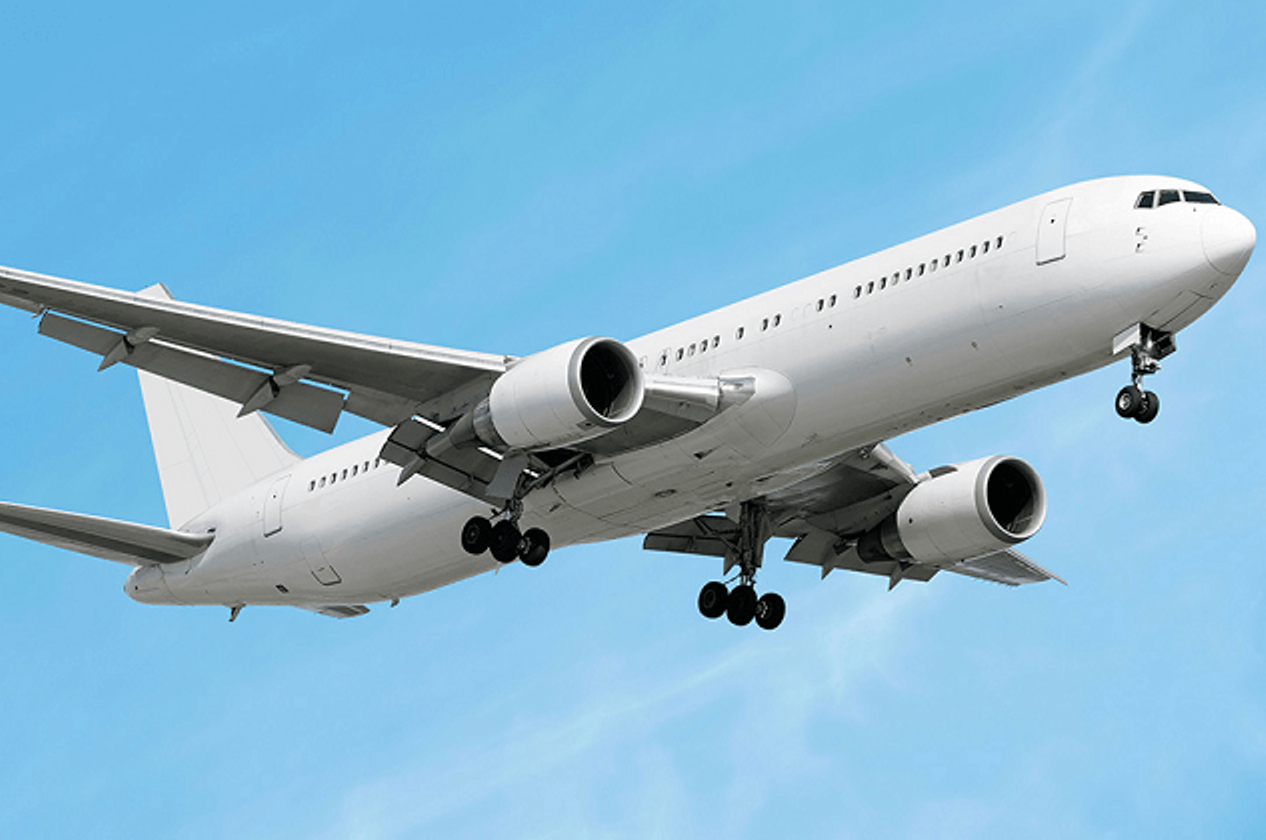
The Nigerian Airspace Management Agency (NAMA) has explained that many airlines are avoiding Nigeria’s airspace because of the difficulties encountered in their communication with air traffic controllers.
This was made known to journalists by the Managing Director of NAMA, Mr Farouk Umar, at Ikeja, Lagos, where he stated that the agency was consequently eyeing more investments to rejuvenate the communication systems to match emerging air traffic trends.
Umar explained that there was a need to improve the weak communication system, which had been demand-saturated as the industry grew and more routes were opened.
He said huge investments were required of the Federal Government as more routes opened needing more stations to have signals to cover the entire country.
The NAMA boss revealed that the presidency recently budgeted N40 billion to address some of the issues at the airports, but the money had not been accessed.
Umar assured that as soon as money was made available, the agency would tackle critical safety challenges at the various airports.
He said, “The entire communication network has been re-designed to ensure that every blind spot is covered because if one system fails today, air traffic controllers would not notice.
“We realized also that our radios are working well and well-positioned and we have addressed the challenges we met on ground, but then, we are still having issues.
“The issues have nothing to do with our radios, but with electricity supply which had been a national challenge that the government had been working assiduously to fix.
READ ALSO: Tinubu sacks FAAN, NAMA MDs, 4 others in aviation
“We have decided to deploy solar energy to some of our facilities to complement electricity supply from the national grid and from generators so that they can function well.’’
Umar noted that the International Civil Aviation Organisation frowned at even a second blackout at any airport and Nigeria could not afford to flout the regulation.
He added, “For an average electronic system, the lifespan is about 10 years. Most of the communications electronics at the airports have been working for the past 15 years to 20 years. Their performance would be below standard, expectedly.
“We are replacing some of the equipment and we have done almost 80 percent. The contractors are still working, however.’’
Umar also told newsmen that Terminal Control Centres (TRACON) were still having challenges because, since 2014, there had not been enough spare parts to fix the obsolete equipment there.
He said, “The Federal Government has approved the modernization of the TRACON system. 15 per cent of the fund has been paid and we are hopeful that more installations will start soon.
“We are also hopeful that at the end of it all, the system will go back to optimal performance.’’


-

 Business1 week ago
Dangote Refinery IPO: 70% Subscription claim meets fourfold demand assertion as investors seek clarity
-

 Featured5 days ago
Inside INEC’s race to prepare for Nigeria’s 2027 elections
-

 Featured5 days ago
2027: APC unveils nationwide campaign timetable, Tinubu to rally in 12 states
-

 Latest7 days ago
UCTH faces morgue crisis as 50 unclaimed corpses await mass burial
-

 Aviation1 week ago
Germany opens online application route for student, EU Blue Card and other long-stay visas
-

 Business7 days ago
BREAKING: Nigeria’s Inflation Rate Drops to 14.63% in September
-

 Business6 days ago
President Tinubu and the Low Transport Fares Fiasco
-
 Business5 days ago
Court dismisses ₦170m Trade Fair contract claim, says Zenith Bank was not a party