
Education
England university partners University of Calabar on water, land management

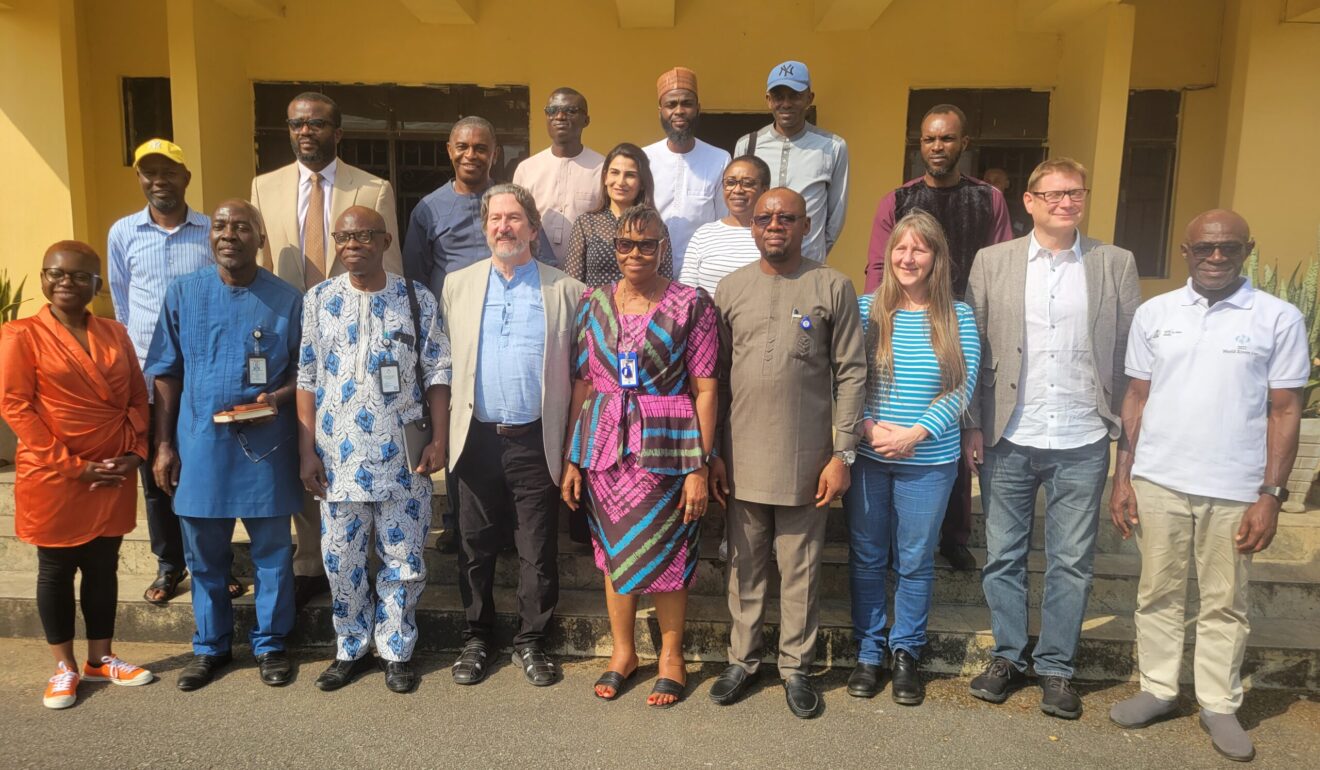
Credit: NAN
The University of Plymouth, England, and University of Calabar (UNICAL), have partnered on water and land management to mitigate climate change.
Prof. William Blake, Director, Sustainable Earth Institute, University of Plymouth, disclosed this when he led other management staff of the university to University of Calabar on Wednesday.
Blake explained that the partnership would focus on research and manpower development to improve water and land management.
He said that the university had received a small grant from the British government to partner with institutions in Nigeria and Ghana on climate smart agriculture with particular interest in land and water management.
He added that the research and manpower development would be centred on soil health and how it could help to solve many problems in relation to food security, climate change mitigation and adaptation.
“We are interested in understanding the different skills set and the different research questions in the area of water and land management among scholars in the country.
“This will enable us to formulate research plans together and co-design research strategies and solutions that can help,” he said.
The director added that the partnership would also strengthen synergy between the two institutions and support each other for sustainable environmental management.
He said that the Carbon Emissions Centre in the University of Calabar reflects the institution’s mission for sustainable environment management in terms of soil organic matter.
“Soil health rests on soil organic matter. So, the more we work, particularly on soil organic matter, and know the amount of carbon stored in the soil, we will know the key benefits that come with it.
“Change in the soil structure reduces flooding, improves productivity and all the problems associated with it; a healthy soil will help prevent this.
“This is fundamental, and for us, that meeting point between sustainable earth and carbon emissions is something we really need to pay attention to,” Blake said.
Responding, Prof. Ralph Offiong, Director, Carbon Emissions Centre, University of Calabar, said that the partnership was a welcome development considering that climate change has become a threat to mankind.
Offiong added that the partnership would also focus on blue and green economy, climate change and local communities’ livelihood sustainability enhancement.
He said that the partnership with the British university would foster cross fertilisation of ideas on how to manage climate change issues.
“Climate change is a very serious threat to mankind because it is affecting ecosystems, humanity, businesses and everything, from the clothes we wear to the food we eat and every other thing we do,” he said.
The university’s Vice-Chancellor, Prof. Florence Obi, said that the partnership was crucial, particularly that Calabar was surrounded by water.
Obi, who was represented by the Deputy Vice Chancellor, Administration), Prof. Eno Nta, said: “we belong to the riverine part of the country, our people live on water, our livelihood is in water.
“It is good, therefore, to understand the water better – how we are encroaching on it or how the water is encroaching on us too,” she said.
NAN


-

 Business1 week ago
OPay explains how Nigerians can access FG’s N50,000 monthly cash relief
-

 Comments and Issues6 days ago
2027 Poll and the vote peddlers of Nigeria
-

 Features5 days ago
How ADC leadership crisis put Atiku’s 2027 ambition at risk
-

 Energy5 days ago
NNPC plans 5–10% stock market listing, targets 2027 for IPO preparations
-

 Business5 days ago
LoveWorld Expo 2026 to showcase global innovations, emerging technologies in Lagos
-

 Latest7 days ago
El-Rufai mobilises supporters for ADC ahead of 2027 elections
-

 Latest5 days ago
2027: No Court rulings can keep me off the ballot, Atiku insists
-

 Latest6 days ago
NDC faults Tinubu’s $7.7bn external loan request, raises debt concerns