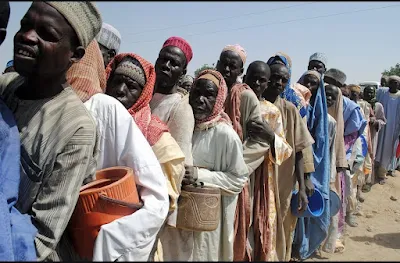
Nigeria has been ranked among the world’s ten most food-insecure countries, with millions of people facing acute hunger as conflict, economic strain, and climate shocks continue to disrupt livelihoods and food production.
The latest findings, contained in the Global Report on Food Crises 2026 released on April 24, 2026, show that a significant share of the world’s most vulnerable populations are concentrated in just a handful of countries, including Nigeria, Sudan, and Afghanistan.
According to the report, about 266 million people across 47 countries experienced severe food insecurity in 2025, marking a sharp increase over the past decade.
In Nigeria, projections indicate that nearly 35 million people could face acute hunger during the 2026 lean season, with conditions expected to worsen in conflict-affected regions.
Parts of Borno State remain particularly critical, where thousands of residents are classified under emergency or catastrophic hunger levels, signaling a risk of famine if urgent interventions are not sustained.
The report identifies a combination of factors fueling Nigeria’s food crisis.
Persistent insecurity in the North-East and North-West has forced farmers off their land, disrupting agricultural production and supply chains. At the same time, rising inflation and high food prices have reduced purchasing power for households already under financial pressure.
Climate-related shocks—including floods and irregular rainfall—have further damaged crops and weakened food systems across several regions.
António Guterres described the situation as a “global alarm,” noting that hunger crises are becoming more prolonged and deeply rooted rather than temporary emergencies.
Similarly, Qu Dongyu warned that food insecurity is now a structural issue, requiring long-term solutions beyond emergency aid.
Humanitarian agencies are also grappling with funding shortfalls. The World Food Programme has indicated that it needs urgent financial support to sustain operations in Nigeria, particularly in the North-East, where millions depend on food assistance.
Without additional funding, aid groups warn that large numbers of vulnerable people could lose access to critical support in the coming months.
Nigeria is listed alongside several other nations facing severe hunger challenges, including those in sub-Saharan Africa, the Middle East, and parts of Asia, where conflict and economic instability continue to drive food insecurity.
Experts say addressing Nigeria’s food crisis will require a coordinated approach that combines improved security, economic stability, and investment in agriculture.
As the country approaches the 2027 political cycle, food security is expected to remain a central issue, with growing calls for policies that move beyond short-term relief toward sustainable solutions.



 Comments and Issues1 week ago
 Energy1 week ago
 Comments and Issues1 week ago
 Aviation1 week ago
 Energy1 week ago
 Energy1 week ago
 Health1 week ago
 Agribusiness6 days ago