
Comments and Issues
Types of Nigerians

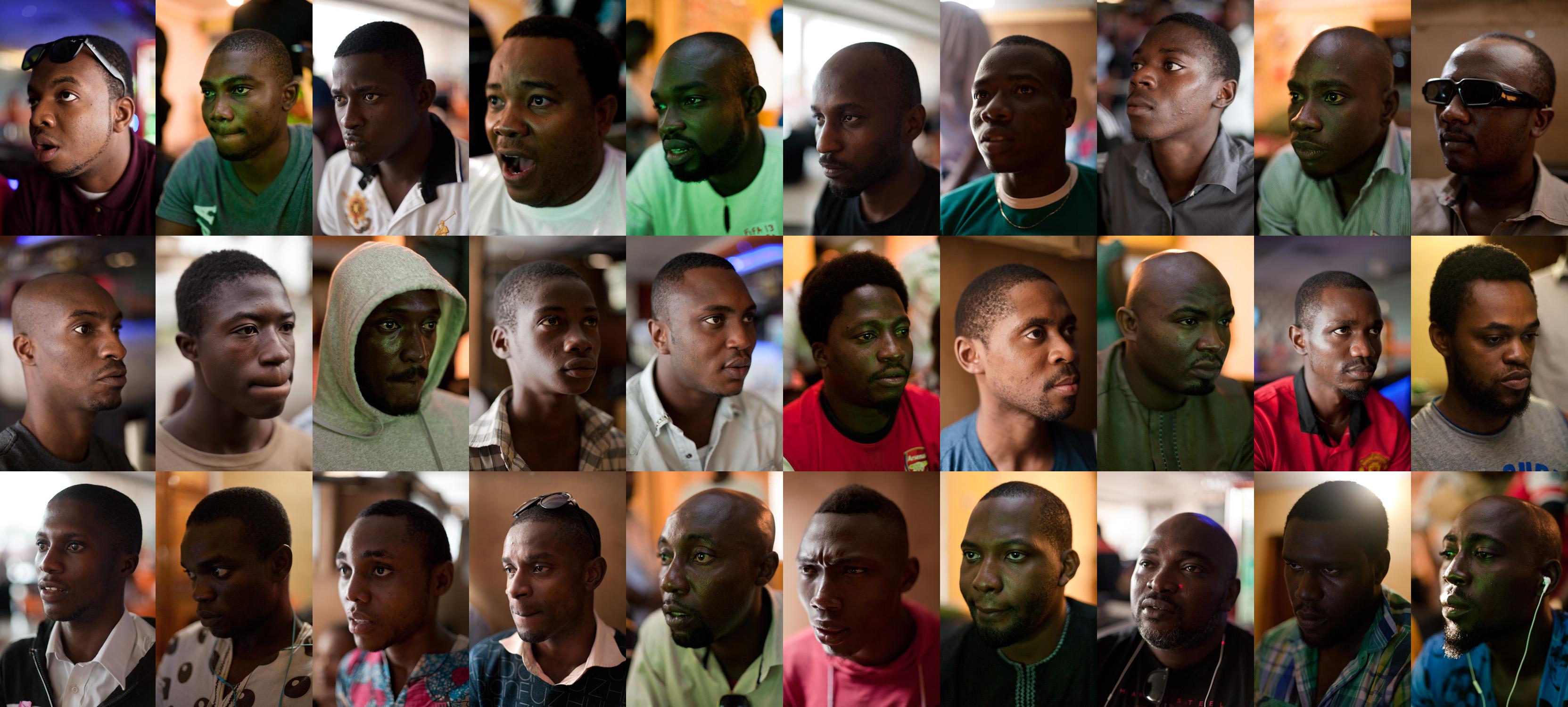
There are two types of Nigerians: those who disparities stimulate their existence and those who disparities present negativities. When people from different social statuses live side by side, astonishment and rage can arise from their confrontations. “A house,” Karl Marx said, “can be large of small; so long as the neighbouring houses are of the same size, it meets all society’s expectations for a residence. But if a palace is built next door to the little house, it is reduced to the rank of a hovel.” Envy becomes the proximity and not distance. That is why in Nigeria success is often attributed to political connivance, whereas in more developed societies success is usually a journey—from the ground-up—of sorts.
Consider the typical Nigerian situation: a boss in a Nigerian bank, during assessments, puts differences on her list. The sudden telescoping was based solely on regional differences and not the contribution of each employee. The hard working employee is forced to ask how much harder one needs to work.
Or again, a wiser position: the elitists are caught up in the mechanism of making profits from these disparities. The munificent people whose pomp offends others and who raise the bar to an inaccessible height do this for their personal gratification. As soon as these selected few open the Pandora’s box of equality, the citizens realise that the pursuit of happiness is a monster of comparison.
The perverse pleasure taken in the poverty of others, for example, helps the elite solidify their mechanism for creating wealth. The new media has not made matters easy.
From Instagram and Facebook posts, the poor, ordinary Nigerian, sees his political servant displaying fancy cars, golden bags and their graduating children from top-ranking universities. The bursts of laughter can only be found from the happy people who have one sort of political affiliation or the other. The scene reminds us of that aphorism: “It’s not enough to be happy; it’s also necessary that others aren’t.” Happiness, in the mind of the first type of Nigerian, should belong solely to him/her.
ALSO SEE: “Wizkid is but a studio rat if Nigerians back off”
The only way out of this is perhaps an introduction of another type of economic and political system. The question remains, what type? Socialism? I can’t help here.
The political elites are not the only rivals whose existence offends the second group of Nigerians but also, the round-bellied executives located in different parts of the corporate genealogy. The second group sees their existence as prompters to elevate themselves into the space of a new life. They inspire the second type of Nigerians; they suggest countless ways of living, of blazing new paths.
The venomous existence of the elites has been converted into emulation and into curiosity. The second group of Nigerians have become conductors of desire rather than become intolerant obstacles to the first group. It’s now a chase to be better than their neighbour and not for the good of the society at large.
Culled from Herald









-
 Latest1 week ago
Global excitement builds as Healing Streams Live Services returns October 23
-
 Featured7 days ago
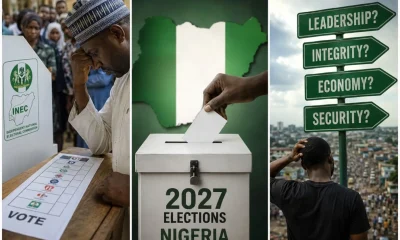
Inside INEC’s race to prepare for Nigeria’s 2027 elections
-

 Business1 week ago
President Tinubu and the Low Transport Fares Fiasco
-
 Featured7 days ago
2027: APC unveils nationwide campaign timetable, Tinubu to rally in 12 states
-
 Business4 days ago
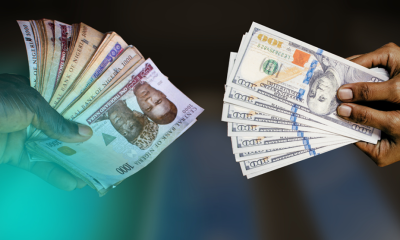
Naira faces exchange rate gap as Dollar hits N1,380 on parallel market
-

 Business7 days ago
Court dismisses ₦170m Trade Fair contract claim, says Zenith Bank was not a party
-

 Latest7 days ago
Breaking: NNPCL raises petrol price to ₦1,405 per litre amid discount controversy
-

 Business1 week ago
Rite Foods targets beverage market growth with LIDA Malt