
Health & Fitness
Wall geckos pose no threat to people, says expert

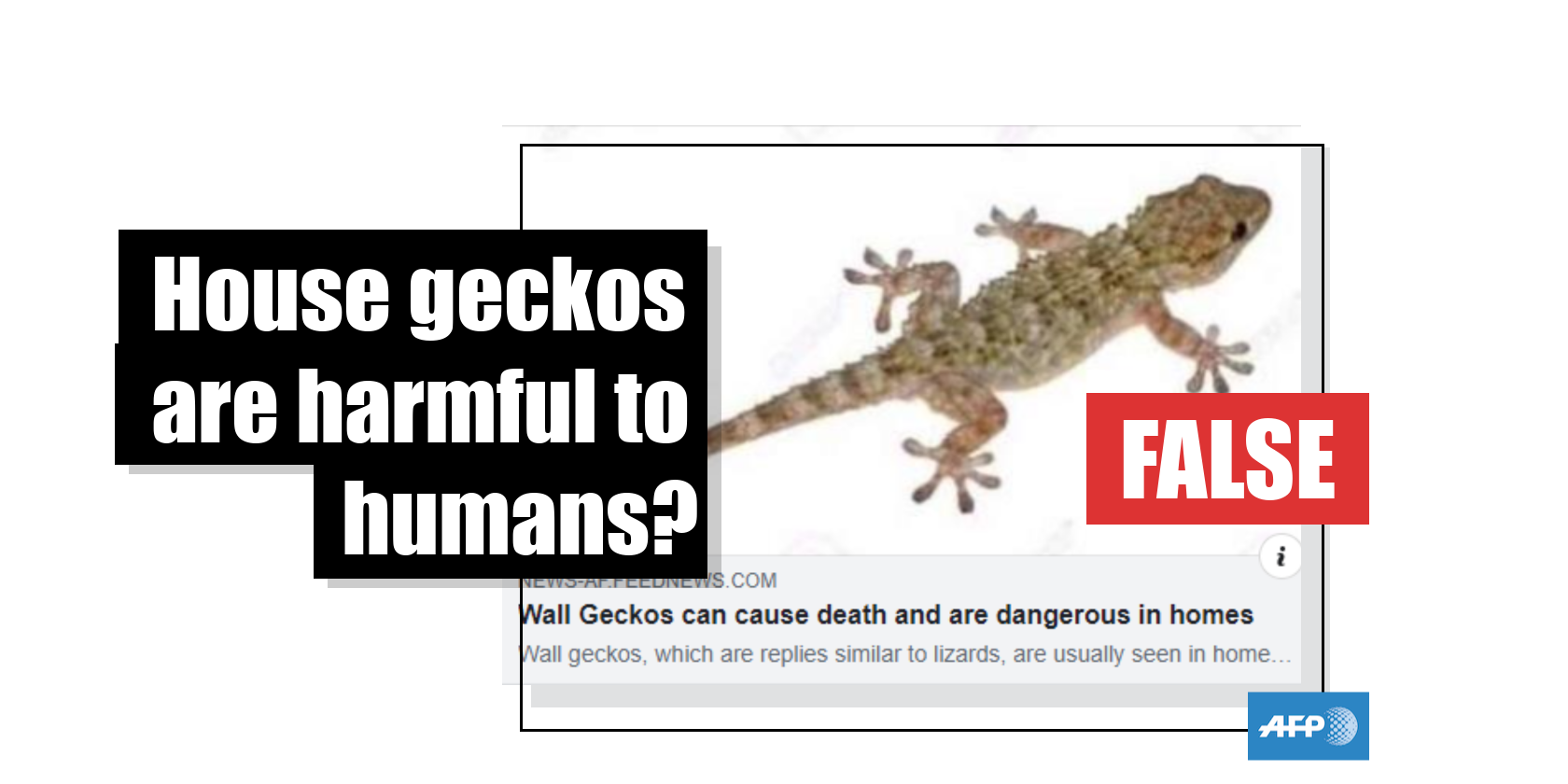
Multiple online posts shared thousands of times urge people to remove geckos from their homes because they are allegedly dangerous and carry deadly bacteria. The claim is false and experts say not only are geckos safe, but they control the spread of insects and bugs that are otherwise a domestic nuisance.
Although the claim varies from post to post, the message is essentially the same: wall or house geckos should be killed because they are dangerous. This danger supposedly stems from geckos carrying lethal germs.
There are have been reports which warns that toothbrushes left out overnight are at risk of “toxic” bacterial contamination if licked by a “lizard”, while another version of the claim described how an unnamed family from an undisclosed country supposedly died after eating soup that contained the remains of a gecko which had climbed into the pot where its poisoned the food.
According to experts, these claims are false because wall geckos pose no threat to people.
Dr Jeanne Tarrant, programme manager for the Threatened Amphibian Programme at the Endangered Wildlife Trust in South Africa, said in an email that geckos are not harmful to humans and “actually provide a service by eating insects and spiders around your house”.
READ ALSO: 5 home remedies you should use to help get rid of wall gecko from your home
“Humans and house geckos have been living alongside each other for hundreds if not thousands of years, with no detriment to humans. It really would not be recommended to try and eliminate them from your home.”
Professor Aaron M. Bauer, a biodiversity specialist at Villanova University in Pennsylvania, United States and a world authority on geckos — he has a species named after him — echoed Tarrant’s comments.
Biting, he said, is highly unusual in geckos and, in any event, nothing more than an unpainful nip on the off-chance you try to handle one.
Salmonella transmission is similarly unlikely, he explained. “Geckos, like many reptiles, can carry salmonella although such transmission is not common and it is easily avoided. Geckos are probably less likely to transmit salmonella than other reptiles that have larger, wetter faecal material.
“Regarding the toothbrush, if you found gecko faeces on it you should wash it off, just as you would if you found any foreign matter on it.”
On the topic of salmonella, the Centers for Disease Control and Prevention offer tips here to avoid infection. One piece of advice is not to kiss lizards — the same goes for “cats, dogs, chickens, turtles … or other pets and animals”.


-
 Latest5 days ago
Israel marks 3 years since October 7 Hamas attack amid Gaza strikes, election debate
-

 Energy5 days ago
Fuel Battle: Dangote, marketers and government clash over petrol imports
-

 Energy6 days ago
Petrol, diesel prices rise 86% in 2026 as costs hit fresh highs
-

 Energy7 days ago
Has Iran lost control of the Strait of Hormuz? Oil flows rebound as war disruptions persist
-

 Football6 days ago
Nigeria’s World Cup exit under spotlight as FIFA’s DR Congo files emerge
-

 Latest6 days ago
US Court set to rule on release of FBI, DEA records on Tinubu
-

 Business6 days ago
Nigerian investors at a crossroads as fixed-income yields slide
-

 Business7 days ago
LoveWorld Trade and Investment Forum to Convene Business Leaders in Accra