
Business
Naira crosses N1,520 mark against Dollar at parallel market

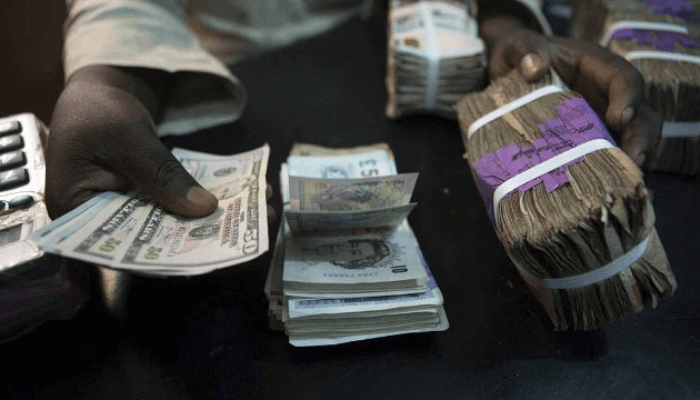
The naira depreciated to N1,520 per dollar at the parallel section of the foreign exchange (FX) market on Monday.
This signifies a 3.4 percent decline from the N1,470/$ traded on May 10.
The bureau de change (BDC) operators, popularly known as street traders, put the buying price of the dollar at N1,490 and the selling price at N1,520 — leaving a profit margin of N30.
At the official window, the local currency depreciated by 0.80 percent against the dollar to close at N1,478.11 on Monday — from the N1,466.31 traded on May 10.
READ ALSO: Naira crashes further at official, parallel markets
According to FMDQ Securities Exchange, a platform that oversees official FX trading in Nigeria, an exchange rate of N1,490 to the dollar was the highest rate recorded during trading and the lowest rate was N1,322/$.
Meanwhile, Olayemi Cardoso, governor of the Central Bank of Nigeria (CBN), on Monday, said the apex bank had been “reoriented” to focus on price and monetary stability.
Cardoso said the official FX market has been stabilised.
According to the governor, investors previously had a “tendency to head for the window” in response to currency fluctuations, however, there has been a “fundamental shift”
Cardoso said investors are getting more comfortable with the official window.


-
 Latest6 days ago
Israel marks 3 years since October 7 Hamas attack amid Gaza strikes, election debate
-

 Energy6 days ago
Fuel Battle: Dangote, marketers and government clash over petrol imports
-
 Energy7 days ago
Petrol, diesel prices rise 86% in 2026 as costs hit fresh highs
-
 Energy1 week ago
Has Iran lost control of the Strait of Hormuz? Oil flows rebound as war disruptions persist
-

 Football6 days ago
Nigeria’s World Cup exit under spotlight as FIFA’s DR Congo files emerge
-

 Latest6 days ago
US Court set to rule on release of FBI, DEA records on Tinubu
-
 Business6 days ago
Nigerian investors at a crossroads as fixed-income yields slide
-

 Business1 week ago
LoveWorld Trade and Investment Forum to Convene Business Leaders in Accra