
Featured
2027 Elections: Tinubu’s re-election bid, opposition battles and emerging surprises

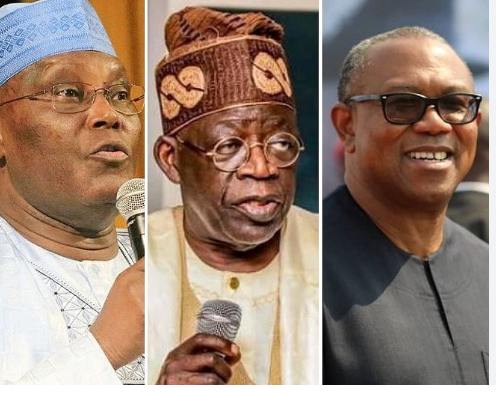
Nigeria’s political landscape is entering a critical phase ahead of the 2027 general elections, with President Bola Tinubu seeking re-election, opposition figures positioning themselves for a major challenge and political parties intensifying efforts to build nationwide support.
Although the campaign period has officially commenced, the political atmosphere remains uneven. The ruling All Progressives Congress (APC) has taken its campaign to several states, while opposition parties are still dealing with internal disagreements, legal battles and negotiations over possible alliances.
The presidential and National Assembly elections are scheduled for January 16, 2027, while governorship and State Houses of Assembly elections will hold on February 6, according to INEC’s revised timetable announced in February 2026. Presidential and National Assembly campaigns commenced on August 19, while campaigns for governorship and state assembly elections began on September 9.
The coming weeks are expected to test the strength of the major political parties, the popularity of their candidates and their ability to convince voters that they have credible solutions to Nigeria’s economic and security challenges.
Tinubu’s re-election bid and the APC advantage
President Tinubu is seeking a second term on the platform of the APC, which has already begun nationwide mobilisation.
The President launched his re-election campaign with a rally in Kaduna on October 24, defending his administration’s economic reforms and promising improved prosperity, growth and recovery.
The APC is expected to rely on its control of the Federal Government, political structures across the states and alliances with influential governors and political figures to strengthen its position.
However, the administration will have to confront public dissatisfaction over the cost of living, inflation, unemployment, fuel prices and insecurity.
The removal of petrol subsidy and other economic reforms introduced by Tinubu have generated significant financial pressure for households and businesses. While the government maintains that the policies are necessary for long-term economic stability, opposition candidates are likely to make their effects on ordinary Nigerians a major campaign issue.
The President’s central challenge will be convincing voters that the economic difficulties experienced under his administration are temporary and that his policies will deliver measurable improvements.
Atiku, Obi and the opposition’s unresolved challenge
The opposition’s biggest challenge may not necessarily be a shortage of popular candidates but its inability to establish a united political front.
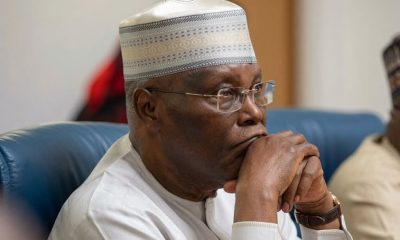
Former Vice-President Atiku Abubakar, former Anambra State Governor Peter Obi and Oyo State Governor Seyi Makinde have emerged as prominent opposition figures, but they are contesting on different political platforms.
Atiku is the presidential candidate of the African Democratic Congress (ADC), Obi is running under the Nigeria Democratic Congress (NDC), while Makinde is the candidate of the Allied Peoples Movement (APM).
Their separate ambitions have complicated efforts to build a common platform capable of mounting a coordinated challenge against Tinubu.
Opposition leaders and groups have held discussions on the possibility of a common candidate, but disagreements over leadership, political interests and the method of selecting a flag bearer remain significant obstacles.
A coalition could strengthen the opposition by reducing the fragmentation of votes. However, persuading leading politicians to abandon their individual ambitions in support of one candidate may prove difficult.
The unresolved negotiations could therefore become one of the defining features of the 2027 presidential contest.
Major surprise: Court ruling threatens Atiku’s ADC ticket
One of the most significant developments in the election season came on November 5, when the Federal High Court in Abuja nullified the leadership of the ADC under former Senate President David Mark and invalidated decisions taken by the party leadership.
The judgment also affected the process that produced Atiku as the party’s presidential candidate, as well as the nominations of other ADC candidates for the 2027 elections.
The case followed a leadership dispute involving Nafiu Bala Gombe, a former deputy national chairman of the party, who challenged the emergence of the Mark-led caretaker leadership.
The ADC has rejected the judgment and filed an appeal, alongside an application seeking a stay of execution. It has also asked INEC to exercise restraint while the legal proceedings continue.
The development is particularly important because the ADC has been positioning itself as a major opposition platform ahead of the elections.
If the judgment is upheld by the higher courts, it could seriously affect the party’s ability to field candidates and Atiku’s presidential ambition. If overturned, the party could regain its footing, although the prolonged dispute may have already affected its preparations.
The outcome of the appeal is therefore one of the biggest developments to watch in the coming weeks.
Peter Obi’s new platform and the question of opposition unity
Another important development is Peter Obi’s move from the Labour Party to the NDC.
Obi, who finished third in the 2023 presidential election, remains an influential figure among voters who supported his previous campaign.
His decision to contest under a different platform has altered the opposition landscape, particularly in the South-East, where he enjoys considerable political support.
However, his decision to run separately from Atiku has raised questions about whether the opposition can avoid splitting votes among candidates seeking to unseat the incumbent.
Obi’s political strength will depend not only on his personal popularity but also on the ability of the NDC to establish structures across the country, attract influential political figures and mobilise voters beyond his traditional support base.
His recent engagement with other opposition leaders, including Makinde, has also fuelled speculation about possible political cooperation. Whether such discussions produce a formal alliance remains uncertain.
The return of political defections and unexpected alliances
As the election approaches, more political realignments are likely.
Governors, lawmakers, former ministers, party leaders and influential political blocs will be assessing where their interests are best protected.
The APC is expected to continue attracting politicians from opposition parties, particularly those seeking access to the ruling party’s political structure and federal influence.
However, defections may not automatically translate into electoral victories. Some politicians could face resistance from existing party members, while others may struggle to transfer their personal political influence to a new platform.
The possibility of unexpected alliances between politicians who previously belonged to opposing camps also remains open.
The political relationship between Obi and Makinde, for instance, has attracted attention amid wider discussions about opposition cooperation. But personal meetings and public appearances should not be mistaken for a concluded electoral alliance.
The economy and insecurity will dominate campaign debates
Beyond political calculations, the economic situation is likely to be one of the most important issues determining voter choices.
The cost of food, transportation, electricity, housing and healthcare remains a major concern for many households.
Opposition candidates are expected to question the effectiveness of the government’s economic policies and present alternative approaches to reducing hardship, creating jobs and improving living standards.
Tinubu and the APC, in turn, will seek to defend their reforms and argue that the policies are laying the foundation for long-term economic recovery.
Security will also feature prominently.
Persistent attacks by armed groups, kidnappings, banditry and communal violence in different parts of the country are likely to form part of the candidates’ campaign messages.
Voters will be looking for specific and realistic proposals rather than broad promises to end insecurity.
Campaign violence and the credibility of the election
Another issue requiring close attention is the safety of candidates, supporters and voters during the campaign period.
Peter Obi’s convoy was reportedly attacked by suspected thugs in Calabar, Cross River State, during a political engagement in November. The incident has renewed concerns about political violence and the safety of opposition figures.
Political parties and security agencies will face pressure to ensure that rallies, town hall meetings and other campaign activities take place without intimidation or attacks.
INEC will also be under scrutiny over its management of the electoral process, particularly the publication of candidate lists, enforcement of campaign regulations and preparation for the January and February polls.
The courts are likely to remain influential, especially where disputes over party leadership, candidate nominations and eligibility arise.
What voters should watch in the coming weeks
Several developments could significantly reshape the political contest before election day.
First, the outcome of the ADC’s appeal will determine whether Atiku and other party candidates can proceed without the uncertainty created by the November 5 judgment.
Second, opposition coalition negotiations could produce a common candidate or leave the major challengers competing separately, potentially benefiting the ruling party.
Third, the APC’s nationwide campaign will test whether Tinubu can convert the party’s political structure and government influence into wider public support.
Fourth, the performance of opposition candidates in areas outside their traditional strongholds will help determine whether they can build genuinely national campaigns.
Finally, the economy, insecurity and the credibility of the electoral process could prove more decisive than the number of rallies or political endorsements secured by the candidates.
A contest that remains difficult to predict
The 2027 election is shaping up as a contest between an incumbent seeking to retain power and opposition figures attempting to turn public dissatisfaction into an electoral challenge.
Tinubu has the advantage of incumbency and the APC’s nationwide political machinery. However, the opposition has prominent figures with established support bases and the potential to mobilise voters seeking an alternative.
The latest court ruling against the ADC has introduced another layer of uncertainty, while the unresolved opposition alliance talks could determine whether the major challengers face the President separately or coordinate their efforts.
Ultimately, the election may be decided less by political defections, campaign rallies and endorsements than by voters’ assessment of the government’s performance and the credibility of the alternatives being offered.
For now, the biggest question is whether Nigeria’s opposition can overcome its internal differences before the election or whether its fragmentation will give Tinubu a clearer path to a second term.


-
 Business5 days ago
OPay explains how Nigerians can access FG’s N50,000 monthly cash relief
-

 Crime1 week ago
Cocaine in their bellies: NDLEA arrests two Nigerians bound for Paris [VIDEO]
-

 Latest1 week ago
Nathaniel Bassey hits 1bn YouTube views, sets African gospel music record
-
 Featured1 week ago
APC, Atiku clash over Tinubu’s power sector reforms ahead of 2027 elections
-
 Latest1 week ago
Tinubu wins US Court ruling as Judge rejects Greenspan’s evidence request
-
Latest1 week ago
Atiku Slams Tinubu over power crisis, says Nigerians need electricity, not excuses
-

 Business7 days ago
Petrol prices set to drop as Dangote Refinery cuts gantry rate to N1,215
-
 Features3 days ago
How ADC leadership crisis put Atiku’s 2027 ambition at risk