
Comments and Issues
2027 Poll and the vote peddlers of Nigeria

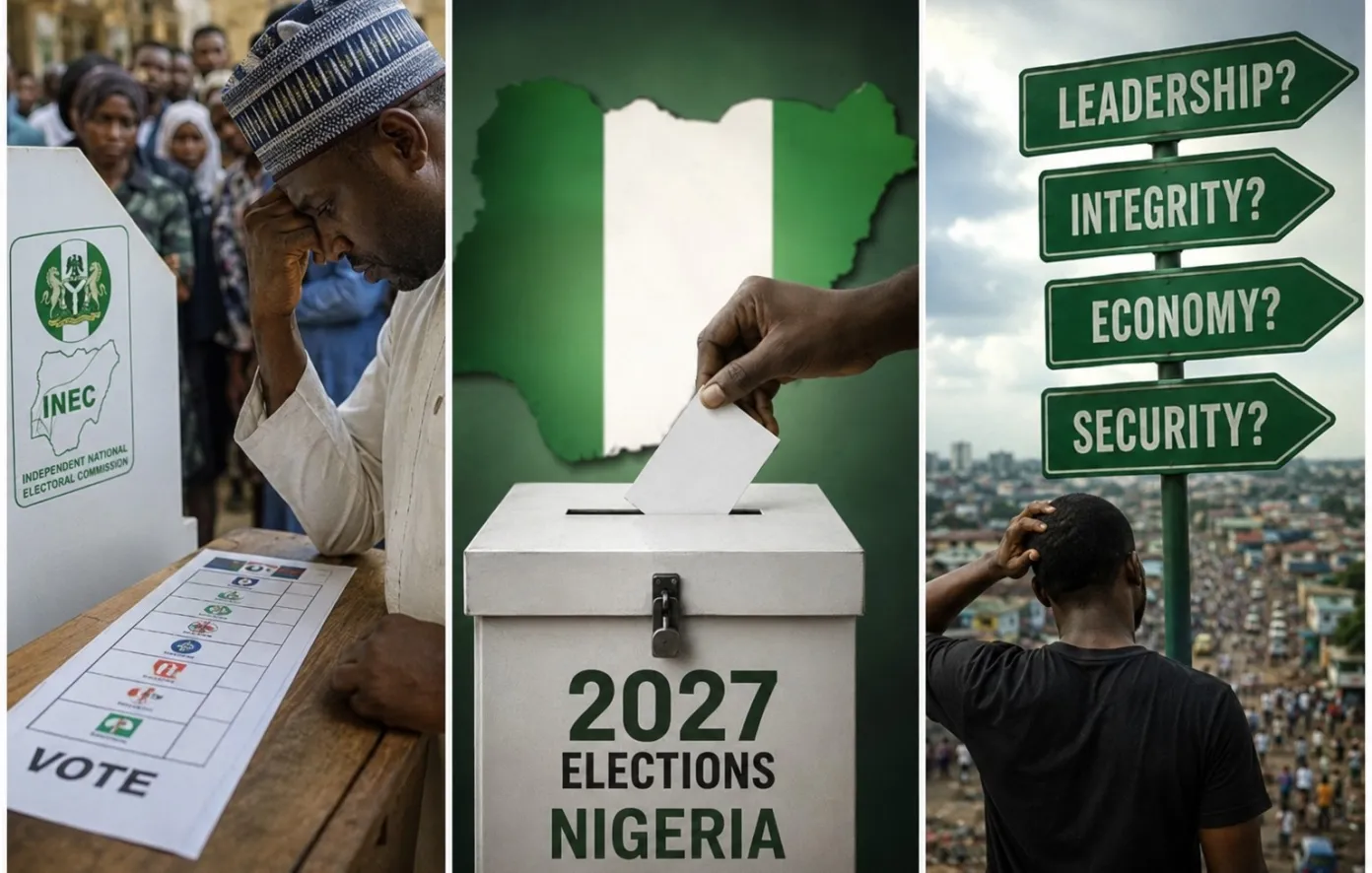
There is one disturbing political practice that the current administration in Nigeria appears to have popularised and normalised, particularly as the 2027 general elections draw closer: the peddling of votes and the persistent claims by individuals and political groups that they have already secured specific blocs of voters for the incumbent President, Bola Ahmed Tinubu.
Since the beginning of the year, and with unprecedented intensity as political mobilisation gathers momentum, Nigeria’s public spaces have been inundated with claims by various interest groups within the ruling All Progressives Congress (APC) about the millions of votes they have supposedly secured for the incumbent President and the party’s presidential candidate.
Across the country, political office holders have continued to make extraordinary electoral promises. The Governor of Edo State, for instance, who secured fewer than 130,000 votes in his election victory over the Peoples Democratic Party (PDP), has reportedly promised to deliver 2.5 million votes in Edo State for President Tinubu in the January 2027 presidential election.
Similarly, the APC Governors’ Forum, particularly governors from the Northern region, where the incumbent President is expected to face considerable electoral challenges, has featured prominently in media reports about promises to deliver millions of votes for him.
These declarations have understandably generated questions among discerning Nigerians. How can political office holders confidently claim to have secured millions of votes before citizens have even exercised their constitutional right to vote? On what basis are these extraordinary electoral figures being projected?
Interestingly, the reported political calculations are not limited to the ruling party. Rotimi Chibuike Amaechi, a former two-term Governor of Rivers State and former Federal Minister, has also been quoted in the media as predicting that the presidential candidate of the African Democratic Congress (ADC), former Vice-President Atiku Abubakar, would secure the overwhelming majority of Northern votes, estimated at close to 40 million. His argument, as reported, is that Atiku’s Northern background gives him a significant electoral advantage in the forthcoming presidential contest.
However, Amaechi’s prediction does not approach the extraordinary certainty displayed by several political interest groups within the APC, which appear to have clinically calculated and confidently announced millions of votes supposedly already secured for their presidential candidate.
The situation becomes even more troubling when heads of Federal Government agencies and other public office holders, whose statutory responsibilities require them to serve the Nigerian public without partisan discrimination, begin making political promises involving millions of votes for the incumbent President. Reports that some of these officials have pledged to deliver approximately 10 million votes for President Tinubu raise serious questions about the politicisation of public institutions.
If you ask me, I would describe what is happening as vote peddling. How else can these extraordinary political declarations be explained, other than as an attempt to turn the electorate into a commodity that can be negotiated, traded and delivered to political candidates?
The situation becomes even more disturbing when considered alongside reports that the Federal Government has commenced payments of N50,000 to selected Nigerians under an intervention programme intended to alleviate the suffocating cost-of-living crisis.
While social intervention programmes are legitimate instruments of public policy, serious questions arise when beneficiaries are reportedly required to provide sensitive personal information, including banking and voter-related details. Nigerians deserve clear explanations about the purpose for which such information is collected, the legal authority under which it is obtained, how it is protected and whether it could potentially be accessed or misused for partisan political purposes.
There is a legitimate public-interest concern that personal information collected under the guise of social assistance could be exploited for purposes unrelated to the programme. Speculation has also emerged about the possible misuse or cloning of voter information to manipulate electoral outcomes. These are serious allegations that must not be treated as established facts without evidence. Nevertheless, they deserve independent investigation by the appropriate authorities.
If these concerns are substantiated, the relevant institutions must act decisively to protect citizens’ personal information and safeguard the integrity of the electoral process. No Nigerian should be required to surrender fundamental rights or sensitive personal information as the price of accessing legitimate government assistance.
The most fundamental question arising from these developments is this: if political parties and interest groups can supposedly procure millions of votes long before election day, what exactly is the purpose of conducting elections?
If votes can be purchased, negotiated or politically allocated before citizens arrive at polling stations, why should Nigerians continue to invest faith in the electoral process?
The uncomfortable truth is that vote peddling diminishes the dignity of elections and undermines the integrity, legitimacy and credibility of constitutional democracy.
I therefore join political scientists, democracy advocates and other concerned Nigerians in asking a fundamental question: Why do we care about elections?
The universal democratic principle is that democracy cannot meaningfully exist without credible elections. Although democracy requires much more than the periodic conduct of elections, no country can legitimately claim to operate a democratic system without genuine, transparent, free and fair electoral processes.
Credible elections provide the foundation for democratic legitimacy. Political scientists have consistently argued that elections give citizens the opportunity to hold their leaders accountable by voting them out of office or renewing their mandate when they have performed satisfactorily. They also provide a peaceful mechanism for transferring political power and resolving political competition without violence.
Furthermore, credible elections contribute to better governance by connecting citizens’ interests with the decisions of those entrusted with public authority. They allow voters to choose representatives who reflect their aspirations and provide a foundation for responsive government and sustainable national development.
It is universally recognised that citizens possess an inalienable and constitutionally grounded right to participate in the government and public affairs of their countries. This includes the right to vote and to be elected in periodic elections without discrimination.
The will of the people, expressed through their ballots, constitutes the foundation of legitimate democratic authority. The Nigerian Constitution recognises this principle in Section 14(2)(a), which provides that sovereignty belongs to the people of Nigeria, from whom government derives all its powers and authority.
This constitutional principle means that political office holders do not own governmental authority. They exercise power on behalf of the Nigerian people and must periodically submit themselves to the electorate for the renewal of their mandates.
Interestingly, these democratic principles are also enshrined in Article 21 of the Universal Declaration of Human Rights (UDHR) and Article 25 of the International Covenant on Civil and Political Rights (ICCPR), alongside other international human rights instruments.
These provisions affirm the principle that elections belong to the people and constitute an essential feature of genuine democracy.
This is precisely why it is demeaning and dangerous for governors, ministers, political appointees and other public officials to engage in the peddling of votes during electioneering campaigns. Such conduct is not merely an affront to democratic ethics; depending on the circumstances and evidence, it may also constitute an electoral offence under Nigerian law.
The practice makes a mockery of democratic governance and must be confronted by the relevant government institutions. Nigerian citizens, in particular, must speak out against these dangerous tendencies and reject practices that threaten the sanctity of the forthcoming elections.
The following are some of the reported incidents and public declarations illustrating the growing culture of vote peddling in Nigeria.
THE POLITICAL SCENARIOS: WHO HAS ALREADY SECURED THE VOTES?
1. Tinubu’s daughter rallies market leaders for her father’s re-election
Towards the end of October 2026, reports emerged that President Bola Tinubu’s daughter and self-styled Iyaloja-General of Nigeria, Folasade Tinubu-Ojo, had launched a political support movement to mobilise market women, traders and other informal-sector workers for her father’s re-election in 2027.
The movement, known as the Iyaloja General Movement for Renewed Hope Initiatives, was reportedly inaugurated at Eagle Square, Abuja, with its leadership announcing a target of 10 million votes for the All Progressives Congress in the 2027 general elections.
Speaking at the event, Tinubu-Ojo reportedly said the movement would sensitise market leaders and members of the informal sector about the forthcoming elections and encourage them to support the President’s re-election.
Although political mobilisation is a legitimate feature of democratic competition, the declaration of a predetermined 10-million-vote target raises questions about the extent to which ordinary citizens are being regarded as independent voters rather than electoral assets controlled by political organisations.
2. Heads of Federal Government agencies pledge 10 million votes for Tinubu
Earlier, in September 2026, reports emerged that an organisation known as the Forum of Chief Executive Officers of Federal Parastatals and Agencies had pledged to mobilise 10 million votes for President Bola Tinubu in the 2027 presidential election.
The announcement was contained in a statement issued by Biodun Ajiboye, chairman of the forum’s Media and Publicity Committee.
This development is particularly troubling because the leadership of Federal Government agencies is expected to uphold public-sector neutrality and discharge statutory responsibilities in the interests of all Nigerians.
Public institutions must not be transformed into partisan mobilisation platforms. The use of official positions, public resources or institutional influence to secure electoral advantages for political candidates would represent a serious departure from the principles of impartial public administration.
3. Bago promises Tinubu two million votes in 2027
Like several APC governors, Niger State Governor Mohammed Bago has reportedly promised to deliver two million votes out of the state’s approximately 2.9 million registered voters for President Tinubu in the 2027 presidential election.
Bago reportedly made the declaration while inaugurating a 525-member campaign council for the state.
He expressed confidence that the target would be achieved through grassroots mobilisation extending from local communities to the state headquarters.
The obvious question is how such a substantial electoral commitment can be made in advance of an election in a democratic society where citizens are constitutionally entitled to exercise their voting rights freely and independently.
No governor, political party or political association owns the votes of the people. The electorate, not political office holders, determines the outcome of elections.
VOTE BUYING AND THE DECLINE OF NIGERIA’S DEMOCRATIC CULTURE
A commentator on Nigerian electoral corruption once observed that the 2022 party primaries and gubernatorial elections brought the reality of vote buying into particularly sharp focus.
According to media reports, delegates participating in the primaries of the major political parties were offered thousands of dollars to induce them to support particular candidates.
In a research paper published in 2017 examining patterns of vote buying in Nasarawa State, an author reportedly concluded that vote buying and selling had become important determinants of electoral outcomes in party primaries. The findings were also considered reflective of a wider problem within Nigeria’s electoral system.
Vote buying has been part of Nigeria’s electoral history, particularly since the restoration of democratic governance in 1999. However, the practice appears to have assumed increasingly visible and sophisticated dimensions in recent electoral contests.
It is also widely argued that the increased deployment of technology in election administration has reduced some opportunities for the traditional manipulation of ballot papers and election results, thereby encouraging political actors to explore alternative methods of influencing electoral outcomes through material and financial inducements.
However, technological advancement does not automatically guarantee electoral integrity. Election technology can itself be compromised through administrative failures, deliberate interference or the manipulation of electoral procedures.
The 2023 presidential election remains an important example in the ongoing debate about electoral transparency in Nigeria. The controversy surrounding the failure to upload presidential election results to the Independent National Electoral Commission’s IReV portal in real time generated widespread criticism and questions about the credibility of the process.
The lesson is that technology must be supported by transparency, accountability, institutional independence and strict adherence to electoral laws. Otherwise, the introduction of digital systems may fail to achieve its intended democratic objectives.
There is another school of thought which argues that the growing use of technology has reduced opportunities for the manual manipulation of election results, while encouraging political actors to concentrate more heavily on directly inducing voters at polling units.
Whatever the explanation, the fundamental problem remains the same: the deliberate subversion of the free will of the electorate.
VOTE BUYING AND INSECURITY: MAJOR THREATS TO CREDIBLE 2027 POLLS
The Human Rights Writers Association of Nigeria (HURIWA) has also warned that vote buying and insecurity constitute major threats to the credibility of the 2027 general elections.
The organisation raised these concerns during its 18th National Lecture in Abuja, themed Achieving Free and Fair Elections in Nigeria 2027, where security experts, academics and civil society leaders examined the conditions necessary for credible elections.
Speaking at the event, HURIWA’s National Coordinator, Comrade Emmanuel Onwubiko, described vote buying as an increasingly entrenched electoral menace capable of distorting the genuine will of the electorate.
According to him, transparent, free and fair elections are indispensable to producing leaders capable of addressing Nigeria’s numerous socioeconomic and developmental challenges.
He observed that Nigerian votes were increasingly being treated as commodities to be negotiated, bought and sold.
Onwubiko also expressed concern about the apparent failure of government institutions to address the problem with the urgency it deserves. He warned that continued institutional inaction could allow vote-buying networks to become as organised and profitable as kidnapping syndicates.
He drew a parallel with the early development of kidnapping in Nigeria, when inadequate government intervention allowed the criminal enterprise to expand into a sophisticated and highly profitable industry.
HURIWA therefore warned that unless systematic and sustained measures were adopted to dismantle vote-buying networks, the practice could develop into an organised commercial enterprise in which syndicates specialise in selling electoral support to political aspirants.
Onwubiko further cited research suggesting that widespread poverty and economic hardship have contributed significantly to the expansion of electoral inducement, leaving economically vulnerable citizens susceptible to financial offers from politicians.
He called on the Independent National Electoral Commission (INEC), the Economic and Financial Crimes Commission (EFCC), the Independent Corrupt Practices and Other Related Offences Commission (ICPC), the Nigeria Police Force and other relevant security agencies to intensify their efforts to combat electoral corruption.
He particularly urged the EFCC and the police to become more proactive in investigating, arresting and prosecuting individuals involved in vote buying and selling.
The issue of election security also featured prominently during the lecture.
The Minister of Defence, General Christopher Musa, reportedly warned that insecurity across different parts of the country remained a significant threat to the successful conduct of free and fair elections in 2027.
Represented by his Senior Special Assistant on Legal and Public Service Matters, Barrister Aliu Anas, the Minister emphasised the relationship between national security and electoral integrity.
He noted that insurgency, banditry, communal conflicts and digital disinformation could undermine the electoral process if not effectively addressed.
The Minister also disclosed that the Federal Government had prioritised election security and was working with INEC, the Nigeria Police Force, intelligence agencies and other relevant institutions to create a secure environment for the forthcoming elections.
He stressed that safeguarding the electoral process required collective responsibility involving government institutions, communities and individual citizens.
Particular concern was expressed about informants who provide intelligence and logistical assistance to criminal groups, thereby frustrating security operations.
Citizens, he argued, must support security agencies by providing useful information capable of preventing attacks and disrupting criminal networks.
Delivering the keynote lecture, political analyst and public affairs commentator Professor Okey Ikechukwu shifted attention to what he described as the opposition’s failure to develop effective strategies for challenging the ruling party.
He argued that although concerns about electoral transparency were legitimate, opposition parties had not sufficiently developed the political structures and grassroots networks necessary to compete effectively for power.
Ikechukwu maintained that political victories are secured through organisation, strategic planning and sustained engagement with the electorate, rather than emotional appeals alone.
He criticised opposition leaders for spending much of the period following the 2023 elections complaining about the outcome instead of examining the factors that contributed to their defeat and preparing more effectively for the next electoral contest.
He also observed that internal divisions, leadership disputes and the absence of coherent political strategies could significantly weaken the opposition’s prospects in 2027.
His argument raises an important point: while electoral institutions must guarantee transparency and fairness, opposition political parties also have a responsibility to organise themselves, develop credible programmes and establish meaningful connections with voters.
Nevertheless, the failure of opposition parties to organise effectively cannot excuse electoral malpractice or diminish the responsibility of government institutions to protect the integrity of elections.
VOTE PEDDLING: WHAT DOES THE LAW SAY?
One of the fundamental challenges confronting Nigeria is not necessarily the absence of laws but the apparent lack of political will to enforce existing legal provisions effectively.
The persistent failure to investigate and prosecute electoral offenders creates an environment in which political actors may conclude that the financial inducement of voters carries little risk of punishment.
As a civil society advocate, I recently participated in a meeting convened by the Chairman of the Independent National Electoral Commission, Professor Joash Amupitan, during which several issues relating to the forthcoming elections were discussed.
I directly asked the INEC Chairman why the Commission had not been more successful in ensuring that individuals who openly engage in vote buying are brought to justice.
His response was disappointing.
Professor Amupitan explained that the responsibility for prosecuting electoral offenders, including individuals involved in vote buying, principally rests with law enforcement agencies such as the Nigeria Police Force, the EFCC and the ICPC, rather than INEC.
He nevertheless acknowledged that vote buying remains one of the greatest challenges confronting Nigeria’s electoral process and emphasised the need for strict enforcement of the law to eradicate the practice.
While the Chairman’s explanation may reflect the division of institutional responsibilities, it does not absolve INEC of its responsibility to monitor, document and report electoral offences and to work collaboratively with the relevant enforcement agencies.
Nigeria has an established legal framework prohibiting electoral bribery and the inducement of voters.
Specifically, Section 121 of the Electoral Act 2022 criminalises the provision, giving, lending or offering of money or other valuable consideration, directly or indirectly, to influence a person’s vote or induce a person to vote or refrain from voting.
The law also criminalises the receipt of such inducements. Persons found guilty may face the penalties prescribed by the Act, including imprisonment or fines.
The legal prohibition is therefore clear. The challenge is the persistent gap between the existence of these provisions and their effective enforcement.
A democratic society cannot successfully combat electoral corruption when individuals who engage in vote buying are allowed to operate without meaningful consequences.
WHY HAS VOTE BUYING NOT BEEN ERADICATED?
An analysis published by DUBAWA identified several factors that have contributed to the persistence of vote buying in Nigeria. I subscribe to many of these explanations because they reflect the institutional and socioeconomic realities confronting the country.
1. Weak law enforcement
One of the greatest obstacles to eradicating vote buying is the weakness of enforcement mechanisms.
Election observer organisations have repeatedly documented incidents of vote buying across Nigerian elections. However, successful prosecutions and convictions remain relatively limited when compared with the scale of reported offences.
Weak accountability, inadequate investigations and delays in prosecution reduce the deterrent effect of existing electoral laws and contribute to a culture of impunity.
When electoral offenders believe that they can buy votes without facing legal consequences, the practice becomes increasingly attractive to those seeking political power.
2. Poverty and economic hardship
Nigeria’s prolonged economic difficulties have made millions of citizens vulnerable to electoral inducements.
For individuals struggling with rising food prices, unemployment, inflation and declining purchasing power, immediate financial assistance may appear more valuable than political promises whose benefits are uncertain.
This is one of the most disturbing dimensions of vote buying. Economic hardship creates an environment in which the constitutional right to vote freely can be undermined by the desperate need to survive.
However, poverty must never be used to justify the exploitation of vulnerable citizens by politicians. Rather, it should strengthen the argument for responsible governance, economic inclusion and effective social protection.
3. Difficulties in gathering evidence
Vote buying frequently occurs discreetly and through intermediaries.
Transactions may take place away from polling stations, through political agents or after voters have provided evidence that they have voted for a particular candidate.
These methods make it difficult for electoral officials and law enforcement agencies to obtain sufficient admissible evidence for successful prosecution.
Consequently, enforcement agencies must develop stronger intelligence-gathering mechanisms and investigative strategies capable of identifying and dismantling organised vote-buying networks.
4. New and indirect methods of electoral inducement
Political actors have increasingly adopted sophisticated methods of influencing voters.
Instead of openly distributing cash, inducements may be disguised as welfare assistance, food distribution, transportation support, gifts or other forms of material assistance.
Although legitimate social intervention programmes must not automatically be classified as vote buying, the timing, purpose, conditions attached to benefits and the involvement of political actors must be carefully examined.
Where government assistance is deliberately designed or distributed to influence electoral choices, it raises serious questions about electoral integrity and the possible violation of applicable laws.
The evolution of these methods creates additional challenges for investigators, electoral authorities and civil society organisations.
Source: DUBAWA (dubawa.org).
CONCLUSION: NIGERIA MUST END THE COMMERCIALISATION OF VOTES
Nigeria has no choice but to confront and eradicate vote buying if the country genuinely intends to sanitise its increasingly troubled electoral system and establish constitutional democracy on a foundation of integrity, accountability and public trust.
The uncomfortable truth is that political aspirants who spend hundreds of millions or billions of naira purchasing electoral support cannot reasonably be presumed to be motivated entirely by altruistic or patriotic considerations.
Those who invest enormous financial resources in buying their way into political office raise legitimate questions about their intentions and the expectations they attach to their political investments.
Politics must never become a commercial enterprise in which public office is treated as an investment opportunity and the national treasury as a source of private returns.
When political aspirants regard the acquisition of public office as a financial investment, there is a serious danger that the first priority after assuming power will be recovering the money spent during electioneering campaigns rather than serving the people.
Such a mentality creates fertile ground for corruption, abuse of public office, misappropriation of public resources and the systematic betrayal of citizens’ democratic expectations.
Those who organise the procurement of votes for presidential candidates and other political aspirants must therefore understand that they are contributing to a dangerous culture that undermines the foundations of democratic governance.
The most troubling dimension of this practice is the possibility that political leaders themselves may fail to demonstrate the moral and institutional commitment necessary to eradicate it.
If the occupant of the highest political office in Nigeria does not demonstrate an unequivocal commitment to condemning and combating electoral corruption, it becomes increasingly difficult to expect law enforcement institutions to act impartially, particularly when allegations involve political actors associated with the incumbent administration.
The President appoints the leadership of several important Federal institutions, including security and law enforcement agencies. Although these institutions are bound by law and must exercise their statutory responsibilities independently and impartially, the political environment in which they operate can significantly influence their effectiveness.
No law enforcement agency should look the other way because an alleged electoral offender is politically connected to the ruling party or enjoys the protection of a powerful political office holder.
The police, EFCC, ICPC and other relevant institutions must demonstrate that electoral laws apply equally to everyone, irrespective of political affiliation, social standing or proximity to the corridors of power.
The 2027 general elections must not become another exercise in which the political elite determine electoral outcomes through financial inducements, political intimidation and the manipulation of vulnerable citizens.
Nigerians must reclaim their democratic rights. Their votes are not the personal property of governors, ministers, political appointees, wealthy businessmen or political godfathers. Every eligible voter must remain free to make an independent electoral choice without coercion, intimidation or financial inducement.
The future of Nigeria’s democracy depends on whether its citizens and institutions are prepared to defend this fundamental principle.
I therefore urge Nigerians to speak out whenever they encounter electoral malpractice, report suspicious activities to the appropriate authorities and continuously demand accountability from those entrusted with public power.
The fight against vote buying must be sustained, systematic and uncompromising.
Nigeria cannot build a credible democracy on the commercialisation of votes. The electorate must remain sovereign, elections must remain genuine expressions of the people’s will, and public office must be understood as a responsibility to serve rather than an opportunity to steal.
The time has come to clean up the Augean stable of Nigeria’s electoral system before the damage becomes irreversible.
EMMANUEL NNADOZIE ONWUBIKO is the Founder of the Human Rights Writers Association of Nigeria (HURIWA) and a former National Commissioner of the National Human Rights Commission of Nigeria.


-

 Business2 days ago
OPay explains how Nigerians can access FG’s N50,000 monthly cash relief
-

 Sports6 days ago
Senegal opens Dakar 2026 Youth Olympic Games, Africa’s first Olympic event
-

 Football1 week ago
U-17 Women’s World Cup: Flamingos Beat Mexico to Reach Quarter-Finals
-

 Latest6 days ago
FG Announces N50,000 cash support for vulnerable Nigerians under new relief programme
-

 Business6 days ago
NNPC’s N66-per-litre petrol discount set to end October 31
-

 Latest5 days ago
INEC recognises Pantami for Gombe, keeps Kano NDC candidate off final list
-

 Latest6 days ago
Netanyahu, Eisenkot face coalition deadlock as Israel struggles to form new government
-

 Latest6 days ago
NDC Chieftain tells Atiku to drop presidential ambition over son’s support for Tinubu