Connect with us

Crime

Oyo school abductions signal dangerous spread of Nigeria’s insecurity into South-West

Published

on

Oyo school abductions signal dangerous spread of Nigeria’s insecurity into South-West
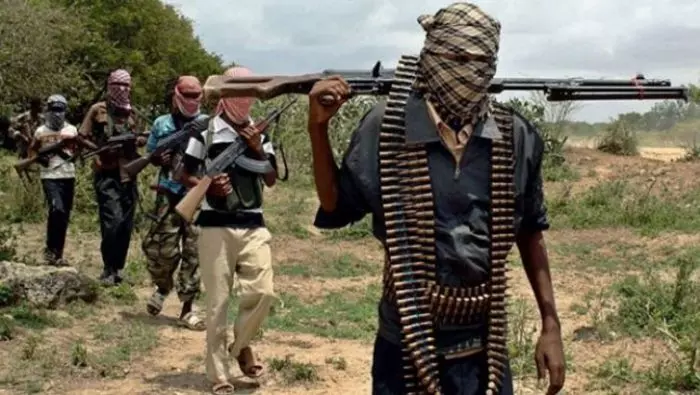
For years, mass abductions of schoolchildren and deadly bandit attacks were widely viewed by many in Southern Nigeria as a crisis largely confined to the troubled regions of the North-West and North-East. That perception is now rapidly collapsing following coordinated attacks on schools in Oyo State that have sent shockwaves across the South-West.

The attacks, carried out by heavily armed gunmen in Oriire Local Government Area near Ogbomoso, have intensified fears that the insecurity once associated mainly with northern states is steadily spreading across the country’s regional boundaries.

The situation took a darker turn after reports confirmed the killing of abducted mathematics teacher Michael Oyedokun while still in captivity, triggering outrage, protests, and renewed concerns over the growing reach of armed criminal groups.

For many residents in the South-West, images of school abductions, mass kidnappings, and armed raids were previously seen as tragedies happening far away in states battling insurgency and banditry.

But the coordinated invasion of schools in Oyo State has reinforced fears that criminal networks are no longer restricted to isolated northern territories, with armed groups increasingly exploiting forest corridors stretching across multiple states.

Security analysts say the vast forests linking Oyo, Kwara, Niger, and parts of the North-Central region are gradually becoming operational routes for kidnappers and bandit groups seeking new territories beyond their traditional strongholds.

The attackers reportedly stormed multiple schools during school hours, abducting students, teachers, and school administrators before fleeing into nearby forest reserves.

The incident has unsettled communities across the South-West, particularly because schools once considered relatively safer in the region are now appearing vulnerable to the same style of coordinated attacks long witnessed in parts of northern Nigeria.

Residents say the psychological impact has been severe, with fears growing that no part of the country may remain insulated from the wider national security crisis.

Following confirmation of Oyedokun’s death, protests broke out in Ogbomoso and surrounding communities, with teachers, youths, and residents demanding immediate action from the government and security agencies.

Demonstrators called for stronger military deployments, permanent security formations in vulnerable rural areas, and improved intelligence operations around forest corridors.

President Bola Ahmed Tinubu condemned the killing and ordered intensified rescue operations for the remaining hostages.

The president also renewed support for the establishment of state police, arguing that local security structures are becoming increasingly necessary as insecurity spreads into previously calmer regions.

Oyo State Governor Seyi Makinde has since convened emergency security meetings and pledged to strengthen surveillance and border monitoring across vulnerable parts of the state.

The Oyo attacks have become more than a local security incident; they now symbolize a broader national anxiety that armed criminal groups are gradually extending their reach across Nigeria.

What was once perceived as a regional northern crisis is increasingly being viewed as a nationwide threat, with communities across the South-West now confronting the same fears that have haunted many northern states for years.

As rescue efforts continue, the attacks have reignited difficult questions about whether Nigeria’s insecurity has evolved from a regional emergency into a fully national crisis with no clear geographic boundaries anymore.

Continue Reading
Advertisement
Click to comment

Leave a Reply

Your email address will not be published.

Trending