
Education
Rising academic fraud threatens credibility of Nigeria’s education system

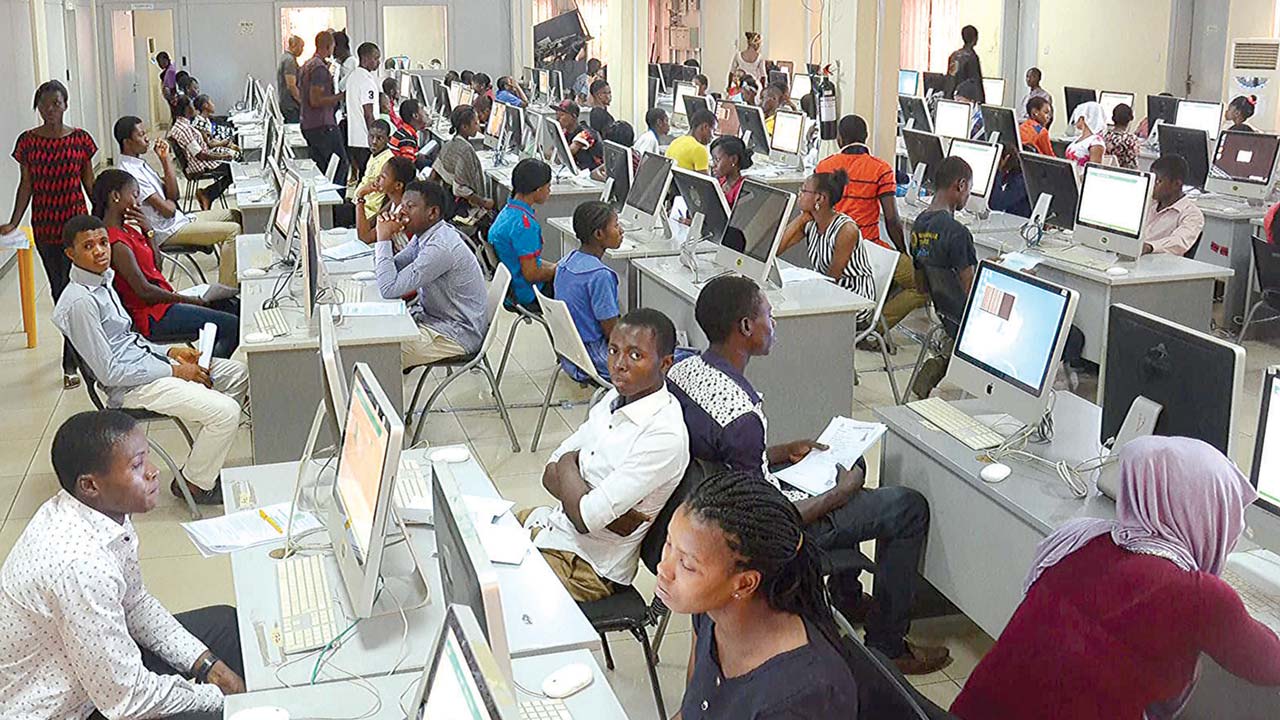
Across Nigeria’s education landscape, alarm bells are sounding over a surging crisis in academic fraud that many experts warn could undermine the credibility of the nation’s qualifications and erode public trust in its institutions.
From sophisticated exam cheating to widespread certificate forgery and internal corruption in universities, evidence suggests that academic integrity in Nigeria is under unprecedented strain.
Tech-Driven Exam Malpractice Explodes
Recent investigations by the Joint Admissions and Matriculation Board (JAMB) reveal that exam malpractice has evolved far beyond traditional classroom cheating.
In a report probing the 2025 Unified Tertiary Matriculation Examination (UTME), a special committee identified more than 4,000 cases of technology-enabled fraud, including biometric manipulation known as “finger-blending” and nearly 200 instances of artificial intelligence-assisted impersonation using image morphing.
These findings represent a worrying shift: fraudsters are exploiting digital systems and sophisticated tools to gain unfair advantage, forcing authorities to rethink how exams are monitored and secured.
Another report found that over 6,400 UTME results were flagged for “abnormal” practices, prompting JAMB to launch special investigations into systemic malpractice.
In individual states, data shows that certain regions such as Anambra and Lagos have disproportionately high numbers of candidates arrested for malpractice — including impersonation and possession of unauthorized mobile devices during exams.
Certificate Forgery and Illegal Admissions
Beyond cheating in exams, certificate forgery has become a national headache. In 2025 alone, JAMB disclosed that it uncovered at least 585 forged A-Level certificates presented for university admissions.
READ ALSO: Insecurity threatens education in Northern Nigeria, youth group warns
In an earlier investigation, a staggering 96% of A-Level results submitted to Bayero University were found to be fraudulent — prompting warnings to institutions to independently verify every document.
Meanwhile, the National Universities Commission (NUC) has identified multiple universities under investigation for issuing or accepting fake certificates, further deepening concerns about the reliability of academic qualifications nationwide.
Corporate and regulatory authorities have also pursued high-profile individual cases.
In 2025, the Independent Corrupt Practices and Other Related Offences Commission (ICPC) arraigned a university professor on allegations of operating an illegal degree-awarding scheme and forging a National Youth Service Corps (NYSC) certificate, underscoring how academic fraud can intersect with fraud in public service credentials.
Corruption Inside Institutions
Academic fraud isn’t confined to certificates and exams; internal corruption within universities has also surfaced. At Enugu State University of Science and Technology (ESUT), three lecturers and a student were suspended for alleged grade manipulation and extortion, revealing how faculty members have sometimes been complicit in subverting merit for personal gain.
Experts argue that such breaches go beyond isolated misconduct. Academic corruption — ranging from selling admissions and grades to abuse of office and financial misappropriation — has been documented as a recurring pattern that erodes institutional effectiveness and fairness.
A systematic literature review found that behaviours such as selling grades and admissions are widespread, weakening confidence in academic standards and outcomes.
Education experts like Professor Is-haq Oloyede, JAMB’s registrar, have repeatedly warned that unless transcription malpractice and fraud are contained, “the credibility of Nigeria’s education system could collapse.”
In response, the Federal Government has intensified efforts to tighten oversight. A recent initiative, the Nigeria Education Repository and Databank (NERD), aims to deploy digital verification tools to track and authenticate academic documents and deter forgery.
Experts say this can be a game-changer, but its success depends on cooperation among schools, regulators, and law enforcement.
Education advocates also argue that addressing academic fraud requires more than technology — it necessitates ethical reforms, greater investment in quality teaching and assessment systems, and a shift in national attitudes toward integrity in learning.
The consequences of persistent academic fraud extend beyond classrooms. A culture of compromised learning devalues genuine achievement, erodes employer confidence, and risks producing graduates ill-prepared for professional challenges.
As Nigeria strives to position itself for competitive global participation, experts contend that restoring academic integrity is not optional — it is foundational to national development and social trust.
Unless the root causes of fraud are tackled systematically and collectively, the cycle of malpractice threatens to reshape the very meaning of education in the country.


-
 Latest6 days ago
Full List: Meet the 2026 Nobel Prize winners across six categories
-

 Football5 days ago
Premier League Matchweek 7: Five Fixtures That Could Shape the Weekend
-

 Latest5 days ago
Umahi defends Lagos-Calabar highway route changes amid public outcry
-

 Business4 days ago
Dangote Refinery IPO: 70% Subscription claim meets fourfold demand assertion as investors seek clarity
-
Business5 days ago
Dangote Refinery IPO Extension: Was the 70% subscription report overhyped?
-

 Latest3 days ago
UCTH faces morgue crisis as 50 unclaimed corpses await mass burial
-

 Featured5 days ago
El-Rufai, ADC governorship candidate’s court appearance puts Kaduna opposition politics in focus
-

 Business3 days ago
BREAKING: Nigeria’s Inflation Rate Drops to 14.63% in September