
Business
Nigeria’s foreign debt climbs 22% to $51.86bn under Tinubu administration

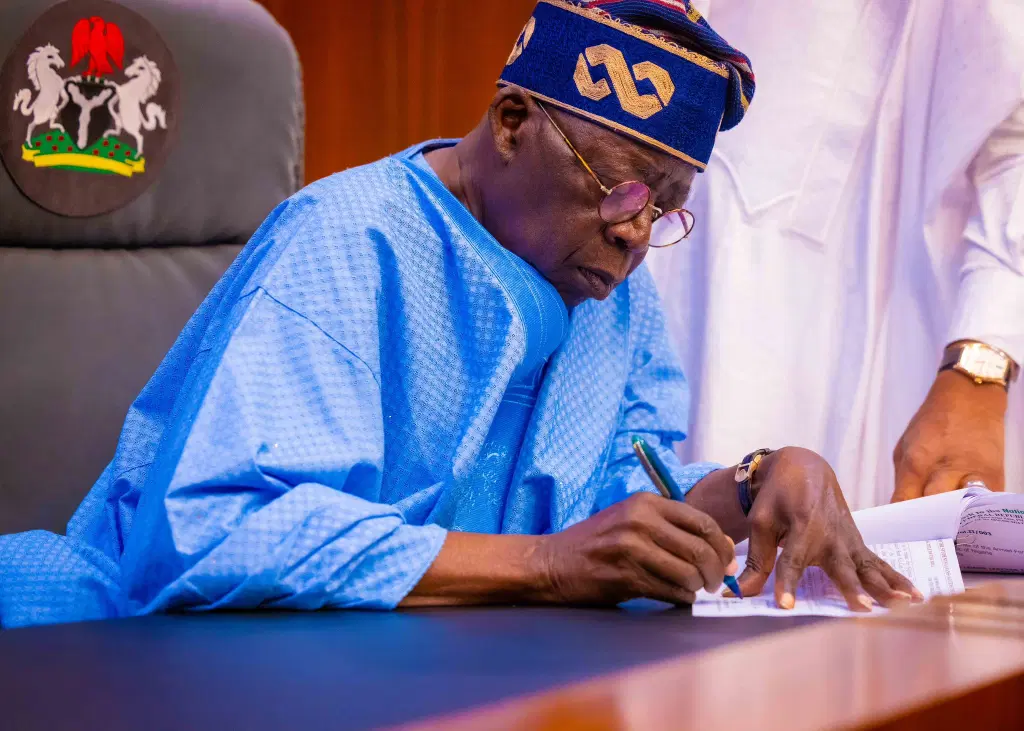
Nigeria’s total external debt stock rose significantly from $42.49 billion in December 2023 to $51.86 billion in December 2025, marking an increase of $9.36 billion or 22 per cent within two years, according to the latest data released by the Debt Management Office (DMO).
The rise reflects intensified foreign borrowing under the administration of Bola Tinubu, alongside a strategic shift in the country’s debt composition away from bilateral lenders toward multilateral institutions and renewed access to international capital markets.
An analysis of the DMO data shows that Nigeria’s external debt portfolio is now dominated by multilateral loans, Eurobonds, bilateral facilities, and syndicated loans from development finance institutions.
The World Bank Group emerged as the largest contributor to the growth in Nigeria’s foreign debt stock over the period under review.
Loans from its concessional arm, the International Development Association (IDA), increased from $14.96 billion in 2023 to $18.51 billion in 2025. Exposure to the International Bank for Reconstruction and Development (IBRD) also rose sharply from $485 million to $1.38 billion within the same period.
Several major policy-based financing packages drove this expansion. In June 2024, the World Bank approved $2.25 billion under the RESET and ARMOR reform programmes. This was followed by $1.57 billion in September 2024 for the HOPE and SPIN initiatives, and another $1.08 billion in March 2025 for education and resilience programmes.
The flagship facility was the $1.5 billion Reforms for Economic Stabilisation to Enable Transformation (RESET) Development Policy Financing approved in June 2024.
Although multilateral debt also includes obligations to the International Monetary Fund, Nigeria has fully repaid earlier emergency IMF financing obtained in previous years.
As of December 2025, World Bank loans accounted for 38.36 per cent of Nigeria’s total external debt stock of $51.86 billion.
Eurobond debt climbed from $15.12 billion in 2023 to $18.55 billion in 2025, representing an increase of more than $3 billion.
In December 2024, Nigeria issued a $2.2 billion dual-tranche Eurobond — $700 million at 9.625 per cent due in 2031 and $1.5 billion at 10.375 per cent due in 2034.
READ ALSO: Anger, debate trail proposed $1.25bn loan amid concerns over Nigeria’s debt surge
Another $2.35 billion dual-tranche issuance followed in November 2025, comprising $1.25 billion at 8.63 per cent due in 2036 and $1.10 billion at 9.13 per cent due in 2046.
The November 2025 issuance attracted an order book exceeding $13 billion, reflecting a 477 per cent oversubscription and signalling strong investor appetite despite global market volatility.
Loans from the African Development Bank increased from $3.2 billion to $3.9 billion within the two-year period.
Bilateral loans also rose from $5.9 billion to $6.7 billion, with China remaining one of Nigeria’s major bilateral creditors. However, exposure to China Exim Bank declined slightly as older facilities continued to amortise.
Other contributors to the debt expansion include a $517 million exposure from the China Development Bank, a $331 million increase from Agence Française de Développement, and a new $160 million facility from Unicredit.
Meanwhile, a syndicated facility arranged by the Africa Finance Corporation rose sharply from $270 million to $2.51 billion.
The Federal Government increased its planned borrowing for 2026 to N29.20 trillion following an upward revision of the proposed budget size and fiscal deficit. This represents an N11.31 trillion increase over the earlier projection of N17.89 trillion contained in the 2026 Abridged Budget Call Circular issued in December 2025.
The country recorded a fiscal deficit of about N5.7 trillion in the first half of 2025 amid revenue shortfalls and elevated expenditure. In 2024, the deficit widened sharply to N13.51 trillion, pushing the deficit-to-GDP ratio beyond the threshold permitted under the Fiscal Responsibility Act 2007.
Each annual fiscal deficit translates into new borrowing requirements, suggesting that Nigeria’s debt profile — including external obligations — could continue to expand in the coming years.
While the government’s reform programme has attracted improved investor confidence and a credit rating upgrade from Moody’s from Caa1 to B3, concerns persist among analysts over the pace of debt accumulation and the growing cost of servicing obligations.


-
 Latest1 week ago
Israel marks 3 years since October 7 Hamas attack amid Gaza strikes, election debate
-

 Energy1 week ago
Fuel Battle: Dangote, marketers and government clash over petrol imports
-

 Latest2 days ago
Full List: Meet the 2026 Nobel Prize winners across six categories
-
 Featured6 days ago
103 Million Voters: What does INEC’s new register say about Nigeria’s population?
-

 Business1 week ago
Nigerian startup 3650HQ moves to cut rising WhatsApp costs for businesses
-

 Football2 days ago
Premier League Matchweek 7: Five Fixtures That Could Shape the Weekend
-

 Business7 days ago
The Ministry of Commerce of Loveworld gets a $1 million boost for new investment fund at LTIF 2026 to promote Trade in Ghana
-

 Features7 days ago
Edo’s 2.5 million vote promise: Can the numbers match the politics?