
Latest
Court clarifies rules on party primaries, limits INEC powers in landmark judgment

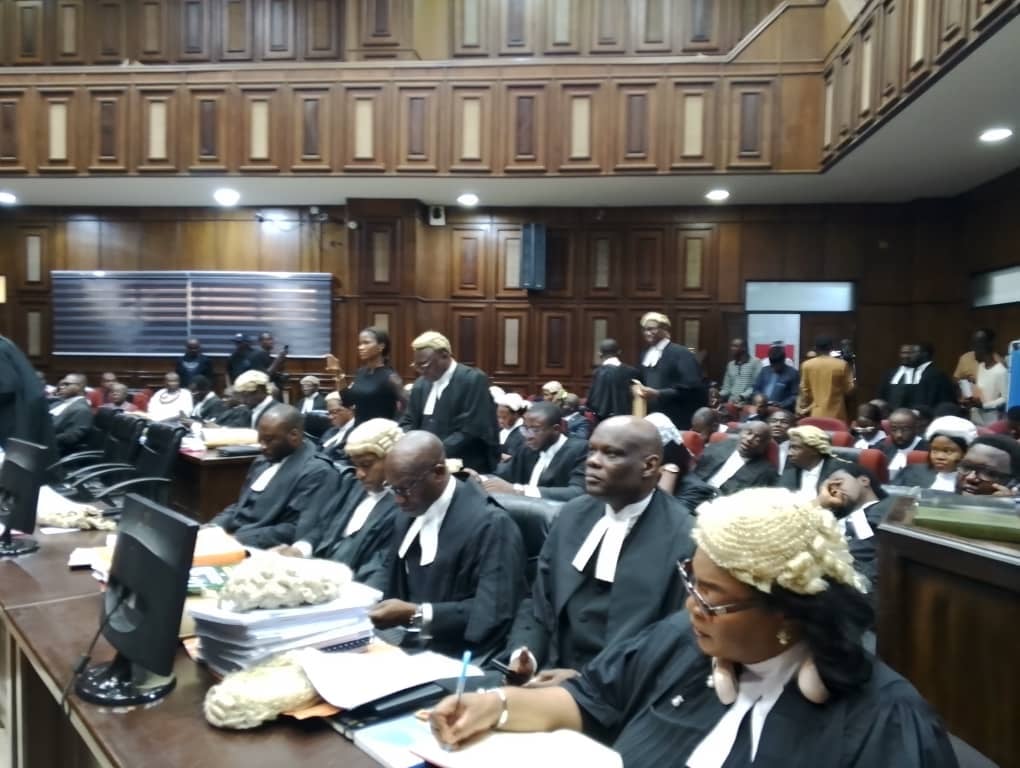
The Federal High Court sitting in Abuja has delivered a judgement that could significantly reshape the conduct of party primaries and candidate substitution ahead of the 2027 general elections, ruling on the interpretation of several provisions of the Electoral Act and the regulatory powers of the Independent National Electoral Commission (INEC).
Delivering the judgment, Justice M.G. Umar reportedly held that certain provisions of the Electoral Act relating to timelines for the submission of party registers and internal party nomination processes were inconsistent with constitutional principles of political party autonomy.
According to the court’s decision, political parties are not strictly bound by the 21-day timeline for the submission of registers before primaries, particularly where such timelines could affect substitution processes and internal party arrangements.
The court further held that fresh registers may be submitted where necessary, and that aspirants included in such updated registers may participate in substitution-related primaries.
The judgement also nullified aspects of the Independent National Electoral Commission’s regulatory timetable, particularly sections that sought to dictate fixed dates for the conduct of party primaries.
The court ruled that the Independent National Electoral Commission cannot impose or enforce timelines on internal political party affairs in a manner that undermines party independence.
In addition, the court invalidated INEC’s attempt to shorten the time allowed for political parties to submit particulars of their nominated candidates, as well as its authority to reduce the statutory period for candidate substitution processes.
The judgement further stated that INEC must adhere strictly to the constitutionally prescribed minimum timeline of 60 days for the publication of final candidate lists ahead of elections, and cannot issue revised schedules that fall short of this requirement.
Justice Umar also struck out portions of INEC’s revised timetable covering the conduct of primaries, submission of candidate details, publication of particulars, and substitution procedures, describing them as inconsistent with the Electoral Act framework as interpreted by the court.
Reacting to the judgement, the lawmaker representing Ideato North and South Federal Constituency in the House of Representatives, Ikenga Imo Ugochinyere, described the ruling as a major clarification of electoral procedures and internal party democracy.
The judgement is expected to generate significant political and legal debate, particularly among political parties, electoral stakeholders, and governance observers, as preparations gradually build toward the 2027 general elections.


-

 Latest5 days ago
Full List: Meet the 2026 Nobel Prize winners across six categories
-

 Football5 days ago
Premier League Matchweek 7: Five Fixtures That Could Shape the Weekend
-

 Latest4 days ago
Umahi defends Lagos-Calabar highway route changes amid public outcry
-

 Business3 days ago
Dangote Refinery IPO: 70% Subscription claim meets fourfold demand assertion as investors seek clarity
-
Business4 days ago
Dangote Refinery IPO Extension: Was the 70% subscription report overhyped?
-

 Latest2 days ago
UCTH faces morgue crisis as 50 unclaimed corpses await mass burial
-

 Featured4 days ago
El-Rufai, ADC governorship candidate’s court appearance puts Kaduna opposition politics in focus
-

 Business2 days ago
BREAKING: Nigeria’s Inflation Rate Drops to 14.63% in September