
Latest
Tinubu’s 2027 re-election bid: New promises, old questions and an unfinished record

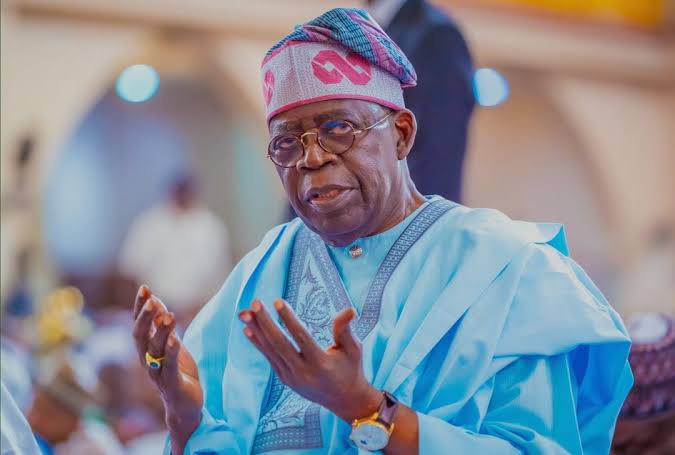
As President Bola Tinubu seeks another four-year term, his re-election campaign is increasingly built around what he says his government will deliver between 2027 and 2031. From improved security and cheaper food to reliable electricity, millions of jobs and better public services, the promises are ambitious. But with roughly three and a half years already spent in office, a more pressing question confronts Nigerians: why should voters place greater confidence in a fresh set of commitments when several promises from his first campaign remain unfulfilled?
Tinubu formally launched his re-election campaign in Kaduna on October 24, 2026, ahead of the January 16, 2027 presidential election. The All Progressives Congress subsequently unveiled a 109-page manifesto, titled From Reforms to Prosperity: Agenda 2027–2031, outlining what the president hopes to achieve if returned to office.
The document reorganises his administration’s eight-point Renewed Hope Agenda into four broad priorities: security, quality of life, energy and infrastructure, and accountable governance.
It promises to recruit additional security personnel, reduce the cost of living, train two million young Nigerians, halve youth unemployment by 2031, improve electricity supply, expand infrastructure and make public institutions more accountable.
On paper, it reads like an extensive response to the problems confronting the country. But manifestos are not records of performance. They are statements of intention, and Nigerians have a right to examine the distance between the promises made in 2023 and the realities of 2026 before accepting another set of assurances.
The most striking feature of the new manifesto is how many of its central promises address challenges that have remained prominent throughout Tinubu’s first term.
On security, the APC promises to complete four new Army divisions in Makurdi, Ilorin, Jalingo and Benin City, recruit and train 28,000 additional military personnel, and deploy 50,000 newly recruited police officers.
It also proposes stronger intelligence operations, expanded community policing, electronic border surveillance and improved protection for farms, schools, markets and critical infrastructure.
These are important commitments. But they also raise an uncomfortable question: after more than three years in power, why do Nigerians still have to look towards another four-year mandate for the restoration of security in their communities?
Kidnapping, armed attacks and insurgency remain serious national concerns. For families in affected communities, another promise to strengthen security is less persuasive than evidence that people can travel safely, farmers can return to their land and children can attend school without fear of abduction.
The manifesto’s security proposals therefore require more than recruitment figures and announcements about new military formations. Nigerians need to know where the personnel will be deployed, how their operations will be funded, what results are expected and how the government will measure improvements in public safety.
Tinubu’s economic reforms, particularly the removal of petrol subsidy and the unification of foreign exchange rates, have been central to his administration’s defence of its record.
The government argues that the decisions were necessary to address longstanding economic distortions, improve public finances and restore investor confidence.
There have been improvements in some macroeconomic indicators. Nigeria’s annual inflation rate, for instance, declined to 14.06 per cent in October 2026 from 14.63 per cent in September, according to the National Bureau of Statistics.
But a lower inflation rate does not mean that prices have returned to their previous levels. It means prices are generally rising at a slower rate. Food inflation remained at 19.13 per cent in October, while many households continue to struggle with the cost of food, transportation, electricity and other essentials.
The pressure is also reflected in petrol prices. Reuters reported in September that petrol had reached about ₦1,400 to ₦1,500 per litre in parts of the country, adding to the financial burden on households and businesses.
Against this background, the APC’s promise of a better quality of life raises another question: what specific measures will make everyday living more affordable?
The manifesto promises targeted social welfare, expanded cash transfers, improved agricultural production and interventions in energy and infrastructure. It also pledges to strengthen the electricity market and reduce the cost of production.
Yet Nigerians need details about how these interventions will translate into lower food prices, affordable transportation, more disposable income and improved purchasing power.
Economic growth and stronger government revenue are important, but they cannot be the only measures of success if ordinary households remain unable to afford basic necessities.
One of the clearest examples of the gap between the 2023 and 2027 campaign agendas is youth unemployment.
During his first presidential campaign, Tinubu promised to halve youth unemployment within four years. His new manifesto retains the commitment, this time setting 2031 as the deadline.
The APC now promises to train two million young Nigerians, expand digital literacy programmes, provide more funding for youth-led businesses and improve employment opportunities through the National Youth Service Corps.
These proposals may offer opportunities if properly implemented. But the decision to repeat the unemployment target raises questions about what happened to the earlier commitment.
A report published in November by Premium Times noted that the new manifesto does not provide a clear baseline against which the government will measure its 2031 target. Without a published starting figure and consistent measurement, Nigerians may find it difficult to determine whether the promised reduction has actually been achieved.
Training two million people is also not the same as creating two million jobs. A young person who completes a digital skills programme but remains unemployed has not necessarily experienced an improvement in economic circumstances.
The government must therefore be judged by employment outcomes, business survival rates, income growth and the number of young people who secure sustainable work, not simply by how many people attend training programmes.
Reliable electricity remains one of the country’s most persistent economic challenges.
Businesses continue to contend with unstable supply and the cost of alternative power, while households face the consequences of an electricity system that has struggled to provide consistent service.
The new manifesto promises to strengthen electricity generation, transmission and distribution, expand gas-to-power projects, improve industrial power supply and ensure that more households and businesses are properly metered.
It also promises improvements in roads, transport infrastructure, export facilities and public services.
However, the administration must explain why Nigerians should expect a different outcome from another round of promises when electricity reliability and infrastructure delivery remain major public concerns.
The issue is not whether the government has announced projects or allocated funds. It is whether those projects have been completed, whether they work as intended and whether citizens can identify measurable improvements in their daily lives.
For a manufacturing business struggling with energy costs, another promise of improved power supply is not enough. What matters is whether electricity becomes reliable and affordable.
Perhaps one of the most revealing sections of the new manifesto is its promise to make government more accountable.
The APC says every major commitment will have a baseline, a target, a cost, a responsible official and a reporting date. It also promises public delivery dashboards and independent verification of progress.
The document further proposes an independent audit of unfinished and underused public assets within the first 100 days of a second term.
These are welcome ideas. But they raise an obvious question: why should Nigerians wait until after another election for the government to establish a transparent system for tracking its promises?
Tinubu has already been in office for more than three years. His administration has had the opportunity to publish detailed performance records, identify failed projects, disclose implementation gaps and explain which campaign commitments have been fulfilled.
Accountability should not be a fresh promise reserved for a second term. It should be a basic requirement of the current administration.
An administration seeking re-election should be able to present a comprehensive account of its performance, showing what it promised, what it delivered, what it failed to deliver, how much public money was spent and why some targets were missed.
An assessment by the AdvoKC Foundation, published in June 2026 through its BAT-O-METER accountability project, provides one basis for examining the administration’s performance.
The report reviewed 53 promises made during Tinubu’s 2023 presidential campaign. It rated 11 promises, representing 20.8 per cent, as kept; 22, or 41.5 per cent, as compromised; and 20, or 37.7 per cent, as broken.
The foundation acknowledged progress in areas including education financing, small-business support and aspects of economic reform. However, it identified significant shortcomings in electricity billing, efforts to tackle kidnapping, the revival of Ajaokuta Steel Company, major rail projects and environmental commitments.
The assessment is not an official government audit, and its ratings reflect the foundation’s own methodology. Nevertheless, it offers a useful accountability framework for examining the promises made during the last election.
Its central implication is difficult to ignore: a substantial proportion of the commitments reviewed had not been fully delivered by the administration’s third year.
Tinubu’s campaign cannot reasonably be separated from that record. The new manifesto may contain additional targets and more detailed proposals, but it does not erase the commitments Nigerians were asked to support in 2023.
There is also an apparent contradiction in the president’s own campaign message.
On November 11, Tinubu, speaking through Senate President Godswill Akpabio at the launch of the Presidential Pension Security Initiatives in Abuja, urged Nigerians to judge him by his record rather than campaign promises.
He challenged opposition politicians to present their records of delivery instead of relying on promises.
That argument is reasonable as a principle of democratic accountability. But it also places the president under an obligation to make his own record the centre of the re-election debate.
If voters should judge candidates by what they have done, the administration must be prepared to answer questions about the commitments it has not fulfilled, the projects that remain incomplete and the policies whose benefits have yet to reach ordinary Nigerians.
It cannot insist that opposition candidates be judged by their records while asking voters to assess its own future through a new list of promises.
There is nothing wrong with a president presenting a vision for a second term. Governments need long-term plans, and some reforms require more than one electoral cycle to produce their full benefits.
But a second-term manifesto should build on demonstrable progress, not become an opportunity to reset the political conversation without accounting for the first term.
Tinubu’s administration has taken difficult economic decisions and can point to improvements in some areas of public finance and macroeconomic performance. Those developments deserve consideration. Equally, the hardship experienced by households, the persistence of insecurity, electricity challenges and the number of unfulfilled campaign commitments deserve serious scrutiny.
The president’s 2027 agenda promises to move Nigeria from reforms to prosperity. The critical question is whether the government has established a credible record that makes that transition believable.
For voters, the test should be straightforward: which promises from 2023 have been fulfilled, which have failed, and what evidence supports the claim that the next four years will be different?
Until those questions are answered convincingly, another manifesto, however detailed, risks sounding less like a new national direction and more like a second opportunity to deliver what was promised the first time.


-
 Featured7 days ago
Nigeria’s youth unemployment paradox: Graduates struggle as millions survive in informal jobs
-

 Business7 days ago
Nigerian Banks earn N521.8bn from E-banking, card fees in nine months
-

 Energy7 days ago
Nigeria’s power crisis deepens as ₦639bn unpaid gas debt threatens electricity supply
-

 Latest7 days ago
Dalung claims ‘message from Buhari’s grave’ urges Nigerians to vote Atiku in 2027
-
 Featured6 days ago
Tinubu’s Renewed Hope: Reforms, hardship and the unanswered question of a second term
-
 Featured5 days ago
The cost of Renewed Hope: How Nigeria’s economic reforms are reshaping everyday family life
-

 Latest7 days ago
Ondo shuts ponmo processing centre after discovery of human waste
-
 Featured1 week ago
Breaking: Manchester United sack Michael Carrick after poor start to Premier League season