
Features
State Police: Will decentralised policing make Nigerians safer or empower governors to abuse power?

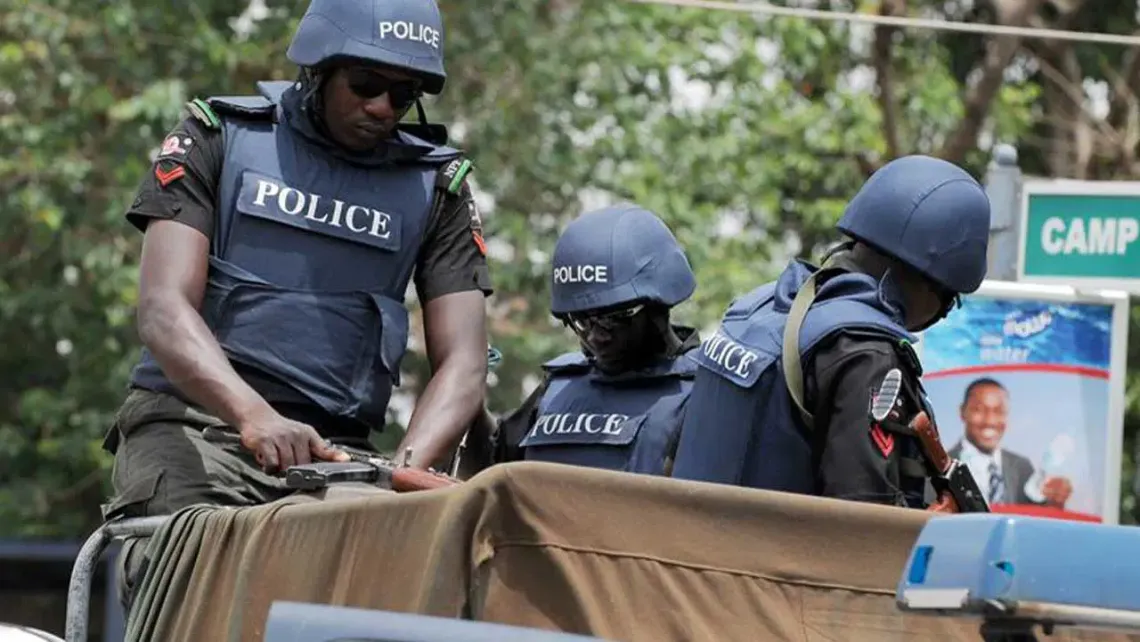
As Nigeria moves closer to establishing state police, communities grappling with kidnapping, banditry and other security threats are hoping for faster responses to crime. However, concerns over political interference, human rights violations and the possible misuse of police powers are raising questions about whether the proposed reform will deliver greater security or create another avenue for abuse.
Nigeria is moving closer to a major overhaul of its policing system following the approval of a constitutional amendment establishing state police by 28 of the country’s 36 State Houses of Assembly.
The development, announced by the National Assembly on November 3, 2026, means the proposal has secured the minimum support required from state legislatures to advance under Section 9 of the 1999 Constitution.
At least 24 state assemblies, representing two-thirds of the 36 states, are required to approve a constitutional alteration. The National Assembly had earlier passed the proposed amendment through both chambers before transmitting it to the state legislatures for consideration.
The proposal seeks to introduce a decentralised policing structure in which state police services operate alongside the existing federal police system.
For communities facing persistent insecurity, the proposed reform offers hope that security agencies could become more accessible, responsive and familiar with local threats.
However, as the proposal advances, a fundamental question remains: will allowing governors to establish and control police forces in their states make Nigerians safer, or expose citizens to another level of political influence and possible abuse of state power?
The argument for state police
Nigeria’s security challenges have continued to expose the limitations of a highly centralised policing structure.
From kidnapping and banditry to armed robbery, communal violence and attacks on rural communities, several parts of the country have experienced security threats that require rapid intervention and effective intelligence gathering.
Under the current system, the Nigeria Police Force operates as a federal institution, with its command structure ultimately controlled from Abuja.
Although state governors are constitutionally recognised as chief security officers of their respective states, they do not exercise direct operational control over police commands.
Supporters of state police argue that this arrangement makes it difficult for state governments to respond independently to local security emergencies.
They believe decentralised policing would allow officers to develop a better understanding of their communities, identify emerging threats and respond more quickly to incidents.
In areas affected by kidnapping, for instance, a locally established police force could potentially improve intelligence gathering, strengthen cooperation with community leaders and facilitate coordination across local government areas.
Proponents also argue that state police could reduce the pressure on the federal police by distributing policing responsibilities across the country.
However, these potential benefits would depend on adequate funding, professional training, effective coordination and the willingness of state authorities to respect the operational independence of police officers.
Why Nigerians are concerned about governors’ powers
Despite the potential security benefits, the proposal has generated concerns about the concentration of police authority in the hands of state governors.
Nigeria’s political history and experiences with alleged abuse of security agencies have made some citizens wary of giving political officeholders greater influence over law enforcement.
Critics fear that governors could use state police to intimidate political opponents, suppress protests, harass journalists, influence electoral processes or settle personal and political disputes.
The concern is particularly significant during election periods, when state governments and opposition parties may have competing political interests.
If police officers are pressured to prioritise the interests of those in power over their constitutional responsibilities, state police could undermine public confidence in law enforcement.
There are also concerns about human rights violations, including unlawful arrests, excessive use of force, arbitrary detention and the intimidation of citizens who criticise government policies.
These fears raise questions about whether the proposed system can guarantee that police officers remain accountable to the law rather than the political leadership of individual states.
What safeguards are being proposed?
The proposed constitutional framework contains provisions intended to address some of the concerns surrounding political interference and institutional accountability.
Among the safeguards reported in the approved amendment is a framework for independent police oversight institutions, including State Police Service Commissions.
The proposal also provides for the appointment of state police chiefs through a process involving the National Police Council and confirmation by the relevant State House of Assembly.
Other provisions seek to allow police officers to challenge directives considered unlawful or inconsistent with constitutional requirements and national policing standards.
The framework also provides for federal intervention under specified exceptional circumstances, including a breakdown of law and order beyond the capacity of a state police service and situations involving serious human rights violations or threats to national security.
However, the existence of safeguards in legislation does not automatically guarantee their effective implementation.
Their success will depend on the independence of oversight institutions, transparency in recruitment and promotion, effective disciplinary procedures and the ability of citizens to seek justice when police officers violate their rights.
The challenge of funding and professionalism
Beyond political interference, the financial implications of establishing state police services present another major challenge.
State governments would need to provide resources for recruitment, training, salaries, equipment, operational vehicles, communication systems, forensic facilities and police stations.
The financial capacity of states varies considerably, raising questions about whether less wealthy states would be able to maintain properly equipped and professionally trained police services.
Without adequate funding, some state police formations could become poorly equipped, vulnerable to political manipulation or dependent on informal security arrangements.
There is also the challenge of maintaining consistent professional standards across the federation.
A decentralised system would require common standards for recruitment, training, use of firearms, investigation, intelligence sharing and respect for human rights.
The relationship between federal and state police services must also be clearly defined, particularly when criminal activities cross state boundaries.
Kidnapping networks, organised crime groups and other criminal organisations do not necessarily operate within the geographical limits of one state. Effective cooperation between police formations would therefore be essential.
What happens next?
The approval by 28 state assemblies represents a significant constitutional milestone, but it does not mean that state police services are already operational.
The National Assembly announced that the required approvals had been received and that administrative processes were underway to facilitate the transmission of the constitutional amendment to President Bola Tinubu for assent.
The separate National Policing Bill, which is expected to provide the operational framework for the proposed system, also remains important to the reform process.
Its provisions will need to address issues such as recruitment, command structures, funding, jurisdiction, discipline, oversight and cooperation between federal and state police institutions.
Until the necessary legal and administrative processes are completed, the existing federal policing structure remains in place.
Security reform or another test of Nigeria’s democracy?
For Nigerians living in communities affected by kidnapping, armed attacks and other criminal activities, the debate over state police is not simply about constitutional restructuring. It is about whether government can provide security without compromising citizens’ fundamental rights.
A police force that understands local communities and responds quickly to emergencies could strengthen public safety. However, a police institution that serves the interests of political officeholders rather than the public could deepen distrust and create new security problems.
The success of state police will therefore depend not only on how much authority is transferred from the Federal Government to state governments, but also on how effectively that authority is regulated.
As Nigeria approaches this significant change in its security architecture, the central challenge will be ensuring that state police officers serve the people, protect constitutional rights and remain accountable to the law.
Ultimately, Nigerians need a police force that protects them from criminals, not one they must fear because of who controls it.


-

 Business2 days ago
OPay explains how Nigerians can access FG’s N50,000 monthly cash relief
-

 Sports6 days ago
Senegal opens Dakar 2026 Youth Olympic Games, Africa’s first Olympic event
-

 Football1 week ago
U-17 Women’s World Cup: Flamingos Beat Mexico to Reach Quarter-Finals
-

 Latest6 days ago
FG Announces N50,000 cash support for vulnerable Nigerians under new relief programme
-

 Business6 days ago
NNPC’s N66-per-litre petrol discount set to end October 31
-

 Latest5 days ago
INEC recognises Pantami for Gombe, keeps Kano NDC candidate off final list
-

 Latest6 days ago
Netanyahu, Eisenkot face coalition deadlock as Israel struggles to form new government
-

 Latest6 days ago
NDC Chieftain tells Atiku to drop presidential ambition over son’s support for Tinubu