
Trending Stories
Dual Citizenship: See the African countries that restrict multiple nationalities

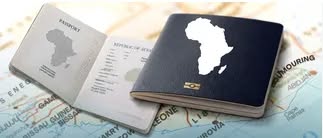
Several African countries maintain legal restrictions on dual citizenship, although the extent of the restrictions varies, with some prohibiting adults from holding another nationality while others impose conditions on acquiring or retaining foreign citizenship.
Countries such as Cameroon, the Democratic Republic of Congo (DRC), Ethiopia, Eritrea and Tanzania have been associated with restrictive dual nationality laws.
However, a 2023 analysis by the European University Institute’s Global Citizenship Observatory (GLOBALCIT) found that only three African countries — Ethiopia, Eritrea and Tanzania — fully prohibited dual citizenship for adults at the time of its assessment.
The report noted that 23 African countries imposed partial restrictions, while 28 fully accepted dual citizenship.
The restrictions take different forms. In some countries, citizens who voluntarily acquire another nationality risk losing their original citizenship. Others require individuals seeking naturalisation to renounce their existing nationality or obtain government approval before retaining both.
The Democratic Republic of Congo has one of the continent’s strictest legal provisions. Article 10 of its 2006 Constitution states that Congolese nationality is singular and exclusive and cannot be held concurrently with another nationality.
Cameroon also maintains restrictions under its nationality legislation, while Ethiopia’s Nationality Proclamation provides that voluntarily acquiring another nationality is treated as renunciation of Ethiopian citizenship.
However, some African countries have recently moved towards relaxing their dual citizenship laws.
Botswana amended its Citizenship Act in 2024 to permit adults to hold dual citizenship, expanding a system that had previously allowed it mainly for children.
Liberia also amended its Aliens and Nationality Law in 2022 to permit dual citizenship in certain circumstances, following a 2019 Supreme Court ruling that challenged the automatic loss of citizenship for acquiring another nationality.
South Africa’s Supreme Court of Appeal ruled in June 2023 that the requirement for citizens to obtain government permission before voluntarily acquiring another nationality was unconstitutional.
The court also ordered that people who had lost South African citizenship under the provision be regarded as having retained it.
The developments highlight the changing legal landscape surrounding nationality across Africa, as governments reconsider policies affecting citizens living, working and investing abroad.
For Africans with international ties, understanding the citizenship laws of their home countries remains important, particularly before voluntarily acquiring another nationality.


-

 Business1 week ago
OPay explains how Nigerians can access FG’s N50,000 monthly cash relief
-

 Comments and Issues6 days ago
2027 Poll and the vote peddlers of Nigeria
-

 Features5 days ago
How ADC leadership crisis put Atiku’s 2027 ambition at risk
-

 Energy5 days ago
NNPC plans 5–10% stock market listing, targets 2027 for IPO preparations
-

 Business5 days ago
LoveWorld Expo 2026 to showcase global innovations, emerging technologies in Lagos
-

 Latest7 days ago
El-Rufai mobilises supporters for ADC ahead of 2027 elections
-

 Latest5 days ago
2027: No Court rulings can keep me off the ballot, Atiku insists
-

 Latest6 days ago
NDC faults Tinubu’s $7.7bn external loan request, raises debt concerns