
Featured
2028 US Presidential Race: Harris, Newsom, Vance, Rubio among potential contenders

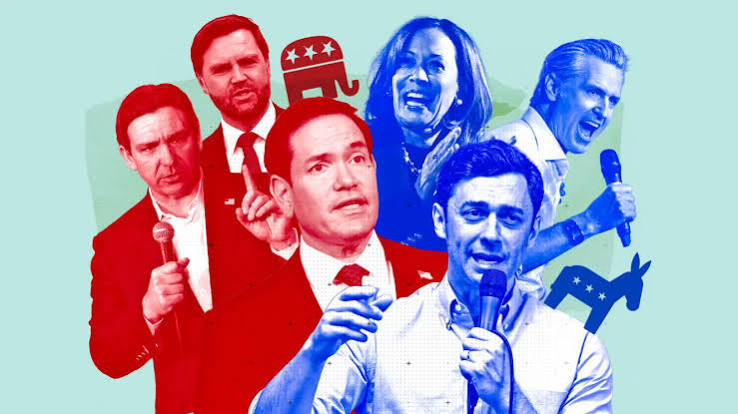
The race to succeed US President Donald Trump in 2028 is beginning to take shape following the November 3 midterm elections, with prominent politicians from both the Democratic and Republican parties positioning themselves for a possible White House campaign.
Although none of the leading contenders from either major party has formally declared a presidential bid, several have started building political networks, courting donors, visiting states with early primary contests and raising their national profiles.
The 2026 midterm results have also reshaped the political landscape, giving Democrats renewed confidence after sweeping victories while forcing Republicans to reconsider their leadership options following significant electoral losses.
Democrats face wide-open contest
The Democratic Party is expected to have a crowded presidential primary, with former Vice President Kamala Harris among the most prominent potential contenders.
Harris, who lost the 2024 presidential election to Trump, has openly acknowledged considering another run. She said in April that she was thinking about seeking the presidency again, although she has yet to make a final decision.
California Governor Gavin Newsom is another leading possibility. He has criticised Trump’s policies, travelled to states with early presidential nominating contests and published a memoir. Newsom said he plans to decide in early January whether to launch a presidential campaign.
He has also indicated that he would not enter the race if Harris decides to run.
Other potential Democratic contenders include Kentucky Governor Andy Beshear, Illinois Governor JB Pritzker and Pennsylvania Governor Josh Shapiro.
Beshear has strengthened his national profile through his leadership of the Democratic Governors Association and campaign appearances in key states. He has also hinted at presidential ambitions in interviews.
Pritzker, a billionaire businessman who secured re-election as Illinois governor, has increasingly positioned himself as a prominent critic of the Trump administration. He has also presented policy proposals aimed at shaping the Democratic Party’s national agenda.
Shapiro, meanwhile, has attracted attention following his re-election victory in Pennsylvania, a state considered important in presidential elections. He established a political action committee in October, providing a platform to raise funds and support Democratic candidates.
Former Transportation Secretary Pete Buttigieg is also being discussed as a possible contender. He ran for the Democratic presidential nomination in 2020 and has indicated that he is more inclined than not to seek the presidency again.
On the progressive side, New York Congresswoman Alexandria Ocasio-Cortez and California Representative Ro Khanna are among the names attracting attention.
Ocasio-Cortez has said she would decide after the midterms whether to pursue a presidential campaign, while Khanna has also indicated that he would make a decision after the elections.
Other Democrats being mentioned include Arizona Senator Mark Kelly, Georgia Senator Jon Ossoff and former Chicago Mayor Rahm Emanuel. Kelly has acknowledged considering a presidential bid, while Ossoff has publicly denied having an interest in running.
The broad field reflects an ongoing debate within the Democratic Party over whether its next presidential candidate should adopt a more moderate approach or embrace progressive policies.
Republicans face post-Trump succession battle
The Republican contest is also attracting attention, particularly following the party’s poor performance in the midterm elections.
Vice President JD Vance is widely regarded as one of the leading potential candidates to succeed Trump. His position as vice president gives him national political visibility, although his close association with the president could become a challenge following the Republican losses.
Vance has not formally announced his intention to run and has indicated that family considerations will influence his decision.
Secretary of State Marco Rubio is another prominent name, although reports suggest that some people close to him consider a 2028 presidential campaign unlikely. Rubio has repeatedly avoided committing to a political future beyond his current administration role.
Florida Governor Ron DeSantis, who unsuccessfully challenged Trump for the Republican nomination in 2024, is also considering his options. His political allies have begun assessing a possible campaign, although he is reportedly weighing whether to contest the next election or wait until 2032.
Texas Senator Ted Cruz is another potential contender. Cruz, who previously ran against Trump in the 2016 Republican primary, has discussed another presidential bid with political associates and reportedly begun preliminary preparations.
Former Virginia Governor Glenn Youngkin is also being considered by Republican strategists as a possible candidate. He has maintained a national political profile since leaving office and established an education-focused advocacy organisation.
Arkansas Governor Sarah Huckabee Sanders and former Georgia Governor Brian Kemp are among other Republicans whose names have surfaced in discussions about the party’s future leadership.
Former United Nations ambassador Nikki Haley, however, has ruled herself out of the 2028 contest, saying she does not intend to run.
Trump’s influence remains a major factor
Although Trump cannot seek election to a third presidential term under the US Constitution, his influence over the Republican Party is expected to remain significant.
The president has indicated that he may not endorse a particular candidate in the Republican primary, but his support could still shape the contest because of his influence among the party’s conservative base.
For potential Republican candidates, one of the biggest challenges will be deciding how closely to associate themselves with Trump’s political legacy while appealing to voters dissatisfied with his administration.
Democrats, meanwhile, must determine whether their electoral gains in the midterms can be sustained through a unified presidential campaign.
With nearly two years remaining before the November 2028 presidential election, the political calculations are still evolving. The coming months are expected to reveal which potential candidates are prepared to move beyond speculation and formally seek their parties’ nominations.


-

 Crime1 week ago
Kwara bandit deal under scrutiny as footage shows security operatives negotiating with terrorists [VIDEO]
-

 Business6 days ago
NGX loses N3trn in three days as Dangote Cement, Aradel, Banks lead sell-off
-
 Latest6 days ago
Tinubu’s 2027 re-election bid: New promises, old questions and an unfinished record
-
 Latest6 days ago
2027: Dele Momodu predicts Peter Obi will defeat Soludo’s Tinubu mobilisation in Anambra
-
 Football6 days ago
Infantino hails Oborevwori over Warri Stadium remodelling, eyes major FIFA events
-

 Featured3 days ago
Four reportedly killed in Delta NDC attack as Tinubu’s ‘All Is Fair in Politics’ remark faces fresh scrutiny (Video)
-
 Latest5 days ago
2027: Obi declares election day ‘Public Holiday’ for vote defence, warns against rigging
-

 Football1 week ago
Osimhen doubtful for Beşiktaş derby as Galatasaray fear injury setback