
Featured
Daura Emir’s Tourist Controversy: Hospitality, viral video and questions that need answers

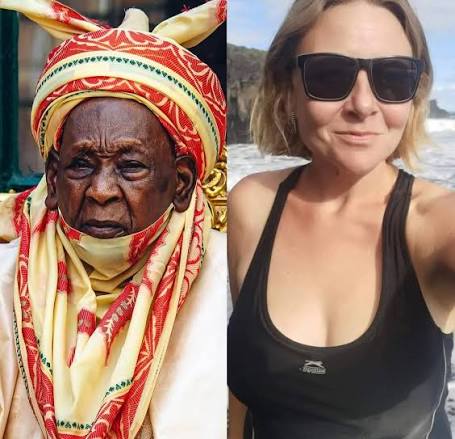
The sexual assault allegation against the Emir of Daura, Alhaji Faruk Umar Faruk, by a foreign tourist has generated widespread controversy, raising questions about what happened during her visit to the palace, the authenticity and completeness of the circulating video, and the need for an impartial investigation.
The tourist, identified as Mirka Czee, who uses the Instagram handle @beduinqa, accused the traditional ruler of touching her breasts without her consent during a visit to the Daura Emirate Palace in Katsina State on November 14, 2026.
Her allegation became public after she completed a 30-day tour of Nigeria and left the country. She said she decided to speak out after returning from her travels because she wanted to draw attention to what she described as an unacceptable experience.
However, details of her visit, including the hospitality she reportedly received before the alleged incident, have become an important part of the public discussion.
According to accounts she shared, Czee was received at the palace, introduced to the Emir and subsequently accompanied by palace dignitaries who took her for a meal and showed her around the traditional institution.
She said she was given a tour of the palace, learned about Daura’s history and Hausa traditions, visited different rooms and the palace stables, where she reportedly rode a horse.
She also described her experiences in other parts of Nigeria positively, saying she had interacted with different communities and encountered people she considered welcoming and hospitable.
Her account of the palace visit, however, took a different turn when she was reportedly brought back to meet the Emir privately.
Czee alleged that she was left alone with the monarch in a large room, where he asked her to sit close to him. She claimed he held her hand and began playing with it, making her uncomfortable.
According to her, the situation escalated when the Emir stood up, hugged and kissed her on the cheeks before allegedly touching her breasts without her consent.
She maintained that she repeatedly objected and told him not to touch her.
The tourist said she recorded part of the encounter using Ray-Ban Meta smart glasses, which have an inbuilt camera. She subsequently shared footage of the meeting on social media.
What does the circulating video establish?
One of the major questions surrounding the controversy concerns the video that circulated online.
The footage shows a man identified by the tourist as the Emir sitting close to her during a conversation inside what appears to be an elaborately furnished room in the palace.
The recording provides visual evidence of an encounter between the tourist and a man she identifies as the traditional ruler. However, it does not conclusively establish every detail of the alleged sexual misconduct.
An examination of a 60-second version of the footage by PREMIUM TIMES found that the camera moves considerably during parts of the interaction, obscuring some of the physical contact.
The publication also noted that the copy it examined carried English and Hausa captions accusing the Emir of misconduct. It could not establish who added the captions or whether they were part of the original recording.
More importantly, the original recording, its complete length, recording date and source history had not been independently authenticated.
The Daura Emirate Council subsequently confirmed that it was examining the circulating footage to determine whether it was genuine or had been altered using technology.
These limitations make it necessary for investigators to obtain and examine the original recording rather than reach conclusions from shortened or repeatedly circulated versions.
Does hospitality disprove the allegation?
The fact that the tourist reportedly received a meal, enjoyed a palace tour and interacted with members of the Emirate before the alleged incident has also become a subject of debate.
Some social media reactions have questioned why someone who received such hospitality would subsequently accuse her host of sexual misconduct.
But that argument raises an important distinction.
Receiving hospitality, participating in a cultural tour, smiling during a conversation or willingly accepting an invitation does not amount to consent to unwanted physical contact.
Equally, the circumstances of a person’s visit do not automatically establish that an allegation against another individual is true.
The relevant questions are what happened during the private encounter, whether the tourist’s account is supported by the original recording and other evidence, and what the individuals involved have to say.
It is also important to distinguish between the tourist’s wider 30-day journey through Nigeria and the duration of her stay in Daura. Available reports confirm the month-long Nigerian tour and describe the palace visit, but they do not establish that she spent nine days under the Emirate’s hospitality. That specific description should not be presented as fact without further evidence.
Political interpretations require separate scrutiny
The controversy has also attracted political interpretations, including claims that the Emir is opposed to the All Progressives Congress (APC) because of increasing poverty in the country.
However, no independently verified evidence has established that the Emir’s alleged political position has any connection with the tourist’s accusation.
An older media report from 2014 quoted the Emir expressing concern about poverty among his subjects and criticising political leaders who accumulated wealth while ordinary citizens struggled to meet their basic needs.
While such remarks may reflect his views on economic inequality and leadership, they do not, on their own, establish that he is opposed to the APC or that the present controversy is politically motivated.
The sexual misconduct allegation and questions about the Emir’s political views should therefore be treated as separate matters unless credible evidence establishes a connection.
Government orders investigation
The controversy has since attracted the attention of the Katsina State Government.
Governor Dikko Radda ordered the suspension of the Emir’s official engagements and travel pending the outcome of an investigation.
The government subsequently constituted a nine-member investigative committee chaired by retired Justice Amiru Sanusi to examine the allegation, invite individuals connected to the matter, review relevant records and recommend appropriate action.
The committee was given four weeks from its inauguration to submit its findings.
The government also directed traditional rulers across Katsina State to obtain official clearance before receiving foreign visitors at their palaces, following the controversy.
Meanwhile, the Daura Emirate Council has maintained that it is reviewing the video. An unnamed palace source quoted by The Punch denied the allegation, although the Emir himself had not issued a personal public response in the reports reviewed.
The Katsina State Police Command had earlier said it had not received a formal complaint from the tourist, according to a report published by on November 23.
Amnesty International Nigeria has called for an independent and transparent investigation. The organisation also condemned death threats and online harassment directed at the tourist after she made the allegation public.
The questions that investigators must answer
Beyond the arguments playing out on social media, the investigation needs to establish several important facts.
Was the original video preserved, and can its full, unedited version be examined independently? Does it capture the alleged contact, or are there gaps that require additional evidence?
Who was present during the different stages of the palace visit, and can members of the Emirate who accompanied the tourist provide accounts of what happened?
What exactly occurred during the private meeting, and has the Emir been given a formal opportunity to respond to the specific allegations?
Can investigators establish the timeline of the visit, the circumstances under which the recording was made and whether other relevant footage or witnesses exist?
These questions should be addressed through evidence, not assumptions, political loyalties or social media campaigns.
The allegation must be taken seriously, just as the Emir’s right to a fair and impartial process must be respected.
Sexual assault and unwanted touching are serious matters that should never be excused because of a person’s traditional status, political influence or position in society.
At the same time, an allegation is not a conviction, and no individual should be declared guilty before the facts have been properly established.
Ultimately, the issue is not whether the tourist enjoyed the hospitality of the Emirate before the alleged encounter, nor whether the Emir has political disagreements with any government. The central issue is what happened during that private meeting and whether an independent investigation can establish the truth.


-

 Business7 days ago
NGX loses N3trn in three days as Dangote Cement, Aradel, Banks lead sell-off
-

 Latest1 week ago
Tinubu’s 2027 re-election bid: New promises, old questions and an unfinished record
-

 Featured4 days ago
Four reportedly killed in Delta NDC attack as Tinubu’s ‘All Is Fair in Politics’ remark faces fresh scrutiny (Video)
-
 Latest1 week ago
2027: Dele Momodu predicts Peter Obi will defeat Soludo’s Tinubu mobilisation in Anambra
-

 Football7 days ago
Infantino hails Oborevwori over Warri Stadium remodelling, eyes major FIFA events
-

 Latest6 days ago
2027: Obi declares election day ‘Public Holiday’ for vote defence, warns against rigging
-

 Latest4 days ago
Abuja protesters March on INEC headquarters, demand accountability ahead of 2027 elections [video]
-

 Football3 days ago
Man United: Pochettino prioritises new striker over defensive signings in January