
Latest
How internal party disputes could shape the 2027 elections

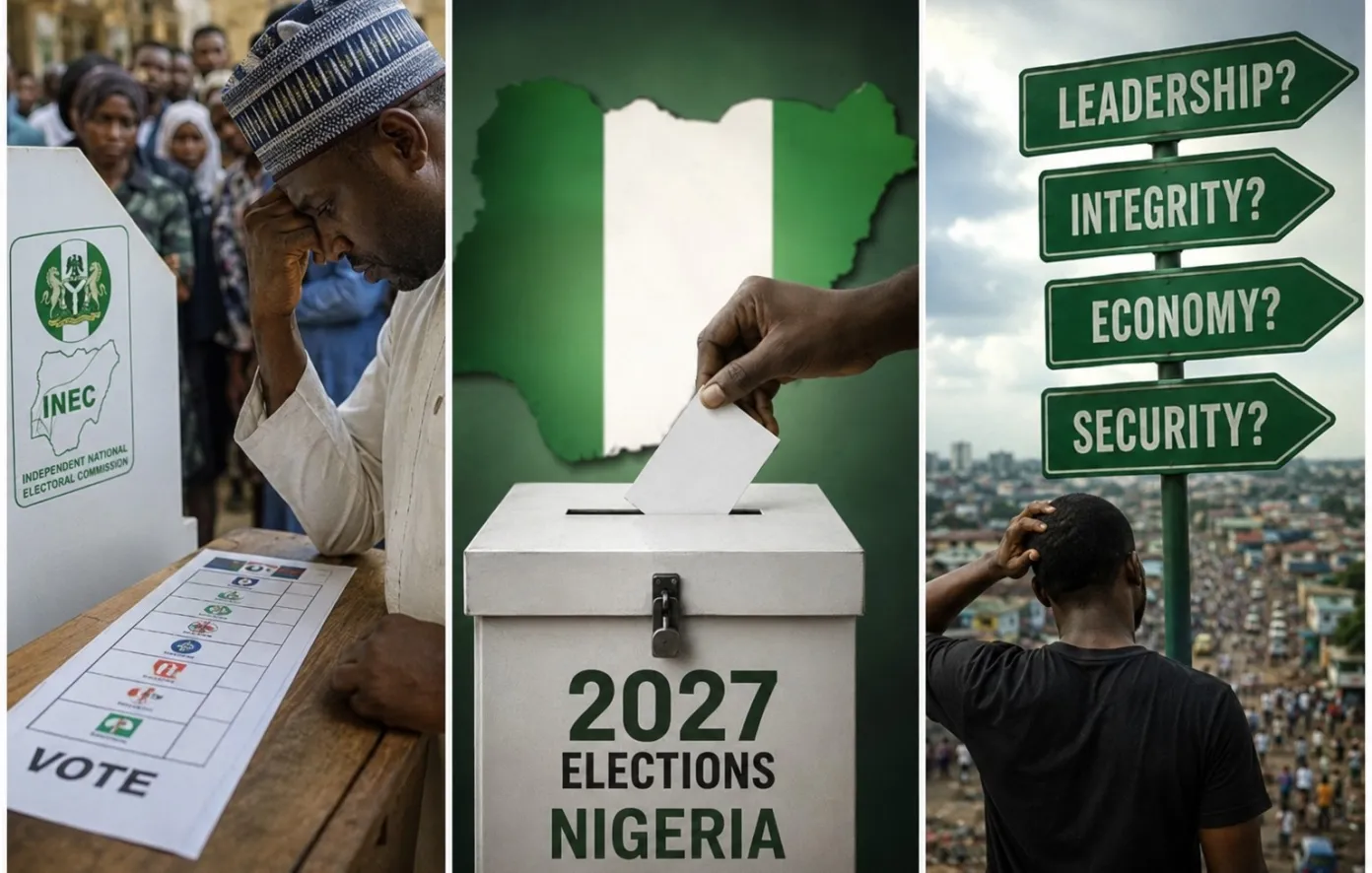
Nigeria’s opposition parties are facing mounting internal challenges as preparations for the 2027 general elections intensify, with leadership disagreements, factional battles and prolonged court cases threatening their ability to organise, select candidates and present a united challenge to the ruling All Progressives Congress (APC).
From the African Democratic Congress (ADC) to the Peoples Democratic Party (PDP) and Labour Party (LP), disputes over party leadership and control of political structures have increasingly become a feature of opposition politics.
The disagreements have moved beyond internal party meetings, with rival factions seeking judicial intervention to establish their legitimacy. In some cases, the disputes have affected party congresses, candidate nominations and the recognition of party officials by the Independent National Electoral Commission (INEC).
The latest development is the November 5, 2026, Federal High Court judgment in Abuja nullifying the leadership of the ADC faction headed by former Senate President David Mark and invalidating decisions taken under its authority, including the process that produced former Vice-President Atiku Abubakar as the party’s presidential candidate.
The ruling, which the ADC has rejected and indicated it will appeal, has renewed concerns about the preparedness of opposition parties and the potential consequences of unresolved internal disagreements for the next general election.
ADC: Leadership crisis threatens opposition coalition
The ADC has emerged as one of the most prominent platforms in discussions about opposition cooperation ahead of 2027.
The party attracted several political figures, including Atiku, former Senate President David Mark, former Osun State Governor Rauf Aregbesola and other politicians seeking an alternative platform to challenge the APC.
However, the party’s growing political profile has been accompanied by a prolonged leadership dispute.
The crisis centres on the emergence of the Mark-led leadership following the resignation of former National Chairman Ralph Nwosu. Nafiu Bala Gombe, a former Deputy National Chairman, challenged the arrangement, arguing that he was constitutionally entitled to succeed Nwosu.
Bala subsequently approached the Federal High Court, questioning the legality of the leadership transition and seeking to invalidate decisions taken by the Mark-led faction.
The dispute passed through different stages of litigation, including proceedings at the Court of Appeal and Supreme Court, before the Federal High Court delivered its substantive judgment on November 5.
Justice Peter Lifu ruled against the Mark-led leadership and nullified decisions taken under its authority, including the process that produced Atiku as the party’s presidential candidate.
The ADC has rejected the judgment and announced plans to challenge it. The final implications for its leadership and nominations will depend on subsequent judicial proceedings.
The crisis has also raised questions about the opposition coalition’s ability to maintain a common political platform when the legitimacy of the organisation hosting its activities remains contested.
PDP: Prolonged leadership battle complicates party’s position
The Peoples Democratic Party (PDP), Nigeria’s former ruling party, has also struggled with a prolonged leadership crisis that has weakened its organisational structure since the 2023 general elections.
The dispute has largely centred on competing leadership groups associated with the Minister of the Federal Capital Territory, Nyesom Wike, and Oyo State Governor Seyi Makinde.
The disagreement has produced rival national working committees, competing claims to party authority and several court cases.
The crisis reached the Supreme Court on April 30, 2026, when the court, in a split 3–2 decision, invalidated the PDP national convention held in Ibadan in November 2025, which produced the leadership backed by Makinde.
The decision further complicated the party’s internal arrangements, with the Wike-aligned leadership retaining recognition from INEC while the opposing faction continued to challenge its position.
The consequences have extended to the party’s preparations for the 2027 elections.
When INEC opened its candidate nomination portal in June 2026, the rival PDP factions disagreed over access to the platform and which leadership had the authority to submit candidates.
The Wike-aligned faction confirmed that it had received the necessary access codes and commenced uploading candidates, while the opposing faction expressed concern that it had not received similar access.
INEC subsequently maintained that it would recognise the leadership backed by the court.
On November 4, 2026, another setback confronted the Turaki-aligned faction when the Court of Appeal upheld the dismissal of a case seeking INEC recognition for its interim leadership.
The faction indicated plans to approach the Supreme Court.
The latest development illustrates how prolonged leadership disagreements can affect a party’s ability to organise its structures and manage its electoral preparations.
Labour Party: Leadership disagreements and declining cohesion
The Labour Party, which became a major opposition platform during the 2023 general elections following Peter Obi’s presidential candidacy, has also experienced internal disagreements.
The party’s crisis involved competing leadership claims, disagreements over party administration and legal battles over the authority of its national officers.
The divisions have affected its efforts to maintain the political momentum generated by the 2023 election.
The departure of Obi and other prominent politicians to new opposition platforms in 2026 further changed the party’s position in the opposition landscape.
Reuters reported in May 2026 that Obi and Rabiu Kwankwaso left the ADC-led opposition alliance, citing internal divisions and unresolved legal disputes, and joined the Nigeria Democratic Congress (NDC).
Their movement highlighted the difficulty of maintaining a united opposition coalition when participating politicians have competing interests and disagreements over party structures.
The Labour Party’s experience also demonstrates how a political organisation can struggle to retain its electoral influence when internal disagreements undermine its leadership and broader political appeal.
Political defections and the search for alternative platforms
Beyond the major opposition parties, political defections have continued to reshape Nigeria’s political landscape ahead of 2027.
The emergence of the NDC as an alternative platform has attracted politicians from different parties, including Obi, Kwankwaso and several lawmakers.
In May 2026, the NDC recorded a wave of defections involving members of the National Assembly, reflecting growing political realignments ahead of the next general election.
The National Assembly Library Trust Fund reported that Senators Victor Umeh and Rufai Hanga joined the NDC, while Senator Enyinnaya Abaribe moved from the ADC to the Labour Party.
These movements demonstrate that party affiliation and political alliances remain fluid as politicians consider the platforms through which they intend to contest the next election.
However, defections alone do not guarantee electoral success. Parties must still establish functioning structures, resolve leadership questions, comply with electoral regulations and present candidates capable of mobilising support across different constituencies.
How internal disputes could affect the 2027 elections
The consequences of unresolved party disputes extend beyond the politicians directly involved. They could affect the electoral process in several ways.
1. Uncertainty over candidate nominations
One of the most immediate risks is uncertainty over the legitimacy of candidates nominated by disputed party leaderships.
Nigeria’s electoral framework requires political parties to conduct primaries and submit their candidates in accordance with the law.
Where rival factions claim authority over a party, disagreements can arise over which officials have the right to organise primaries, issue nomination forms and submit candidates to INEC.
The ADC judgment illustrates the potential consequences. By invalidating decisions taken under the disputed leadership, the court placed the party’s presidential and other nominations under legal uncertainty.
2. Diversion of resources from election campaigns
Court cases, internal negotiations and leadership struggles require time, money and political attention.
Instead of concentrating on policy development, grassroots mobilisation and campaign organisation, party leaders may spend significant resources defending their positions in court.
This can weaken their preparations, particularly when the election timetable leaves limited time for resolving disputes.
3. Fragmentation of opposition votes
The inability of opposition parties to agree on common political objectives or candidates could result in competing presidential campaigns.
Reuters reported in May 2026 that the departure of Obi and Kwankwaso from the ADC-led alliance had weakened an agreement among opposition politicians to support a single presidential candidate.
The disagreement raised concerns about the possibility of opposition votes being divided among competing candidates.
Nigeria’s 2023 presidential election demonstrated the significance of this issue, as opposition candidates collectively secured a substantial share of the votes but contested the election separately.
4. Loss of confidence among supporters
Persistent disagreements can also affect public confidence in political parties.
Supporters who joined a party because of its leadership, ideology or electoral ambitions may become discouraged when internal disputes dominate its activities.
This could affect membership growth, fundraising, volunteer participation and voter mobilisation.
5. Increased legal uncertainty around party administration
Frequent litigation over leadership, congresses and nominations can create uncertainty about which party officials are legally recognised.
INEC must rely on applicable laws and valid court decisions when dealing with political parties. Where competing judgments or appeals exist, the commission may face difficult administrative questions.
The ADC and PDP disputes demonstrate how judicial decisions can influence party administration and electoral preparations.
With the 2027 general elections approaching, opposition parties face the task of resolving internal disagreements before they undermine their electoral preparations further.
Political parties need to strengthen their internal democratic processes, ensure that leadership transitions comply with their constitutions and establish transparent procedures for selecting candidates.
They must also respect court decisions and use available legal channels to challenge rulings rather than allow disagreements to produce prolonged uncertainty.
For opposition coalitions, the challenge extends to negotiating political interests, agreeing on acceptable leadership arrangements and establishing clear rules for candidate selection.
The APC, as the ruling party, also faces the responsibility of ensuring that the political environment allows opposition parties to operate freely and participate in the electoral process without undue interference.
Allegations that the ruling party is exploiting opposition divisions have been raised by some opposition figures, but such claims require independent evidence. The APC has rejected accusations that it is using the courts or INEC to undermine its political opponents.
Nigeria’s opposition parties are approaching the 2027 general elections amid leadership disagreements, legal battles and political realignments that could shape their ability to challenge the ruling party.
The ADC’s leadership dispute, the PDP’s competing factions and the Labour Party’s internal divisions illustrate the difficulties facing political organisations attempting to consolidate their structures ahead of a major election.
Although internal disagreements are not unusual in democratic politics, unresolved disputes over leadership and candidate selection can have serious electoral consequences.
For the opposition, the challenge is no longer simply about identifying candidates capable of challenging President Bola Tinubu. It is also about building credible party structures, resolving internal conflicts and establishing a common political direction.
Whether the opposition can overcome these challenges before the 2027 elections will depend largely on its ability to put institutional stability and electoral preparedness ahead of factional interests.


-
 Business3 days ago
OPay explains how Nigerians can access FG’s N50,000 monthly cash relief
-

 Sports7 days ago
Senegal opens Dakar 2026 Youth Olympic Games, Africa’s first Olympic event
-

 Latest6 days ago
FG Announces N50,000 cash support for vulnerable Nigerians under new relief programme
-

 Business6 days ago
NNPC’s N66-per-litre petrol discount set to end October 31
-
 Latest6 days ago
INEC recognises Pantami for Gombe, keeps Kano NDC candidate off final list
-

 Latest1 week ago
Netanyahu, Eisenkot face coalition deadlock as Israel struggles to form new government
-

 Latest6 days ago
NDC Chieftain tells Atiku to drop presidential ambition over son’s support for Tinubu
-

 Crime6 days ago
Doris Ogala remanded as Court adjourns bail hearing to November 6