
Latest
Macron blames Iran war for rising fuel prices, cost-of-living crisis in France

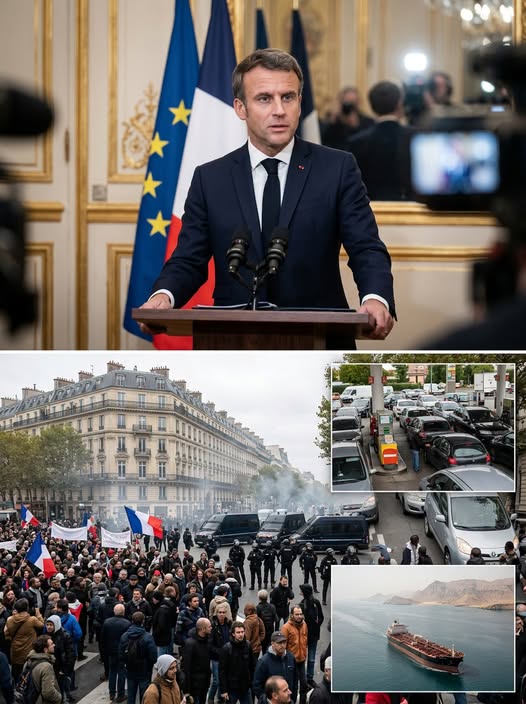
French President Emmanuel Macron has blamed the war involving Iran for rising fuel prices and mounting cost-of-living pressures in France, saying the country is bearing the economic consequences of a conflict it did not participate in.
Macron’s remarks come amid widespread public discontent over rising living costs, fuel prices and concerns about deteriorating public services, with reports of demonstrations escalating into violence in parts of the country.
The French president said the conflict had intensified pressure on energy markets, worsening the financial burden on households already struggling with the cost of essential goods and services.
He also highlighted disruptions around the Strait of Hormuz, a critical maritime corridor through which a significant share of the world’s oil supplies passes, as a factor contributing to uncertainty in global energy markets.
According to Macron, France had not chosen to take part in the war but was nonetheless experiencing its economic fallout, underscoring the vulnerability of countries that depend on international energy markets.
The conflict has renewed concerns about the relationship between geopolitical instability, energy security and domestic inflation, particularly in economies exposed to fluctuations in global oil prices.
Higher fuel costs can increase transportation expenses, raise the cost of distributing food and other essential commodities, and push up production costs for businesses. These pressures can ultimately translate into higher prices for consumers and further erode household purchasing power.
The economic concerns have added to public frustration over living standards, education and the quality of public services, presenting another challenge for Macron’s administration.
READ ALSO; Macron to visit Nigeria October 28-29 as France moves to deepen strategic ties
Demonstrations across France have drawn large numbers of people protesting against economic hardship and government policies. While many protesters have expressed grievances through peaceful demonstrations, some gatherings have reportedly degenerated into clashes with security forces, looting, vandalism and damage to public property.
Authorities have condemned the violence, while Macron has stressed the need to distinguish peaceful demonstrators from those responsible for criminal acts. He has also called for accountability for individuals involved in the destruction.
The unrest has placed the government under pressure to restore public order while addressing the economic concerns driving public dissatisfaction.
France, like other European economies, remains exposed to developments in international oil markets despite not participating directly in the conflict. Disruptions to energy production or shipping routes can trigger price increases that spread through the wider economy.
For ordinary households, the effects may be felt through higher transport fares, more expensive food and rising costs for other everyday necessities.
The situation has also highlighted the difficulty governments face in shielding consumers from external economic shocks, particularly when energy prices are influenced by conflicts beyond their borders.
Macron’s administration must now contend with the combined pressures of energy-market uncertainty, public anger over living costs and demands for improved public services.
While the government faces the immediate task of containing unrest and protecting public infrastructure, the longer-term challenge will be to ease household financial pressures and strengthen the country’s resilience to international energy shocks.
For many French citizens, the central concern remains whether the government can contain rising living costs and restore confidence in public services as the economic consequences of the conflict continue to unfold.


-

 Latest1 week ago
Full List: Meet the 2026 Nobel Prize winners across six categories
-

 Football1 week ago
Premier League Matchweek 7: Five Fixtures That Could Shape the Weekend
-
 Business6 days ago
Dangote Refinery IPO: 70% Subscription claim meets fourfold demand assertion as investors seek clarity
-
 Latest7 days ago
Umahi defends Lagos-Calabar highway route changes amid public outcry
-
Business7 days ago
Dangote Refinery IPO Extension: Was the 70% subscription report overhyped?
-

 Latest5 days ago
UCTH faces morgue crisis as 50 unclaimed corpses await mass burial
-
 Featured3 days ago
Inside INEC’s race to prepare for Nigeria’s 2027 elections
-
 Business5 days ago
BREAKING: Nigeria’s Inflation Rate Drops to 14.63% in September