
Latest
NBC’s threat of sanctions sparks free speech debate as NUJ, NGE, Obi push back

Published
1 hour agoon
The recent warning by the Nigerian Broadcasting Commission (NBC) to sanction broadcast organisations over what it described as declining standards in news and political programming has ignited a heated national debate, with media bodies and political figures accusing the regulator of veiled censorship ahead of the 2027 general elections.
In a formal notice issued to radio and television stations across the country, the NBC warned of stricter enforcement of the 6th Edition of the Nigeria Broadcasting Code, citing what it called a sustained rise in ethical and professional breaches.
The commission expressed concern over what it described as a troubling pattern of declining professionalism in news, current affairs and political programmes. It alleged that some broadcast platforms were being misused by political actors to disseminate inflammatory and divisive content capable of inciting public disorder.
“As we approach the 2027 general elections, the Commission hereby notifies all broadcasters and stakeholders that it will enforce strict and uncompromised compliance with every provision of the Nigeria Broadcasting Code,” the NBC stated.
The regulator specifically referenced provisions relating to fairness, balance, accuracy, hate speech, incitement and respect for constitutional authorities, warning that infractions would attract sanctions.
A key issue raised by the NBC was what it termed a “crisis” in the professionalism of programme anchors and presenters. It accused some broadcasters of allowing personal opinions to be presented as facts, failing to provide equitable representation of opposing views, and permitting programmes to tilt in favour of particular interests.
READ ALSO: Guild of Editors warns NBC against ‘dangerous’ sanctions on broadcasters
According to the commission, such actions constitute violations of explicit provisions of the broadcasting code and would be classified as “Class B breaches,” potentially leading to fines or suspension.
The NBC further stressed that broadcasters bear ultimate responsibility for all content aired on their platforms, including live programming, and urged media organisations to strengthen internal editorial controls, particularly in politically sensitive content.
While the commission maintained that its directive was aimed at preserving professionalism and public trust, critics argue that the move could constrict the political space as Nigeria inches closer to another election cycle.
Some commentators have suggested that the warning may indirectly favour the ruling All Progressives Congress (APC) by discouraging opposition voices from airing critical views on radio and television.
Political analyst Adebayo Okunade described the directive as a subtle attempt to shield the government from scrutiny, arguing that robust criticism could be mischaracterised as hate speech or incitement, thereby exposing stations to regulatory penalties.
The Nigerian Union of Journalists (NUJ) has faulted the advisory, describing it as a veiled attempt to gag the media and institutionalise censorship.
In a statement signed by its National Secretary, Achike Chude, the union expressed grave concern that the NBC’s position threatens free speech and editorial independence.
“Journalism, particularly in the realm of current affairs and political analysis, requires robust engagement. To strip presenters of their right to analyse and contextualise news is to reduce the Nigerian media to a mere mouthpiece,” the NUJ said.
The union warned that vague regulatory provisions and the classification of alleged infractions as sanctionable offences could create a climate of fear, encouraging self-censorship among journalists wary of regulatory backlash.
Citing Section 39 of the 1999 Constitution, the NUJ reminded the commission that freedom of expression—including the right to hold and impart opinions without interference—is constitutionally guaranteed.
Similarly, the Nigerian Guild of Editors (NGE) described the NBC’s move as dangerous and injurious to journalism, warning that it could amount to an assault on press freedom and democratic accountability.
In a statement signed by its President, Eze Anaba, and General Secretary, Onuoha Ukeh, the Guild argued that the interpretation of the broadcasting code in news and political programmes is inherently subjective and open to abuse.
“The scrutiny of political actors is essential. Citizens rely on the media for accurate and comprehensive information to make informed decisions,” the NGE stated, adding that journalism is not designed to place public officials in a comfort zone but to hold power accountable.
The Guild cautioned that positioning the NBC as the sole arbiter of what constitutes rigorous questioning could weaponise the code, stifle legitimate inquiry and silence critical voices.
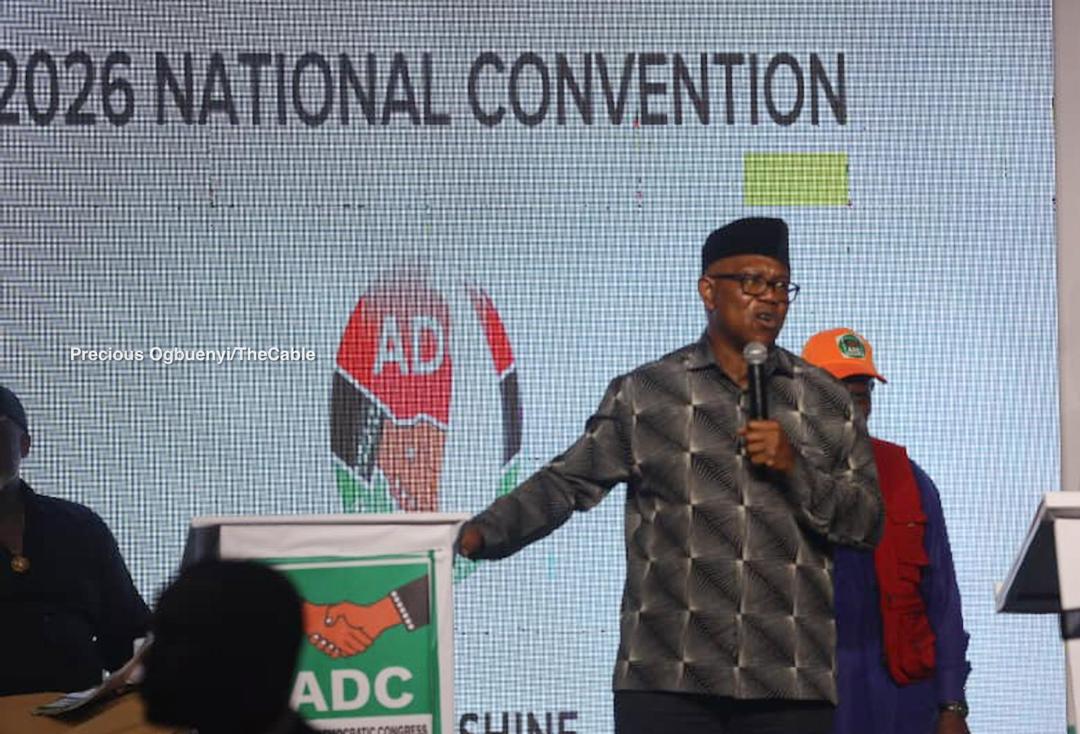
Former presidential candidate Peter Obi also weighed in on the controversy, warning that attempts to regulate media content during a politically sensitive period could undermine Nigeria’s democracy.
In a post on his verified X handle, Obi described the NBC’s notice as troubling, stressing that the media remains a vital pillar of democratic governance.
“A free and responsible media should not be an enemy to any administration. The media is the conscience of the nation,” he wrote.
Obi cautioned that suppressing voices or intimidating journalists under the guise of regulation weakens democratic institutions. He argued that institutions are built to serve the people, not governments, and called for renewed commitment to transparency and accountability.
Linking the development to broader national challenges, including insecurity and economic hardship, he said the government’s focus should be on addressing pressing issues rather than controlling media narratives.
“Nigeria does not need stronger control. Nigeria needs stronger institutions,” Obi declared, expressing solidarity with media organisations across the country.
As Nigeria gradually moves toward the 2027 general elections, the NBC’s directive has amplified concerns about the balance between regulatory oversight and press freedom.
While the commission insists that strict compliance with broadcasting standards is necessary to prevent hate speech and safeguard national stability, media stakeholders argue that any ambiguity in enforcement could erode democratic space and discourage robust public debate.
The unfolding controversy underscores the delicate tension between regulation and freedom in Nigeria’s evolving democratic landscape.

You may like
Trending

 Agribusiness1 week ago
Health experts raise alarm over antibiotic residues in poultry products in Nigeria

 Trending Stories1 week ago
Bakery sues TikToker for ₦50m over viral ‘Everlasting Bread’ claim
 Sports1 week ago
Usyk backs Joshua to defeat Fury as heavyweight rivals train together in Spain
 Football7 days ago
Why Fernandez isn’t Chelsea captain – Rosenior speaks

 Business1 week ago
Kewalram Chanrai unveils Soueast SUVs in Nigeria, signals Q3 2026 local assembly plan
 News6 days ago
Oba Femi Stuns Brock Lesnar in Explosive WrestleMania Debut
 Football6 days ago
Arsenal suffer historic fourth straight domestic defeat after Manchester City loss
 Crime6 days ago
Police launch full investigation after stampede kills three at Ikere hotel party