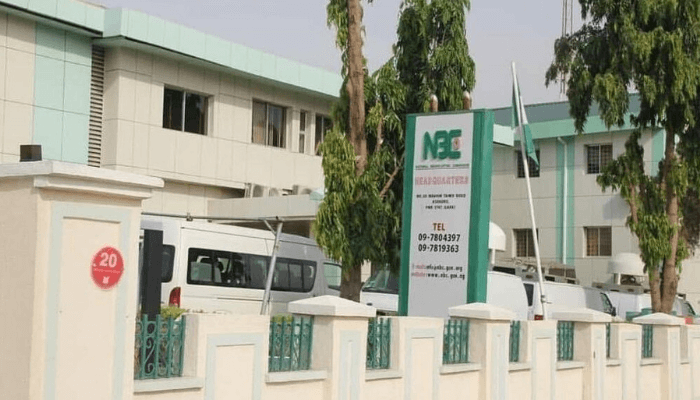
The Nigerian Guild of Editors (NGE) has expressed grave concern over a reported threat by the National Broadcasting Commission (NBC) to sanction broadcast presenters accused of presenting personal opinions as facts or allegedly bullying guests during live programmes.
In a strongly worded statement issued on April 21, 2026, and signed by its President, Eze Anaba, and General Secretary, Onuoha Ukeh, the Guild described the proposed move as dangerous and injurious to journalism, warning that it amounts to a direct assault on press freedom, editorial independence, and democratic accountability.
‘Vague Directive Open to Abuse’
While acknowledging that the NBC may be motivated by a desire to promote professionalism and uphold ethical standards in broadcasting, the NGE argued that the Commission’s statement was vague and broadly worded, making it susceptible to multiple interpretations.
According to the Guild, such ambiguity creates room for misuse and selective application, potentially targeting journalists and media organisations carrying out legitimate professional duties.
The statement further noted that the interpretation of the 6th Edition of the Nigeria Broadcasting Code—particularly as it relates to News, Current Affairs, and Political Programmes—is inherently subjective.
READ ALSO: The Nigerian Guild of Editors (NGE) slam Governor Bago over Badeggi radio closure, Call It “Attack on press freedom”
By positioning itself as the sole arbiter of what constitutes rigorous questioning or appropriate scrutiny, the NBC risks opening the door to abuse.
The Guild warned that such an approach could effectively weaponise the broadcasting code, induce self-censorship among broadcasters, stifle legitimate journalistic inquiry, and silence critical voices in the media space.
Journalism Not About Comfort
Reaffirming the core responsibilities of journalists, the NGE stressed that broadcast presenters, especially during interviews, are duty-bound to ask probing questions, challenge inconsistencies, and demand clarity in the public interest.
“Journalism is not designed to place public officials or interviewees in a comfort zone,” the statement said, “but to hold power accountable.”
The Guild emphasised that as Nigeria approaches another election cycle, the media’s watchdog role becomes even more critical.
Scrutiny of political actors, it argued, is essential for citizens who rely on accurate and comprehensive information to make informed decisions and fulfil their civic responsibilities.
According to the NGE, asking tough—even uncomfortable—questions is not misconduct but a fundamental requirement of responsible journalism.
Democracy Needs Bold Journalism
While reiterating its support for professionalism and civility in broadcasting, the Guild cautioned against conflating assertive, fact-driven questioning with wrongdoing.
“Democracy does not thrive on timid journalism,” the statement noted, “but on bold, responsible, and fact-driven interrogation of issues and personalities.”
The NGE also underscored that journalists are trained professionals guided by enduring ethical standards, including the long-held principle that “comment is free, but facts are sacred.”
Call for Fair and Transparent Regulation
The Guild urged regulatory bodies to operate within clearly defined, transparent, and fair frameworks that do not undermine media independence.
It called on the NBC to demonstrate impartiality and restraint, and to carefully distinguish between genuine professional misconduct and the rightful exercise of journalistic duty.
In conclusion, the NGE declared that the Nigerian press would not be intimidated by perceived threats.
“We remain resolute in our commitment to ask tough questions, report facts, and provide analysis without fear or favour,” the statement affirmed.


 Latest1 week ago
 Football7 days ago
 Maritime6 days ago
 Football5 days ago
 Latest6 days ago
 Latest6 days ago
 Education7 days ago
 Health6 days ago