
Energy
NLC, TUC, others fault tariff increase

• Says it is illegal. Fashola justifies 45% increase
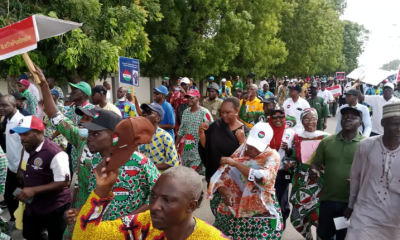
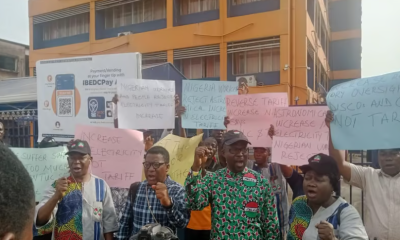
THE Nigeria Labour Congress, Trade Union Congress of Nigeria and Civil Society Organisations have described the decision by the Nigerian Electricity Regulatory Commission, NERC, to increase electricity tariff as “illegal, unfair, unjustifiable and a means to exploit Nigerians.”
In a communiqué released in Abuja and obtained by our correspondent, the groups said the increase could not be justified as there had not been any significant improvement in service delivery and most consumers do not have meters.
The communiqué, jointly signed by the NLC President, Ayuba Wabba; President, TUC, Bobboi Kaigama; Co-ordinator, Electricity Consumer Protection Forum, Adeola Samuel-Ilori; a human rights activist, Toluwani Yemi-Adebiyi; and Publicity Secretary, Campaign for Democratic and Workers’ Rights, Chinedu Bosah said the tariff increase was contrary to the agreement reached with the Federal Government during the privatisation of the electricity companies.
The unions said the agreement, as contained in the Memorandum of Understanding signed on November 1, 2013, stated that all customers must be metered within an 18-month gestation period before any tariff increase.
ALSO SEE: Fashola dares Nigerians by his dictatorial voice — TUC
In addition, the groups said that there was a subsisting suit dated May 28, 2015 before Justice Mohammed Idris of the Federal High Court in Ikoyi, Lagos in the case of Toluwani Yemi-Adebiyi versus NERC, in which the latter had been barred from increasing electricity tariff pending the determination of the suit.
The President, Trade Union Congress of Nigeria, Bobboi Kaigama, alleged that the government did not follow due process in effecting the increase.
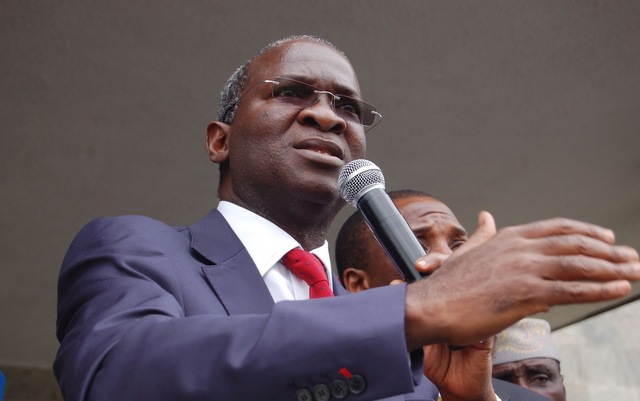
Meanwhile the minister of Power, Works and Housing, Mr. Babatunde Fashola, has justified the 45 per cent increment in electricity tariff, stressing that the action remained the only way to enhance stable power supply in the country.
Fashola, who stated this when he appeared before the Senate Committee on Power, explained that an Act of the National Assembly actually empowered the Nigerian Electricity Regulatory Commission to increase tariff, hence it would not be able to stop the implementation of the new tariff regime at this stage.
He explained that the rise in the cost of procuring raw materials to generate electricity was one of the reasons for increasing the tariff and that the best way to sustain the current stable power supply in the country.
ALSO SEE: Fashola must go to jail for contempt of court – labour
He said, “Electricity is a product; it is made from raw materials; some of the raw materials are gas, power plants; they are also related. So, the issue of tariff is the single issue of price; when the raw materials of course go up, the price cannot stay the same.
Fashola maintained that the Federal Government and consumers had a duty to sustain the current tempo in the power sector by encouraging the power generating firms to produce maximally at the right price level.
“There are a lot of investors who want to pay a little more than the open market tariff; if we want them to come into the industry, we have to allow the new tariff order, which allows for embedded order. There are a lot of people producing excess powers, they want to put it on the grid but the price must be right.







-

 Sports5 days ago
Senegal opens Dakar 2026 Youth Olympic Games, Africa’s first Olympic event
-
 Latest1 week ago
Tinubu endorses Nigeria’s participation in 2026 World Travel Market London
-
 Football6 days ago
U-17 Women’s World Cup: Flamingos Beat Mexico to Reach Quarter-Finals
-

 Latest5 days ago
FG Announces N50,000 cash support for vulnerable Nigerians under new relief programme
-
 Business17 hours ago
OPay explains how Nigerians can access FG’s N50,000 monthly cash relief
-

 Business5 days ago
NNPC’s N66-per-litre petrol discount set to end October 31
-

 Latest4 days ago
INEC recognises Pantami for Gombe, keeps Kano NDC candidate off final list
-

 Latest5 days ago
Netanyahu, Eisenkot face coalition deadlock as Israel struggles to form new government