
Latest
2027: Northern voters divided as Atiku, Kwankwaso chart separate political paths

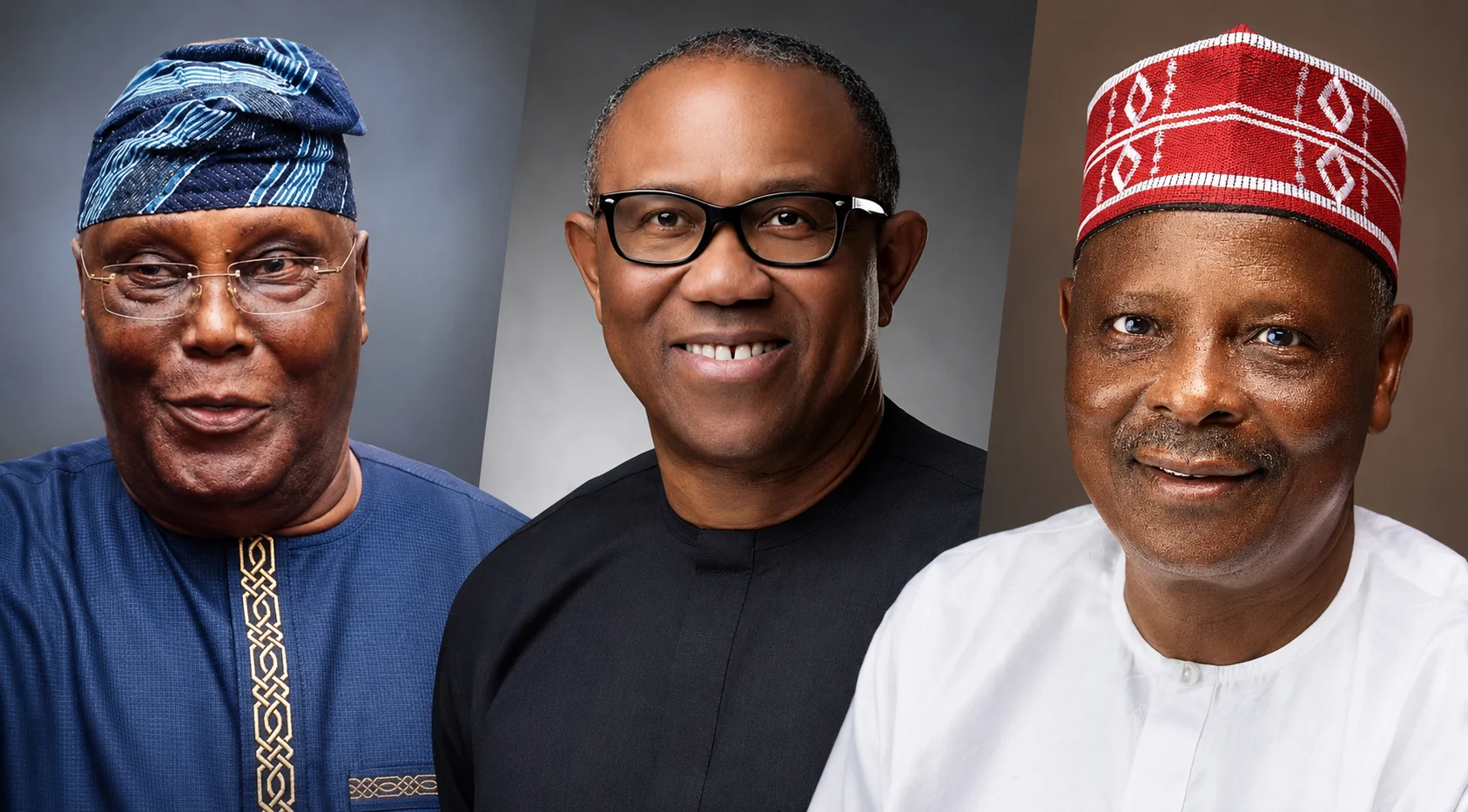
Voters and political stakeholders across northern Nigeria are expressing divergent opinions over how the region may align in the 2027 presidential election if former Vice President Atiku Abubakar and former Kano State Governor Rabiu Musa Kwankwaso contest on different political platforms.
The debate follows growing speculation about a potential alliance between Peter Obi and Kwankwaso, while Atiku is widely expected to pursue his presidential ambition independently, with a yet-to-be-announced running mate.
Commenting on the unfolding political permutations, Adnan Mukhtar Tudun Wada, a chieftain of the African Democratic Congress (ADC), warned that northern voters could be fragmented by competing alliances and personal political interests ahead of 2027.
According to him, Kwankwaso’s political dominance remains largely concentrated in Kano State, whereas Atiku’s support base spans multiple northern states.
“From my observation, Kwankwaso’s strength is in Kano. Even in the previous election, you could see how he only made it in Kano, while Atiku is all over,” he said.
Wada further argued that some northern voters remain uncomfortable with Obi’s potential involvement on the ballot, citing lingering perceptions from the 2023 election campaign.
“The issue is that the North is not comfortable with Obi on the ballot because of the religious card he played the other time. That will also affect the strength of Kwankwaso in 2027,” he stated.
He added that dissatisfaction with the ruling All Progressives Congress (APC) could push many northerners toward supporting a candidate from the region.
“The North is unanimously united against the APC and will surely go for a northerner on the ballot. Kwankwaso is a running mate this time around, and that has discouraged many of his supporters,” Wada said.
Alternative View: A Different Split in 2027
However, Kano Obidient Coordinator, Barrister Ibrahim Muhammad, believes the northern voting pattern in 2027 may differ significantly from that of 2023 due to evolving alliances.
“The northern vote will likely split, but not like that of 2023, because Kwankwaso is running with Peter Obi as presidential candidate from the South,” he said.
He explained that three key factors would determine voting behaviour: regional home-base strength, the choice of running mates, and which candidate voters perceive as most capable of defeating President Bola Ahmed Tinubu in 2027.
“And the pattern will depend on three things: home-base strength, running mates, and whether voters consolidate around the candidate they see as most likely to beat Tinubu,” Muhammad noted.
He also referenced broader coalition talks among opposition parties, suggesting that 2027 could witness a more coordinated opposition front.
“In 2023, Kwankwaso contested as presidential candidate under the New Nigeria Peoples Party (NNPP), which was different from Atiku’s platform, and he got lower votes. But this coming election, Kwankwaso will run with Peter Obi together with a massive alliance from different parties such as the Labour Party (LP), Social Democratic Party (SDP), All Progressives Grand Alliance (APGA), and even those departing from APC to NDC,” he said.
According to Muhammad, some northern voters now interpret Atiku’s political moves as driven more by personal ambition than collective opposition strategy.
“Northerners now understand that Atiku is running for himself, not for Nigerians, because Obi and Kwankwaso asked him to join NDC so that they can merge together and beat Tinubu, and he denied,” he claimed.
He predicted that a Kwankwaso/Obi alliance could perform strongly across Kano, Jigawa, Kaduna, Katsina, Zamfara, Sokoto and other North-West states, while Obi’s appeal could bolster support in parts of the North-East and North-Central regions.
Skepticism Over All Major Contenders
Not all observers are convinced that either bloc would secure victory. Mamman Buhari, a Kano-based activist, expressed doubts about both Atiku and the proposed Obi-Kwankwaso partnership.
“Kwankwaso has proved to be selfish, siding with Obi. Both Obi and Kwankwaso don’t respect the political awareness of the other, but selfishness has made them come together. And Atiku should let us be; he has been contesting for a very long time,” he said.
As political alignments continue to evolve ahead of 2027, the question of whether the North will rally behind a single candidate or splinter along party and personality lines remains central to calculations that could shape the outcome of Nigeria’s next presidential election


-
 Latest6 days ago
Israel marks 3 years since October 7 Hamas attack amid Gaza strikes, election debate
-

 Energy6 days ago
Fuel Battle: Dangote, marketers and government clash over petrol imports
-

 Energy1 week ago
Petrol, diesel prices rise 86% in 2026 as costs hit fresh highs
-

 Football7 days ago
Nigeria’s World Cup exit under spotlight as FIFA’s DR Congo files emerge
-
 Energy1 week ago
Has Iran lost control of the Strait of Hormuz? Oil flows rebound as war disruptions persist
-
 Latest21 hours ago
Full List: Meet the 2026 Nobel Prize winners across six categories
-

 Latest7 days ago
US Court set to rule on release of FBI, DEA records on Tinubu
-

 Business7 days ago
Nigerian investors at a crossroads as fixed-income yields slide