
Featured
7 journalists killed in Ukraine – UN report

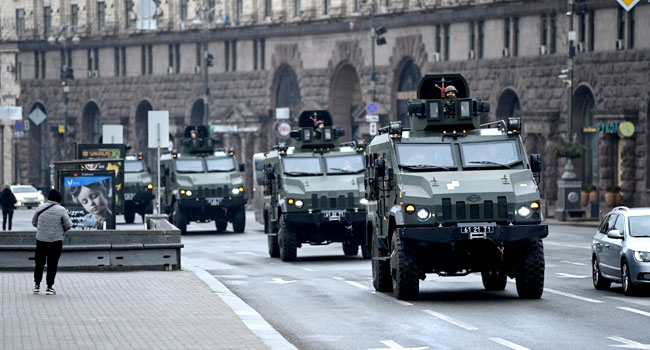
Citing UN data, top independent rights experts on Wednesday said seven journalists had been killed in Ukraine while many had been facing unprecedented danger and even targeted while performing their work.
The alert from UN-appointed independent rights experts, including the UN Special Rapporteur on freedom of expression, cited “numerous reports” that journalists have been “targeted”.
According to the report, cited by the experts, journalists have been tortured, kidnapped, attacked and killed, or refused safe passage from cities and regions under siege.
Latest UN data indicates that seven journalists have been confirmed killed in Ukraine since the Russian invasion on February 24; the last time so many media professionals lost their lives in Ukraine, was in 2014, when Russia annexed Crimea.
The rights experts, in a statement, said Russia’s war against Ukraine had been made easier by the “silencing of critical voices…over a prolonged period of time’’.
They pointed to the blocking of social media platforms and news websites in Russia, and the disruption of foreign media services.
According to experts, Moscow’s “massive labelling” of independent media as “foreign agents” is a source of concern.
“We deplore the systematic crackdown on political opponents, independent journalists and the media, human rights activists, protesters and many others opposing the Russian government’s actions.
“All these measures amount to the creation of a state monopoly on information in blatant violation of Russia’s international obligations.”
After condemning Russia’s alleged use of “propaganda for war” against Ukraine, the rights experts maintained that disinformation is also being spread about Ukraine in Russian State-owned media.
They also rejected the European Union’s recent decision to ban two Russian media companies as “disproportionate”, adding that this move had been used “as a pretext…for (the) additional closure of independent media outlets” in Russia.
“Promoting access to diverse and verifiable information, including ensuring access to free, independent and pluralistic media, is a more effective response to disinformation.
“We call on the Russian government to fully implement its international human rights obligations, including by respecting, promoting and protecting the freedom to seek, receive and impart information regardless of frontiers, and by ensuring a safe working environment for independent media, journalists and civil society actors.”
Irene Khan, UN Special Rapporteur for Freedom of Opinion and Expression, is a UN-appointed independent member of the UN Human Rights Council’s Special Procedures section.
Special Procedures is the general name of the Council’s independent fact-finding and monitoring mechanisms that address specific country situations or thematic issues in all parts of the world.
Experts work on voluntary basis as Independent Experts or Special Rapporteurs; they are not UN staff and do not receive a salary for their work.








-

 Latest5 days ago
Pastor Chris Oyakhilome announces mother’s passing at 88 [VIDEO]
-

 Latest6 days ago
Arsenal eye €70-80m move for Real Madrid star
-
 Football3 days ago
How David Beckham made $51.1m from 2026 World Cup, surpassing winners’ prize
-
 Crime6 days ago
Police arrest suspect, launch manhunt for 2 others over Delta Education Director’s death
-

 Latest5 days ago
How adulterated palm oil, coloured pepper are putting consumers at risk
-
 Crime5 days ago
Deaths in NSCDC Custody: Can Nigeria guarantee the safety of detainees?
-
 Latest6 days ago
Obi left $155m in Anambra, Otti insists amid debt controversy
-
 Crime6 days ago
184.5kg Cocaine Bust: NDLEA docks KC Luxury, two accomplices, remands them in custody