
Latest
3 Nigerian tribes that have not been fully influenced by westernization

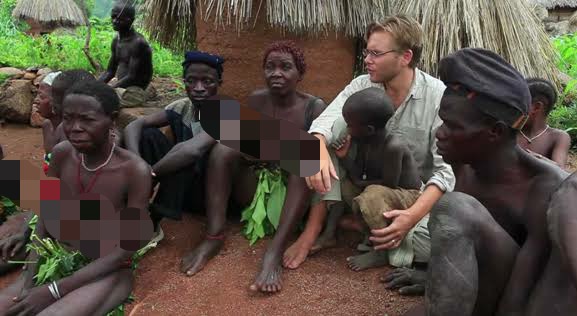
- They do not wear clothes
One of man’s most basic needs is to wear clothes. We wear clothes to hide our nakedness and to make ourselves appear attractive. Wearing clothes also protects one’s body from harm caused by climate change.
However, some tribes have managed to go unnoticed while retaining a significant portion of their culture. Nigeria is home to over 371 documented tribes, not all of which are as well-known in the Western world as others. Who knows how many more there are that have yet to be discovered?
1. The Kambari (Kambari people)
The Kambari are a traditional rural community in Birnin Amina, Rijau Local Government Area, Niger State, and they are one of the few who do not dress. Their forefathers passed down this tradition to them, and they refuse to let it go.
When they go to the market to sell their farm produce, the women cover their bottom halves with wrappers, while the men do the same. For agrarian and nomadic people, donkeys are the only mode of transportation.
They are an unnoticed tribe that is content with their simple way of life and the lack of government support for a sustainable community. The Kambari do not speak English or Hausa; instead, they speak Kamari. They live in small towns and only interact with other people when they need to go to the farm or the market.
The Kamari, like the majority of northern Nigerians, are not Christians or Muslims. They are pagans who worship a Magiro-like god. They also believe strongly in witchcraft and magic.
2. The Koma people
Until a corps member discovered them in 1986, the Koma people were unknown in their mountaintops. They live in the Atlantika Mountains, a remote hilly terrain along the Nigeria-Cameroon border in Jada Local Government Area, Adamawa State.
They are described as a horde of primitive people, with women covering their private parts with leaves, men wearing animal skins, and children running around the countryside butt-naked.
They got recognised as Nigerians a year after Nigeria’s independence. With over 21 villages in Cameroon, the population was distributed along the Cameroon-Nigeria border.
Koma is now one of Adamawa state’s Jada Local Government Area’s seven districts. They live in hills discovered by a serving youth corper in 1986.
3. Jibu People
A journalist named Stephen Osu discovered the Jibu people and was able to learn more about them. They are descended from the Kwarafa Kingdom, which lived in nine communities scattered across the mountains for centuries before fleeing Jihadists who invaded the kingdom.
They now live in Taraba State’s Gashaka Local Government Area, on Gerinjina Mountain. They were able to avoid the colonial masters’ activities in large part due to the difficult terrain of their residence.
They live in groups and are neither Christians nor Muslims, but they worship their gods and ancestors.


-
 Featured4 days ago
BREAKING NEWS: Shouts of joy rock the world as Pastor Chris opens final Healing Streams edition for 2026
-

 Football5 days ago
Man United shortlist Emery, Nagelsmann as potential replacements for Carrick
-

 Business4 days ago
Hoodlums raid JED Benue office, abduct 10 staff over power dispute
-

 Football5 days ago
Aston Villa ready to freeze out Garnacho to avoid £43m Chelsea transfer
-

 Business1 week ago
Naira faces exchange rate gap as Dollar hits N1,380 on parallel market
-

 Latest4 days ago
Akpabio tasks Tompolo-backed movement with spreading Tinubu’s renewed hope message
-

 Business5 days ago
EV adoption: Roxettes seeks cheaper financing, local manufacturing incentives
-

 Business3 days ago
How Ethiopian Airlines is challenging Africa’s aviation narrative through self-reliance