
Business
Nigeria: Whither the fruits of 2026 crude oil windfall?

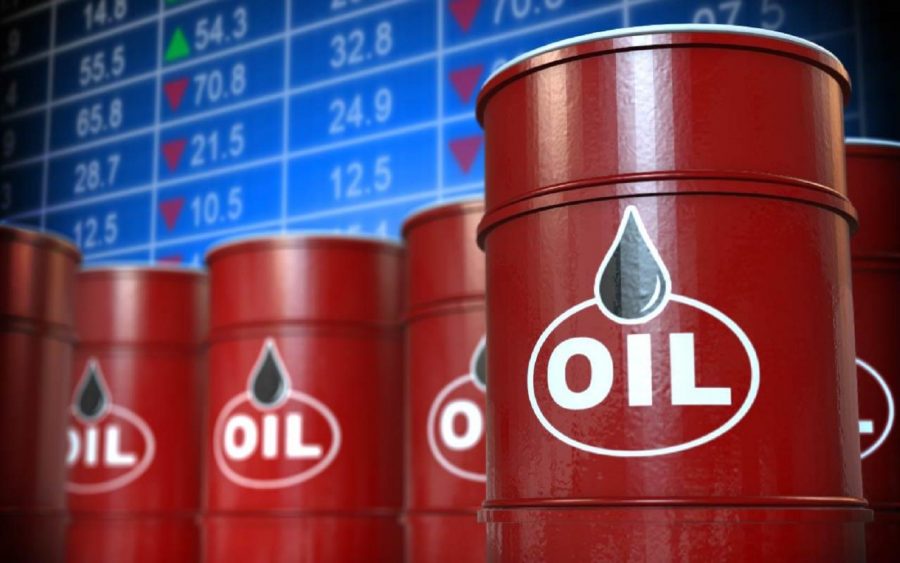
It’s really a serious irony that at a time that Nigeria is expected to be literally swimming in the ocean of humongous unplanned foreign exchange (FX) inflow, the country is practically going cap in hand, borrowing from all manner of financial institutions across the globe. As a major crude oil producer/exporter and member of the Organization of Petroleum Exporting Countries (OPEC), Nigeria is supposed to be a direct beneficiary of the fallouts of the ongoing war in the Middle East which has seen the price of crude oil spike astronomically since February 28, 2026.
Nigeria’s 2026 Appropriation Act is anchored on crude oil price assumption of US$65 per barrel; but even before President Bola Ahmed Tinubu signed the Budget on April 17, 2026, the price of oil had hit about US$120 per barrel. It had scarcely dropped below US$100 per barrel since then. Therefore, Nigeria’s Excess Crude Account (ECA), if it still exists, ought to be getting filled to the brim; or, already ‘overflowing’ with petro-dollars.
Unfortunately, what has been the lot of Nigeria and Nigerians since end-February 2026 has been a beggarly country that is interminably seeking loans of various sums from the World Bank, the International Monetary Fund (IMF), and others. In point of fact, a few days ago, in desperation, Nigeria reportedly began to give ultimatums to both global financial institutions to ‘force’ them to release portions of some already approved loans. What audacity, for debtor country?
At the same time, rather than increasing, the country’s stock of external reserves has been experiencing significant drops. The Central Bank of Nigeria (CBN’s) figures show that, from a level of slightly over US$50 billion as of mid-February 2026, the country’s gross external reserves have dropped to US$48.60 billion as of late April 2026. Some analysts have attributed this trend to the exit of not a few foreign portfolio investors (FPIs) who have been ‘cashing out’ from Nigeria owing to emerging headwinds in the face of the socio-political tensions in the Middle East and other places.
Ironically, too, at a time the country ought to boost its crude oil production and export volume to optimize its windfall gains, it has consistently failed to even hit its modest OPEC-allocated quota of 1.5 million barrels per day. Although the Federal Government of Nigeria (FGN) has about two million barrels per day as its target, actual production has remained a far cry. In its National Liquid Hydrocarbon Production Report, just released, the Nigerian Upstream Petroleum Regulatory Commission (NUPRC), disclosed that the average daily crude oil production hovered around 1.4 million barrels per day—still less than the OPEC quota.
The NUPRC report shows that Nigeria has yet to consistently meet its OPEC quota, while total output (including condensate) also remained below the 1.84 million barrels per day benchmark for the 2026 budget. The latest data means Nigeria remained below its OPEC allocation for the ninth straight month since July 2026. The country’s oil production has struggled for years due to the bizarre phenomenon of crude oil theft, pipeline vandalism, ageing infrastructure, underinvestment in the upstream sector, and organized sabotage against major oil installations.
Nigeria’s peculiar but queer situation in the face of the subsisting crude oil windfall has made the country an ultimate ‘loser’ from the emerging oil trend. The soaring oil prices in the global market have also triggered rises in the prices of refined oil products, including petrol (Premium Motor Spirit, PMS) which Nigeria still imports to meet its local needs. After the removal of fuel subsidy on May 29, 2023, President Tinubu who is also the Minister of Petroleum Resources, licensed more persons and entities to be importing PMS and other refined products into the country.
Although local refining, courtesy of Dangote Refinery, has improved in the past couple of years, the FGN and its officialdom have been unable to avail the local refineries with enough quantity of crude oil for their operations. The licensed importers have also refused to stop their businesses, but have rather kept on with campaigns against perceived monopoly traits in the Dangote Refinery operations. Local refiners, especially Dangote Refinery, have had to resort to importation of crude oil to augment their input requirements.
The sequel and import of all these has been the consistent hike in the pump prices of PMS, diesel, Jet A-1 and other refined products in tune with the trend of oil price movement in the global market. As the oil windfall materializes in the face of the lingering Middle East war, Nigerians vicariously bear the brunt in form of high and rising pump prices of PMS and other products.
It also goes without saying that the emerging scenario has begun a return to the era of hyperinflationary trend, after the inflation rate ‘crashed’ from over 34.80 per cent at end-December 2024 to barely 15 per cent in February 2026. The inflation figure for March 2026 from the National Bureau of Statistics (NBS)—15.38 per cent—shows the ugly face of runaway inflation is about to return, unavoidably. This means more impoverishment of more millions of Nigerians—as already predicted by the World Bank and the IMF.
At this time, it is also worrisome that the Federal Government of Nigeria (FGN) is getting more desperate in seeking loan approvals from these Bretton Woods institutions. Already, statistics show that Nigeria has become Africa’s largest debtor to the World Bank’s International Development Association (IDA), and the third globally, with debt to the institution reaching over US$18.2 billion by end-2025.
Some of the World Bank (IDA) loans include US$750 million for power sector, US$800 million for social safety nets, US$700 million for education, and a major US$2.25 billion loan for economic stabilization. Currently, Nigeria is yet in talks with the World Bank for a fresh US$1.25 billion loan to “support economic reforms and job creation.”
In addition to the World Bank and the IMF, Nigeria is a major debtor to the African Development Bank (AfDB) Group, Africa Export-Import Bank (Afreximbank), China, France, Japan, India, Britain, and Germany, among others. There is hardly any time that the request for the approval of one or some of these foreign loans are not before the National Assembly in recent times. Today, Nigeria’s total public debt is about N159.30 trillion (approximately US$94.20 billion): a complex mix of huge local and external obligations.
This worrisome scenario brings to the front burner, the question of the place of the 2026 crude oil windfall on the Nigerian economy. Where is the supposedly improved FX inflow? Is it in the gross external reserves, and/or on the overall fiscal profile of the country? Or, is the windfall already squandered or embezzled like the 1991/92 ‘Gulf War’ one?
- The author, Okeke, a practicing Economist, Business Strategist, Sustainability expert and ex-Chief Economist of Zenith Bank Plc, lives in Lekki, Lagos. He can be reached via: [email protected] (08033075697) SMS only


-

 Business5 days ago
Abuja gears up for Jetour T2’s rugged-luxury experience
-
 Business7 days ago
Nigeria Business Outlook: Dangote IPO, markets, inflation and naira in focus this week
-

 Business6 days ago
Dangote IPO rush crashes Bamboo login as investors flood platform
-
 Business5 days ago
Dangote: Petrol price gap fuels smuggling as Nigeria faces fresh pump price surge
-

 Business5 days ago
Tinubu’s economic reforms face public confidence test as cost-of-living crisis persists
-

 Latest1 week ago
Hamzat meets Pastor Chris Oyakhilome, hails Christ Embassy’s community impact
-

 News4 days ago
UK, Canada pledge closer cooperation on trade, defence and AI
-
 Business6 days ago
August inflation faces upward pressure despite disinflation trend – Analysts